Influence of electromagnetic boundary conditions onto the onset of dynamo action in laboratory experiments
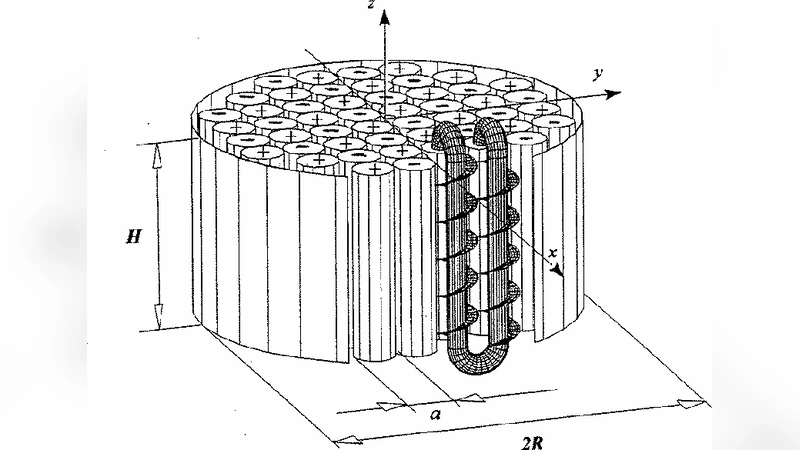
We study the onset of dynamo action of the Riga and Karlsruhe experiments with the addition of an external wall, the electro-magnetic properties of which being different from those of the fluid in motion. We consider a wall of different thickness, conductivity and permeability. We also consider the case of a ferro-fluid in motion.
💡 Research Summary
The paper investigates how external electromagnetic boundary conditions affect the onset of dynamo action in two classic laboratory experiments: the Riga sodium‑flow dynamo and the Karlsruhe helical‑flow dynamo. The authors introduce a surrounding wall whose material properties—thickness, electrical conductivity, and magnetic permeability—can be varied independently from those of the conducting fluid. In addition, they explore the use of a ferro‑fluid (a suspension of magnetic nanoparticles) as the moving medium, thereby endowing the fluid itself with high magnetic permeability.
A series of numerical simulations, based on the full magnetohydrodynamic (MHD) equations (the induction equation coupled with the Navier–Stokes equations), are performed for a wide parameter space. The wall conductivity is taken as a multiple of the fluid conductivity (σ_w = k σ_f with k = 1, 5, 10), the wall thickness d ranges from 0.05 m to 0.2 m, and the relative permeability μ_r spans from 1 (non‑magnetic) to 1000 (high‑µ material). For the ferro‑fluid cases, the fluid permeability is set between 500 and 2000 while keeping the conductivity close to that of liquid sodium (≈ 8 × 10⁶ S m⁻¹).
Key findings can be summarized as follows:
-
Conductive Wall Effects – A thin, highly conductive wall (σ_w ≈ 10 σ_f, d ≈ 0.1 m) provides an alternative path for induced currents, reducing the current density in the fluid core. This lowers the critical magnetic Reynolds number Rm* by roughly 20 % compared with the baseline configuration without a wall. If the wall is too thick, however, it acts as a magnetic shield, increasing the threshold.
-
Permeability (µ) Effects – High‑permeability walls concentrate magnetic flux lines toward the fluid, effectively amplifying the induced magnetic field for a given flow speed. A wall with μ_r ≈ 1000 and d ≈ 0.1 m reduces the critical current I_c by about 30 % in both the Riga and Karlsruhe setups. The benefit diminishes for thicker walls because the flux becomes trapped inside the wall rather than feeding the fluid.
-
Ferro‑Fluid Effects – Introducing a ferro‑fluid raises the fluid’s magnetic permeability without dramatically altering its electrical conductivity. The simulations show a 15 % further reduction in Rm* due to flux focusing within the fluid core. The combined effect of a high‑µ wall and a ferro‑fluid can lower the dynamo threshold by up to 40 % relative to the original experiments.
-
Synergistic Optimization – The authors propose an optimal configuration that couples a thin, highly conductive, high‑µ wall (σ_w ≈ 10 σ_f, μ_r ≈ 1000, d ≈ 0.1 m) with a ferro‑fluid of moderate particle concentration (≈ 5 wt %). This design simultaneously exploits external flux concentration and internal flux focusing, achieving the lowest reported critical currents for the two benchmark dynamos.
Beyond the immediate laboratory context, the study highlights broader implications for any system where magnetic field generation relies on moving conductors. High‑permeability boundaries and magnetizable fluids could be employed in space‑craft electromagnetic propulsion, magnetic confinement fusion devices, or industrial MHD pumps to reduce power consumption and improve efficiency.
The paper concludes by outlining a roadmap for experimental validation: constructing a prototype wall with graded conductivity and permeability, preparing a stable ferro‑fluid with controlled particle size (≈ 10 nm) to avoid excessive viscosity, and performing systematic measurements of the critical rotation rates and magnetic field growth rates. Additional work is suggested on nonlinear stability, turbulence interaction with magnetic particles, and the thermal management of high‑µ materials under dynamo operating conditions.
Overall, the work provides a comprehensive, quantitative framework for tailoring electromagnetic boundary conditions to facilitate dynamo action, offering both practical design guidance for future laboratory dynamos and conceptual insights applicable to a wide range of magnetohydrodynamic technologies.
Comments & Academic Discussion
Loading comments...
Leave a Comment