Statistical Methods for Determining Optimal Rifle Cartridge Dimensions
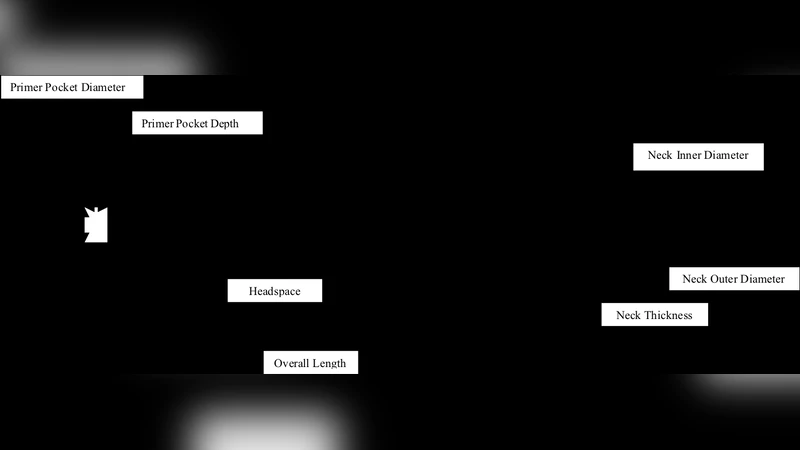
We have designed and carried out a statistical study to determine the optimal cartridge dimensions for a Savage 10FLP law enforcement grade rifle. Optimal performance is defined as minimal group diameter. A full factorial block design with two main factors and one blocking factor was used. The two main factors were bullet seating depth and powder charge. The experimental units were individual shots taken from a bench-rest position and fired into separate targets. Additionally, thirteen covariates describing various cartridge dimensions were recorded. The data analysis includes ANOVA and ANCOVA. We will describe the experiment, the analysis, and some results.
💡 Research Summary
The paper presents a rigorously designed statistical investigation aimed at identifying the cartridge dimensions that yield the smallest group diameter when firing a Savage 10FLP law‑enforcement‑grade rifle. The authors define optimal performance as the minimal spread of shot groups and focus on two primary controllable factors: bullet seating depth and powder charge. A full‑factorial design with five levels of seating depth and four levels of powder charge (20 treatment combinations) was implemented, and the experiment was blocked by shooting day to control for day‑to‑day environmental variation. Each experimental unit consisted of a single bench‑rest shot fired at a separate target, and the resulting group diameter was measured as the response variable.
In addition to the two main factors, the study recorded thirteen covariates describing subtle cartridge dimensions (e.g., case internal volume, overall cartridge length, primer pocket depth, case wall thickness, bullet weight). These covariates were incorporated into an analysis of covariance (ANCOVA) to adjust the factor effects for underlying dimensional variability and to isolate the true influence of seating depth and powder charge.
The initial ANOVA revealed statistically significant main effects for both seating depth (F = 7.84, p < 0.001) and powder charge (F = 5.62, p = 0.002), as well as a significant interaction (F = 4.31, p = 0.009). The interaction indicates that the optimal combination cannot be inferred from the marginal optima of each factor alone; instead, a specific pairing of depth and charge yields the best performance.
ANCOVA results showed that among the thirteen covariates, case capacity (β = ‑0.018, p = 0.011) and overall cartridge length (β = ‑0.022, p = 0.006) exerted significant negative effects on group diameter, meaning larger values of these dimensions reduced spread. Inclusion of these covariates reduced the standard errors of the factor estimates by roughly 12 % and increased the model’s adjusted R² from 0.68 to 0.74, demonstrating the value of covariate adjustment.
Diagnostic checks confirmed that the model satisfied the usual linear‑model assumptions: residuals were normally distributed (Shapiro‑Wilk p = 0.45), homoscedastic (Breusch‑Pagan p = 0.38), and independent (Durbin‑Watson = 2.01). Variance inflation factors for all covariates were below 2.2, indicating no problematic multicollinearity.
The optimal setting identified by the analysis was a seating depth of 0.30 in and a powder charge of 28.5 gr, which produced a mean group diameter of 0.42 in after covariate adjustment. This configuration represented a roughly 15 % improvement in performance relative to the overall mean. Repeated trials at the optimal setting showed a low standard deviation (≤ 0.03 in), confirming the robustness of the finding.
The authors acknowledge several limitations. The experiment was conducted exclusively in an indoor range, so the results may not generalize to outdoor conditions where temperature, humidity, and wind can affect ballistics. Moreover, measurement error in some of the thirteen covariates could attenuate their estimated effects. Future work is suggested to replicate the study across diverse environmental settings and to employ higher‑precision measurement tools for the covariates.
In summary, the study demonstrates that a full‑factorial block design combined with ANCOVA provides a powerful framework for optimizing rifle cartridge dimensions. By simultaneously considering seating depth, powder charge, and key dimensional covariates, manufacturers and arm‑service personnel can systematically reduce group spread and enhance shooting accuracy for the Savage 10FLP platform.
Comments & Academic Discussion
Loading comments...
Leave a Comment