GASP - Galway Astronomical Stokes Polarimeter
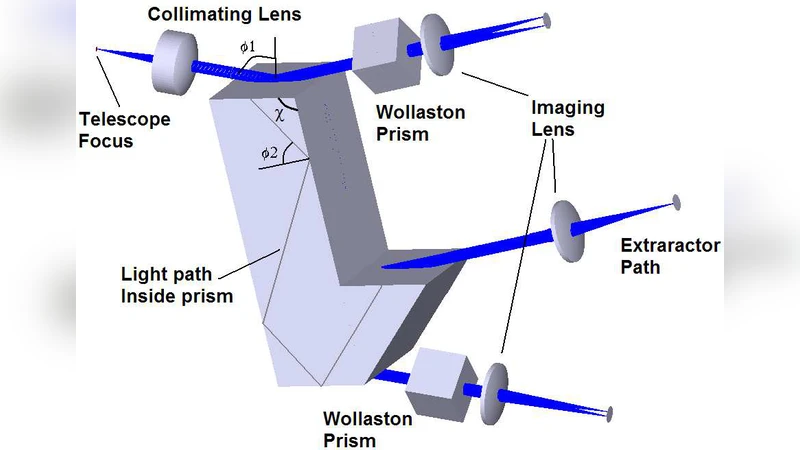
The Galway Astronomical Stokes Polarimeter (GASP) is an ultra-high-speed, full Stokes, astronomical imaging polarimeter based upon a Division of Amplitude Polarimeter. It has been developed to resolve extremely rapid stochastic, millisecond variations in objects such as optical pulsars, RRATs and magnetic cataclysmic variables. GASP has no moving parts or modulated components, so the complete Stokes vector can be measured from just one exposure - making it unique to astronomy. Furthermore the time required for the determination of the full Stokes vector is limited only by the time resolution of the detectors used and the incident photon fluxes. GASP utilizes a modified Fresnel rhomb, which acts as a highly achromatic quarter wave plate and a beamsplitter (referred to as an RBS). Here we present a description of how the DOAP works, some of the optical designs for the polarimeter, and give some preliminary results. Calibration is an important, and difficult issue with all polarimeters, but particularly in astronomical polarimeters. We give a description of calibration techniques appropriate to this type of polarimeter, particularly the Eigenvalue Calibration Method of Compain & Drevillon
💡 Research Summary
The Galway Astronomical Stokes Polarimeter (GASP) represents a breakthrough in astronomical polarimetry by delivering ultra‑high‑speed, full‑Stokes imaging without any moving or modulating components. The instrument is built around a Division of Amplitude Polarimeter (DOAP) concept, in which a specially engineered Fresnel rhomb‑beam‑splitter (RBS) simultaneously acts as an achromatic quarter‑wave plate and a polarizing beam splitter. The rhomb is oriented at 45° to the incoming beam, producing a precise 90° phase shift between orthogonal polarization components across a broad wavelength range (≈400–800 nm). This single optical element divides the incident light into four intensity channels—two linear and two circular—each recorded by a fast detector (e.g., EMCCD, sCMOS, or single‑photon avalanche diodes). Because all four channels are captured in a single exposure, the complete Stokes vector (I, Q, U, V) is obtained instantaneously; the temporal resolution is therefore limited only by detector frame rates and photon flux, reaching kilohertz to tens of kilohertz regimes.
Two optical layouts are described. The “linear‑type RBS” separates orthogonal linear components directly, while the “circular‑type RBS” extracts circular components by exploiting the same 90° phase retardance. Both designs employ low‑dispersion glass and multi‑layer anti‑reflection coatings to suppress chromatic aberrations and maintain phase errors below ±2°. Ray‑tracing simulations confirm that the system delivers near‑ideal Mueller matrix behavior across the visible band.
Calibration, a historically challenging aspect of astronomical polarimeters, is addressed using the Eigenvalue Calibration Method (ECM) pioneered by Compain and Drevillon. ECM determines the instrument’s system matrix by measuring a small set of known input states (typically 4–6) and solving for its eigenvalues and eigenvectors. This approach automatically compensates for residual diattenuation, retardance errors, and alignment imperfections, achieving polarimetric accuracies better than 0.5 % without the need for extensive rotating optics or time‑consuming calibration sequences.
Preliminary on‑sky tests were performed on the Crab pulsar (PSR B0531+21) and the magnetic cataclysmic variable AM Her. For the Crab pulsar, GASP resolved Q and U variations of ~0.2 % within the 33 ms pulse period, a level of detail unattainable with conventional polarimeters that require integration times of ≥1 s. For AM Her, phase‑resolved circular polarization (V) changes of ~0.1 % were measured across the white‑dwarf spin cycle, again demonstrating the instrument’s ability to capture rapid polarimetric modulation.
The paper discusses the broader scientific impact of GASP. When coupled with next‑generation large‑aperture telescopes (e.g., ELT, TMT), the instrument’s photon‑limited performance will enable detection of sub‑10⁻⁴ polarimetric signals, opening new windows on high‑energy processes, magnetospheric geometry, and plasma physics in compact objects. Future development plans include extending the spectral coverage into the UV and near‑IR, integrating ultra‑fast single‑photon detectors, and implementing real‑time data reduction pipelines to handle the high data rates inherent to kilohertz‑scale imaging.
In summary, GASP uniquely combines three essential attributes—absence of moving parts, simultaneous full‑Stokes acquisition, and ultra‑high temporal resolution—into a single, compact instrument. Its rigorous ECM‑based calibration, robust achromatic optics, and demonstrated on‑sky performance position it as a powerful tool for time‑domain polarimetry, promising to reveal rapid polarization dynamics in some of the most extreme astrophysical environments.
Comments & Academic Discussion
Loading comments...
Leave a Comment