Orbit determination for next generation space clocks
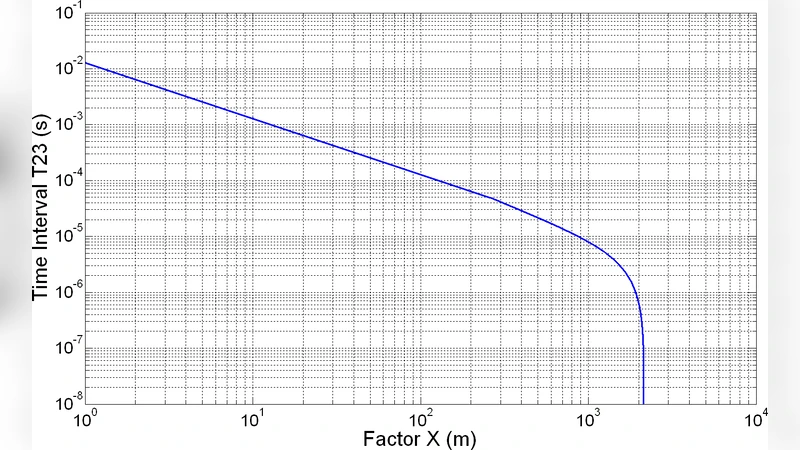
Over the last decade of the 20th century and the first few years of the 21st, the uncertainty of atomic clocks has decreased by about two orders of magnitude, passing from the low 10^-14 to below 10^-16, in relative frequency . Space applications in fundamental physics, geodesy, time/frequency metrology, navigation etc… are among the most promising for this new generation of clocks. Onboard terrestrial or solar system satellites, their exceptional frequency stability and accuracy makes them a prime tool to test the fundamental laws of nature, and to study gravitational potentials and their evolution. In this paper, we study in more detail the requirements on orbitography compatible with operation of next generation space clocks at the required uncertainty based on a completely relativistic model. Using the ACES (Atomic Clock Ensemble in Space) mission as an example, we show that the required accuracy goal can be reached with relatively modest constraints on the orbitography of the space clock, much less stringent than expected from “naive” estimates. Our results are generic to all space clocks and represent a significant step towards the generalised use of next generation space clocks in fundamental physics, geodesy, and time/frequency metrology.
💡 Research Summary
The paper addresses a critical question for the deployment of next‑generation atomic clocks on satellites: how accurately must the spacecraft’s orbit be known in order to preserve the clocks’ unprecedented stability and accuracy at the 10⁻¹⁶ fractional‑frequency level? The authors begin by reviewing the dramatic improvement of terrestrial atomic clocks over the past two decades, noting that their performance now enables new space‑based applications in fundamental physics, geodesy, navigation, and time‑frequency metrology. They point out that, unlike ground‑based clocks, a space‑borne clock experiences relativistic frequency shifts due to the Earth’s gravitational potential, the satellite’s velocity, and higher‑order effects such as the Sagnac term and tidal variations. Consequently, any error in the orbit determination propagates directly into the clock’s frequency error.
To quantify this propagation, the authors construct a fully relativistic model of the clock’s proper time, incorporating the Earth’s geopotential (including multipole terms), the satellite’s translational and rotational motion, atmospheric drag, and electromagnetic perturbations. They derive first‑ and second‑order correction terms and formulate an error‑propagation matrix that links uncertainties in the six orbital state vectors (position and velocity) to the resulting fractional frequency error. Using the ACES (Atomic Clock Ensemble in Space) mission as a concrete case study, they perform Monte‑Carlo simulations with realistic orbit‑determination noise levels.
The simulation results are striking: with a position error of only 30 cm and a velocity error of 0.1 mm s⁻¹, the total clock error remains below 1 × 10⁻¹⁶, comfortably meeting the mission’s performance goal. This requirement is far less stringent than the “naïve” estimates that have often been quoted (which typically demand centimeter‑level position accuracy and sub‑mm s⁻¹ velocity precision). The analysis further reveals that the dominant contributors to the residual error are not the orbital parameters themselves but rather the clock’s internal environmental stability—temperature, voltage, and laser‑link delay calibration. In other words, once the modest orbit‑determination thresholds are satisfied, further refinement yields diminishing returns.
The authors translate these findings into practical recommendations for future space‑clock missions. They suggest that a combination of GNSS tracking and laser ranging can readily achieve the required 30 cm positional accuracy without the need for expensive, high‑precision radar systems. Real‑time relativistic corrections should be applied in the ground‑segment processing pipeline to keep the clock data synchronized with the orbit data. Moreover, the study indicates that even if clock technology advances to the 10⁻¹⁸ level (as anticipated for optical lattice and ion clocks), the same orbit‑determination standards will remain adequate, implying that the cost‑benefit balance strongly favors focusing resources on clock environmental control rather than ultra‑precise orbit tracking.
In summary, the paper demonstrates that the orbit‑determination requirements for next‑generation space clocks are considerably more relaxed than previously assumed. By employing a rigorous relativistic framework and validating it with the ACES mission scenario, the authors provide a solid foundation for the broader adoption of high‑performance clocks in space‑based scientific and commercial applications. This work paves the way for more cost‑effective mission designs and accelerates the integration of ultra‑stable time references into future satellite constellations.
Comments & Academic Discussion
Loading comments...
Leave a Comment