Modeling of anisotropic turbulent flows with either magnetic fields or imposed rotation
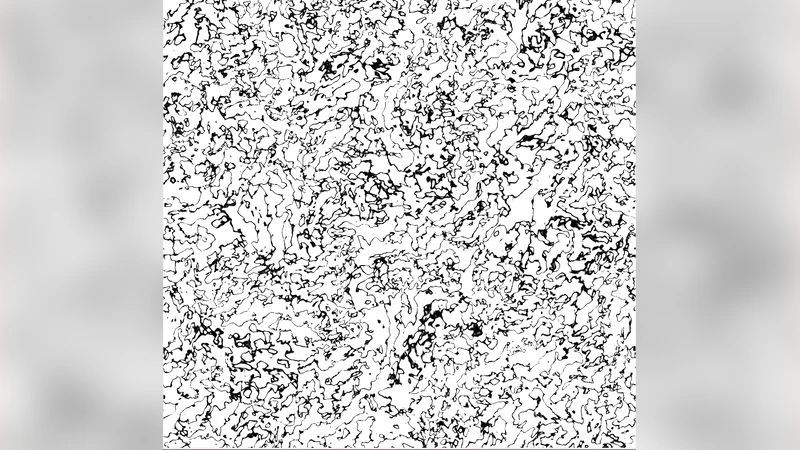
We present two models for turbulent flows with periodic boundary conditions and with either rotation, or a magnetic field in the magnetohydrodynamics (MHD) limit. One model, based on Lagrangian averaging, can be viewed as an invariant-preserving filter, whereas the other model, based on spectral closures, generalizes the concepts of eddy viscosity and eddy noise. These models, when used separately or in conjunction, may lead to substantial savings for modeling high Reynolds number flows when checked against high resolution direct numerical simulations (DNS), the examples given here being run on grids of up to 1536^3 points.
💡 Research Summary
The paper addresses the long‑standing challenge of efficiently modeling anisotropic turbulence in the presence of either solid‑body rotation or an imposed magnetic field, both of which introduce strong directional biases and wave‑type dynamics that are poorly captured by conventional Reynolds‑averaged or large‑eddy‑simulation (LES) approaches. Two complementary reduced‑order models are introduced and rigorously tested against direct numerical simulations (DNS) performed on grids up to 1536³ points, representing some of the highest‑resolution data available for rotating and magnetohydrodynamic (MHD) turbulence.
The first model is a Lagrangian‑averaged (α‑) formulation. By applying an invariant‑preserving filter of characteristic length ℓα, the model removes only the smallest, most rapidly varying scales while exactly conserving the quadratic invariants of the underlying equations: kinetic energy, helicity, and magnetic energy. This preservation guarantees that the large‑scale dynamics, including the nonlinear coupling between vortical motions and Coriolis or Alfvén waves, remain faithful to the full equations. The α‑model therefore excels at reproducing the correct large‑scale structure, spectral slopes, and wave‑vortex interaction mechanisms, especially in regimes where the Rossby or Alfvén numbers are small and wave dynamics dominate.
The second model is a spectral‑closure approach that generalizes the classic concepts of eddy viscosity and eddy noise. In spectral space the nonlinear transfer term is replaced by a scale‑dependent eddy viscosity, which acts as an effective dissipative operator for high‑wavenumber modes, and an eddy‑noise term that injects stochastic energy consistent with the turbulent cascade. The closure is calibrated to reproduce the DNS‑measured energy flux and can be extended to include anisotropic damping rates associated with rotation or magnetic tension. This model is particularly effective at capturing the small‑scale dissipation, the statistical moments of the velocity and magnetic fields, and the correct balance between forward and inverse cascades that appear in rotating or MHD turbulence.
A hybrid strategy is then proposed: the Lagrangian‑averaged filter handles the large‑scale, wave‑dominated part of the flow, while the spectral closure supplies the missing sub‑grid dissipation and stochastic forcing for the unresolved scales. The authors demonstrate that this combined model reproduces the DNS results with remarkable fidelity across the entire wavenumber range. Quantitatively, the hybrid model matches the DNS energy spectra (including the –5/3 inertial‑range scaling), the anisotropy measures (e.g., ratio of perpendicular to parallel energy), and the temporal evolution of integral quantities such as total kinetic and magnetic energy, helicity, and cross‑helicity.
From a computational standpoint, the hybrid approach yields savings of an order of magnitude in CPU time compared with full DNS, and a factor of three to five relative to conventional LES that does not incorporate invariant preservation or wave‑aware closures. These savings are achieved without sacrificing accuracy in the key diagnostics that matter for geophysical, astrophysical, and engineering applications, such as the prediction of large‑scale flow organization, the rate of magnetic reconnection, or the efficiency of rotating MHD generators.
The paper concludes with a discussion of parameter selection (the filter length ℓα, the functional form of the eddy viscosity, and the amplitude of the eddy noise), the robustness of the models under varying Rossby, magnetic Reynolds, and Prandtl numbers, and potential extensions to non‑periodic boundaries, non‑Newtonian fluids, and multi‑physics coupling. The authors argue that the presented framework provides a versatile and computationally tractable tool for high‑Reynolds‑number anisotropic turbulence, opening the door to systematic studies of rotating and magnetized flows that were previously out of reach due to prohibitive computational cost.
Comments & Academic Discussion
Loading comments...
Leave a Comment