Finding the Brightest Galactic Bulge Microlensing Events with a Small Aperture Telescope and Image Subtraction
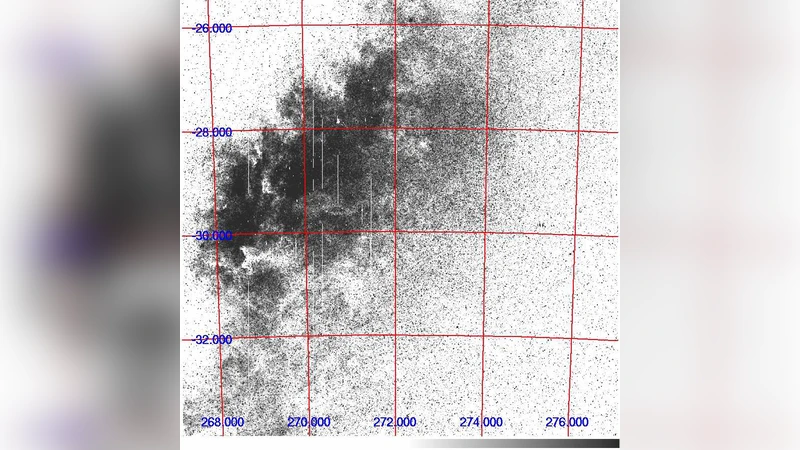
Following the suggestion of Gould and Depoy (1998) we investigate the feasibility of studying the brightest microlensing events towards the Galactic bulge using a small aperture (~10 cm) telescope. We used one of the HAT telescopes to obtain 151 exposures spanning 88 nights in 2005 of an 8.4x8.4 square degree FOV centered on (l,b) = (2.85, -5.00). We reduced the data using image subtraction software. We find that such a search method can effectively contribute to monitoring bright microlensing events, as was advocated. Comparing this search method to the existing ones we find a dedicated bulge photometric survey of this nature would fulfill a significant niche at excellent performance and rather low cost. We obtain matches to 7 microlensing events listed in the 2005 OGLE archives. We find several other light curves whose fits closely resemble microlensing events. Unsurprisingly, many periodic variables and miscellaneous variables are also detected in our data, and we estimate approximately 50% of these are new discoveries. We conclude by briefly proposing Small Aperture Microlensing Survey, which would monitor the Galactic bulge around the clock to provide dense coverage of the highest magnification microlensing events.
💡 Research Summary
The paper investigates whether a modest‑aperture (≈10 cm) telescope equipped with modern image‑subtraction techniques can meaningfully contribute to the detection and monitoring of bright microlensing events toward the Galactic bulge. Building on the suggestion of Gould & Depoy (1998), the authors used one of the HAT (Hungarian Automated Telescope) instruments to obtain 151 exposures over 88 nights in 2005, covering an 8.4° × 8.4° field centered at (l, b) = (2.85°, –5.00°). The data were reduced with the ISIS image‑subtraction package, and candidate variables were identified through a combination of automated signal‑to‑noise cuts, minimum observation counts, and visual inspection.
The analysis yielded matches to seven microlensing events listed in the 2005 OGLE archive, demonstrating that even a small‑aperture system can recover known high‑magnification events that are relatively bright (I ≈ 12–13). In addition, several light curves exhibited the characteristic symmetric rise and fall of a single‑lens microlensing event but were not present in OGLE’s catalog, suggesting that the HAT survey can uncover events missed by larger, higher‑resolution surveys due to limited cadence or sky coverage.
Beyond microlensing, the authors identified a large population of variable stars. Roughly half of the detected variables appear to be new discoveries, including pulsators (RR Lyrae, δ Scuti), eclipsing binaries, and irregular variables. The high cadence (≈5 min exposures) and wide field of view enable detection of short‑period variability that is often undersampled in traditional bulge surveys.
A key strength of the approach is the combination of a very wide field (∼70 deg² per pointing) with a modest cost per instrument (≈ $10 k). This makes it feasible to deploy a network of identical small telescopes at multiple longitudes, achieving near‑continuous coverage of the bulge. The authors propose a “Small Aperture Microlensing Survey” (SAMS) that would operate such a network, providing round‑the‑clock monitoring of the brightest, highest‑magnification microlensing events. The primary scientific payoff would be rapid alerts for high‑magnification events, which are the most sensitive to planetary companions and to detailed stellar surface studies. By delivering dense, real‑time light curves, SAMS could trigger follow‑up observations with large telescopes (e.g., VLT, Keck, JWST) at the moments of peak magnification, dramatically increasing the efficiency of planet detection and characterization.
In conclusion, the study validates the feasibility of using small‑aperture telescopes for bulge microlensing work. The successful recovery of known OGLE events, the identification of plausible new microlensing candidates, and the discovery of a substantial number of previously unknown variables all demonstrate that a low‑cost, high‑cadence, wide‑field survey can fill a niche left by existing large‑aperture projects. If expanded into a dedicated, globally distributed network, such a system could become an essential component of the microlensing community’s infrastructure, delivering timely alerts and dense photometric coverage that enhance the scientific return of both ground‑based and space‑based follow‑up campaigns.
Comments & Academic Discussion
Loading comments...
Leave a Comment