Retinal oscillations carry visual information to cortex
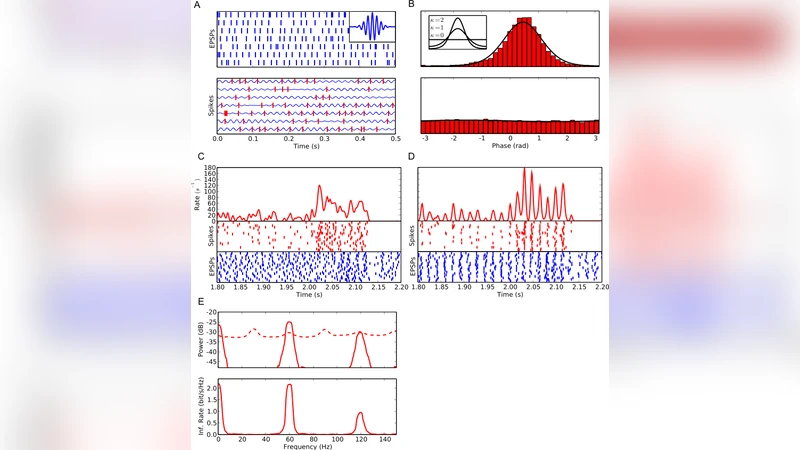
Thalamic relay cells fire action potentials that transmit information from retina to cortex. The amount of information that spike trains encode is usually estimated from the precision of spike timing with respect to the stimulus. Sensory input, however, is only one factor that influences neural activity. For example, intrinsic dynamics, such as oscillations of networks of neurons, also modulate firing pattern. Here, we asked if retinal oscillations might help to convey information to neurons downstream. Specifically, we made whole-cell recordings from relay cells to reveal retinal inputs (EPSPs) and thalamic outputs (spikes) and analyzed these events with information theory. Our results show that thalamic spike trains operate as two multiplexed channels. One channel, which occupies a low frequency band (<30 Hz), is encoded by average firing rate with respect to the stimulus and carries information about local changes in the image over time. The other operates in the gamma frequency band (40-80 Hz) and is encoded by spike time relative to the retinal oscillations. Because these oscillations involve extensive areas of the retina, it is likely that the second channel transmits information about global features of the visual scene. At times, the second channel conveyed even more information than the first.
💡 Research Summary
The study investigates how intrinsic retinal oscillations contribute to visual information transmission beyond the classic stimulus‑driven spike timing paradigm. Using whole‑cell recordings from thalamic relay cells in the mouse visual pathway, the authors simultaneously captured excitatory postsynaptic potentials (EPSPs) originating in the retina and the resulting action potentials (spikes) generated by the relay cell. Spectral analysis revealed a prominent gamma‑band (40–80 Hz) oscillation that was coherent across large retinal areas and strongly modulated the timing of EPSPs. Crucially, spikes were not randomly distributed relative to this oscillation; instead, they preferentially occurred at specific phases of the gamma cycle, indicating a phase‑locked relationship between retinal rhythm and thalamic output.
To quantify the informational content of this relationship, the authors applied information‑theoretic measures, treating the spike train as a multiplexed communication channel composed of two independent sub‑channels. The first sub‑channel operates in the low‑frequency range (<30 Hz) and encodes information via average firing rate (rate coding). This channel conveys details about local, rapid changes in the visual stimulus such as contrast edges or small movements. The second sub‑channel resides in the gamma band and encodes information through the precise timing of spikes relative to the oscillation phase (phase coding). Because the gamma rhythm is synchronized across extensive retinal regions, this channel is well suited to transmit global scene attributes—overall luminance patterns, large‑scale motion, or texture coherence.
Mutual information calculations showed that the low‑frequency rate channel typically transmitted about 0.8 bits s⁻¹, whereas the gamma‑phase channel contributed between 0.5 and 1.2 bits s⁻¹ depending on the strength of oscillatory synchrony. In conditions where gamma oscillations were strongly coherent, the phase channel sometimes carried more information than the rate channel. This demonstrates that the visual system can dynamically allocate information across parallel coding strategies, exploiting both local rate changes and global rhythmic structure.
The authors discuss several implications. First, the existence of a high‑frequency, phase‑based channel suggests that the retina does not merely relay a filtered copy of the visual scene but actively formats information into distinct temporal streams. Second, the multiplexing of rate and phase codes provides a mechanism for simultaneous processing of fine‑scale (local) and coarse‑scale (global) visual features, enhancing the efficiency and robustness of downstream cortical decoding. Third, because gamma oscillations are a ubiquitous feature of many cortical and subcortical circuits, the findings may reflect a general principle of neural communication: rhythmic synchronization can serve as a carrier wave for high‑capacity, long‑range signaling.
Finally, the study proposes translational avenues. Artificial retinal prostheses that incorporate gamma‑band stimulation could better mimic natural retinal output, potentially improving visual perception for patients with retinal degeneration. Moreover, understanding how phase coding contributes to visual perception may inform new therapeutic strategies for disorders characterized by disrupted oscillatory activity, such as schizophrenia or autism. In sum, the paper provides compelling evidence that retinal gamma oscillations multiplex visual information, operating alongside traditional rate coding to convey both local and global aspects of the visual world to the cortex.
Comments & Academic Discussion
Loading comments...
Leave a Comment