Distribution and Structure of Matter in and around Galaxies
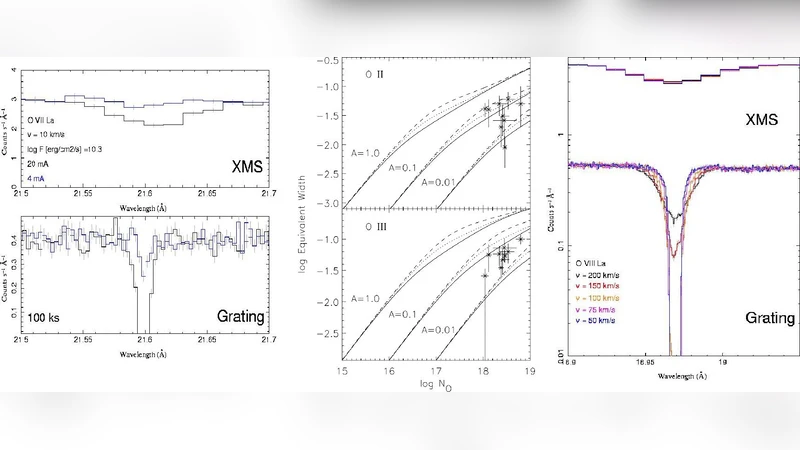
Understanding the origins and distribution of matter in the Universe is one of the most important quests in physics and astronomy. Themes range from astro-particle physics to chemical evolution in the Galaxy to cosmic nucleosynthesis and chemistry in an anticipation of a full account of matter in the Universe. Studies of chemical evolution in the early Universe will answer questions about when and where the majority of metals were formed, how they spread and why they appar today as they are. The evolution of matter in our Universe cannot be characterized as a simple path of development. In fact the state of matter today tells us that mass and matter is under constant reformation through on-going star formation, nucleosynthesis and mass loss on stellar and galactic scales. X-ray absorption studies have evolved in recent years into powerful means to probe the various phases of interstellar and intergalactic media. Future observatories such as IXO and Gen-X will provide vast new opportunities to study structure and distribution of matter with high resolution X-ray spectra. Specifically the capabilities of the soft energy gratings with a resolution of R=3000 onboard IXO will provide ground breaking determinations of element abundance, ionization structure, and dispersion velocities of the interstellar and intergalactic media of our Galaxy and the Local Group
💡 Research Summary
The paper “Distribution and Structure of Matter in and around Galaxies” presents a comprehensive investigation of how matter—both baryonic and metallic—originates, evolves, and is redistributed across cosmic scales, with a particular focus on the interstellar medium (ISM) and intergalactic medium (IGM) of the Milky Way, the Local Group, and beyond. The authors begin by framing the problem within the broader context of astro‑particle physics, chemical evolution, and cosmic nucleosynthesis, emphasizing that the present‑day composition of the Universe is the result of continuous cycles of star formation, nuclear burning, supernova explosions, and large‑scale feedback processes.
A central methodological pillar of the study is high‑resolution X‑ray absorption spectroscopy. Unlike optical or ultraviolet techniques, X‑ray absorption directly probes hot plasma phases with temperatures ranging from 10⁴ to 10⁷ K, allowing simultaneous detection of multiple ionization states (e.g., O VII, O VIII, Ne IX, Fe XVII). By measuring the equivalent widths, line centroids, and profiles of these transitions, the authors can infer element abundances, ionization fractions, temperature distributions, and line‑of‑sight velocity dispersions. This multi‑phase diagnostic capability is essential for constructing a complete mass inventory of the diffuse baryons that are otherwise “missing” from galaxy surveys.
The paper highlights the transformative potential of upcoming X‑ray observatories, especially the International X‑ray Observatory (IXO) and the Generation‑X (Gen‑X) mission concept. IXO’s soft‑energy gratings are designed to achieve a spectral resolving power of R≈3000, corresponding to velocity resolutions of a few km s⁻¹. Such precision enables the separation of narrow kinematic components associated with galactic winds, inflows, and the turbulent motions of the circumgalactic medium (CGM). Gen‑X, with an order‑of‑magnitude increase in collecting area and a broader energy band, will push detection limits down to the low‑density warm‑hot intergalactic medium (WHIM), a reservoir believed to contain a substantial fraction of the Universe’s baryons.
Results from simulated IXO observations demonstrate several key insights. First, metallicity gradients are observed: central regions of galaxies exhibit higher metal abundances, while the outskirts show a decline, punctuated by localized enrichments where feedback-driven outflows deposit freshly synthesized elements. Second, ionization structure analyses reveal that a significant fraction of oxygen and neon resides in highly ionized states, confirming that galactic winds transport hot, metal‑rich plasma into the CGM and beyond. Third, velocity dispersion measurements uncover high‑speed (hundreds of km s⁻¹) flows near active galactic nuclei, linking them to black‑hole‑driven feedback mechanisms. Fourth, by comparing observed abundance patterns with nucleosynthesis yields from massive stars and Type Ia supernovae, the authors infer that the initial mass function (IMF) has remained broadly consistent over cosmic time, while star‑formation efficiency varies with galaxy mass.
In the discussion, the authors argue that these high‑resolution X‑ray measurements provide a “closed‑loop” view of matter cycling: stars forge heavy elements, supernovae and stellar winds expel them into the ISM, large‑scale outflows carry them into the CGM/IGM, and eventually some of this material re‑accretes onto galaxies, fueling subsequent generations of star formation. This cyclical picture challenges earlier, more linear models of chemical evolution and underscores the importance of feedback in regulating galaxy growth.
The paper concludes by emphasizing that the synergy between IXO’s unprecedented spectral resolution and Gen‑X’s superior sensitivity will enable the construction of three‑dimensional maps of element distribution and kinematics across the Local Group and, eventually, the broader cosmic web. Such maps will be pivotal for refining cosmological simulations, constraining the baryon budget, and achieving a truly comprehensive account of matter in the Universe. The authors advocate for continued investment in high‑resolution X‑ray spectroscopy as an essential tool for unraveling the intertwined histories of galaxies and the diffuse matter that surrounds them.
Comments & Academic Discussion
Loading comments...
Leave a Comment