Burst statistics of fluctuations in a simple magnetized torus configuration
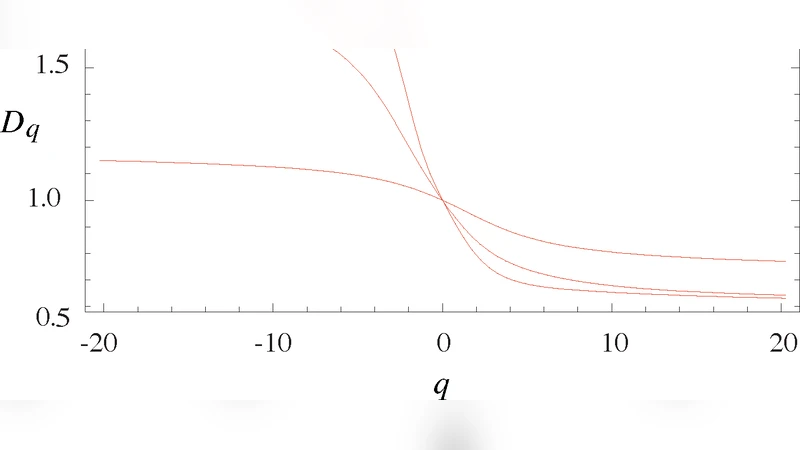
In a toroidal plasma confined by a purely toroidal magnetic field the plasma transport is governed by electrostatic turbulence driven by the flute interchange instability on the low-field side of the torus cross section. In this paper we revisit experimental data obtained from the Blaamann torus at the University of Tromso. On time-scales shorter than the poloidal rotation time, the time series of potential and electron density fluctuations measured on stationary Langmuir probes essentially reflect the spatial poloidal structure of the turbulent field (Taylor hypothesis). On these time scales the signals reveals an intermittent character exposed via analysis of probability density functions and computation of multifractal dimension spectra in different regimes of time scales. This intermittency is associated with the shape and distribution of pronounced spikes in the signal. On time scales much longer than the rotation period there are strong global fluctuations in the plasma potential which are shown to to be the result of low-dimensional chaotic dynamics.
💡 Research Summary
**
This paper revisits experimental data from the Blaamann torus, a simple toroidal plasma device that is confined solely by a toroidal magnetic field. In such a configuration the dominant transport mechanism is electrostatic turbulence driven by the flute‑type interchange instability on the low‑field side of the torus cross‑section. The authors analyse long time series of plasma potential and electron density obtained with stationary Langmuir probes, focusing on two distinct temporal regimes.
On time scales shorter than the poloidal rotation period (τ < T_rot) the Taylor hypothesis is applicable: the temporal fluctuations measured at a fixed probe are essentially a spatial cut through the rotating turbulent structure. In this regime the signals are dominated by sharp, intermittent spikes whose amplitudes can exceed the background level by a factor of five to ten. Probability density functions (PDFs) of the increments reveal heavy tails far from Gaussian, indicating that extreme events are far more probable than would be expected from ordinary turbulence. To quantify the intermittency the authors compute structure functions S_q(τ)=⟨|ΔX(τ)|^q⟩ for orders q = 1–6 and extract scaling exponents ζ(q). The ζ(q) curve is markedly nonlinear, and the corresponding multifractal spectrum D_q = ζ(q)/(q‑1) decreases with increasing q, confirming that the turbulence possesses a multifractal hierarchy of structures. In physical terms, the short‑scale dynamics are governed by localized, bursty interchange blobs that transport particles and energy across magnetic surfaces in a highly non‑uniform fashion.
On longer time scales (τ ≫ T_rot) the plasma potential exhibits large‑amplitude, low‑frequency fluctuations that are not simply the superposition of many independent spikes. By reconstructing the phase space using delay embedding (embedding dimension m ≈ 5, delay τ_d ≈ T_rot/2) the authors identify a low‑dimensional attractor. The correlation dimension D_2 is found to be ≈ 2.1, and a positive maximal Lyapunov exponent (λ_max ≈ 0.03 ms⁻¹) is measured, both hallmarks of deterministic chaos. Thus, the global potential dynamics are governed by a small number of coupled nonlinear degrees of freedom rather than by high‑dimensional stochastic noise.
The coexistence of these two regimes leads to a nuanced picture of transport in a simple toroidal plasma. At sub‑rotation scales, intermittent spikes associated with the interchange instability produce bursty, non‑diffusive transport events that dominate the instantaneous particle and heat flux. At super‑rotation scales, the low‑dimensional chaotic evolution of the global potential modulates the overall confinement and can give rise to long‑range correlations in the transport coefficients. The authors argue that a comprehensive transport model must therefore incorporate both multifractal intermittency and low‑dimensional chaotic dynamics.
Methodologically the work demonstrates the value of combining traditional statistical tools (PDFs, power spectra) with modern nonlinear analysis (multifractal spectra, correlation dimension, Lyapunov exponents) to uncover hidden structures in plasma turbulence. The findings have practical implications for the design of toroidal confinement devices: controlling the intermittent spikes (for example, by tailoring the magnetic shear or adding a poloidal field component) could reduce bursty transport, while understanding the chaotic backbone may help in predicting and possibly stabilising long‑term potential drifts.
In conclusion, the paper provides a clear experimental demonstration that even in a geometrically simple torus, plasma fluctuations exhibit a rich hierarchy of dynamics—intermittent, multifractal bursts on short scales and low‑dimensional chaos on long scales. This dual nature challenges models that rely on a single statistical description and points toward a more integrated approach for predicting transport in magnetically confined plasmas.
Comments & Academic Discussion
Loading comments...
Leave a Comment