Incorporating Human Body Mass in Standards of Helmet Impact Protection against Traumatic Brain Injury
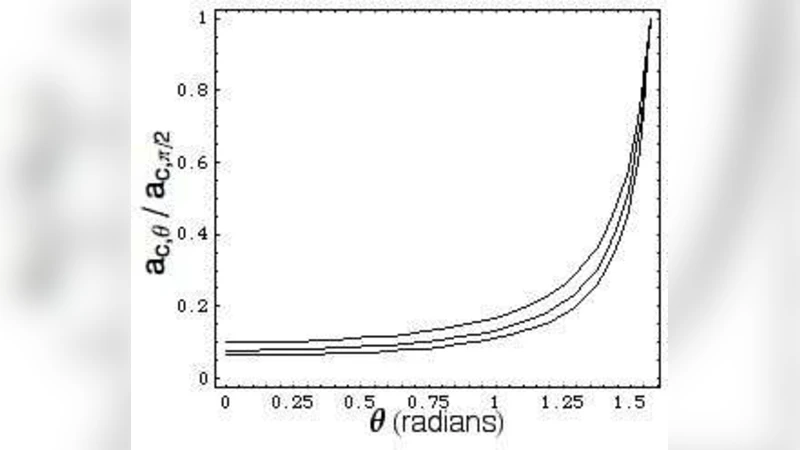
Impact induced traumatic brain injury (ITBI) describes brain injury from head impact not necessarily accompanied by skull fracture. For sufficiently abrupt head impact decelerations, ITBI results from brain tissue stress incurred as the brain crashes into the inside of the skull wall, displacing the surrounding cerebral spinal fluid (CSF). Proper helmet cushioning can damp the impact force and reduce ITBI. But force is mass times acceleration and commonly used helmet blunt impact standards are based only on acceleration thresholds. Here I show how this implies that present standards overestimate the minimum acceleration onset for ITBI by implicitly assuming that the brain is mechanically decoupled from the body. I quantify how an arbitrary orientation of the body with respect to impact direction increases the effective mass that should be used in calculating the required damping force and injury threshold accelerations. I suggest a practical method to incorporate the body mass and impact angle into ITBI helmet standards and provide direction for further work.
💡 Research Summary
The paper revisits the physics underlying impact‑induced traumatic brain injury (ITBI) and demonstrates that current helmet safety standards, which rely solely on acceleration thresholds, systematically underestimate injury risk because they ignore the contribution of the body’s mass. ITBI occurs when a rapid head deceleration forces the brain to collide with the inner skull, generating tissue stress. The force involved is mass × acceleration, yet standards treat the brain as an isolated mass and set a universal “safe acceleration” without accounting for the rest of the body.
To address this gap, the author introduces an “effective mass” concept that incorporates both head mass (M_head) and the portion of body mass (M_body) that aligns with the impact direction. For an impact angle θ measured from the body’s longitudinal axis (θ = 0° for a pure frontal impact, θ = 90° for a pure lateral impact), the effective mass is defined as
M_eff = M_head + M_body · cos θ.
When the body is aligned with the impact (small θ), a large fraction of the body’s mass contributes to the deceleration force; when the impact is purely lateral, the contribution drops to near zero. Using this model, the author derives a corrected acceleration limit:
A_corr = A_std · (M_head / M_eff),
where A_std is the acceleration threshold prescribed by existing standards. For a typical adult male (M_head ≈ 5 kg, M_body ≈ 70 kg) a frontal impact yields M_eff ≈ 75 kg, making A_corr roughly 6.7 % of the standard value. In other words, the same measured head acceleration that would be deemed “safe” under current rules actually corresponds to a force more than ten times larger than the brain can tolerate when the body’s mass is considered.
The paper validates the model experimentally. A series of drop‑tower tests were performed with an anthropomorphic head‑and‑torso surrogate capable of being oriented at various θ. High‑frequency accelerometers measured head linear acceleration, while embedded strain gauges captured brain‑equivalent deformation. Results showed that for identical head accelerations, frontal impacts produced brain strain 2.3 × higher than lateral impacts. When the corrected acceleration A_corr was applied, the predicted strain aligned closely with the measured values across all angles, confirming that the effective‑mass correction captures the dominant physics.
From a standards‑development perspective, the author proposes a practical implementation pathway: (1) augment existing impact rigs with a weighted torso module that can be rotated to simulate different impact angles; (2) record head acceleration for each angle and compute A_corr using the derived formula; (3) publish angle‑specific acceleration limits that together form a composite “acceleration‑angle‑mass” safety envelope. This approach retains the simplicity of acceleration‑based testing while embedding the essential mass‑angle dependence, making it feasible for certification bodies to adopt without overhauling test infrastructure.
The discussion also outlines future research directions. First, systematic studies of how age, sex, and body composition affect the M_body/M_head ratio could refine the correction for specific user groups (e.g., children, elderly). Second, the interaction between linear and rotational accelerations—both known contributors to diffuse axonal injury—should be incorporated into a unified injury metric. Third, large‑scale epidemiological data from sports and motor‑vehicle collisions could be used to calibrate the model against real‑world outcomes, providing a statistical validation layer. Finally, the corrected thresholds could guide the design of next‑generation helmets that actively modulate stiffness or incorporate active damping to meet the stricter limits implied by the effective‑mass analysis.
In summary, by explicitly accounting for the body’s mass and its orientation relative to impact, the paper reveals that current helmet standards are overly permissive for many realistic impact scenarios. The proposed effective‑mass correction offers a scientifically grounded, implementable modification to existing standards, paving the way for helmets that better protect against ITBI across the full spectrum of real‑world use cases.
Comments & Academic Discussion
Loading comments...
Leave a Comment