Wireless Broadcast with Network Coding in Mobile Ad-Hoc Networks: DRAGONCAST
Network coding is a recently proposed method for transmitting data, which has been shown to have potential to improve wireless network performance. We study network coding for one specific case of multicast, broadcasting, from one source to all nodes…
Authors: ** Song Yean Cho, Cédric Adjih **
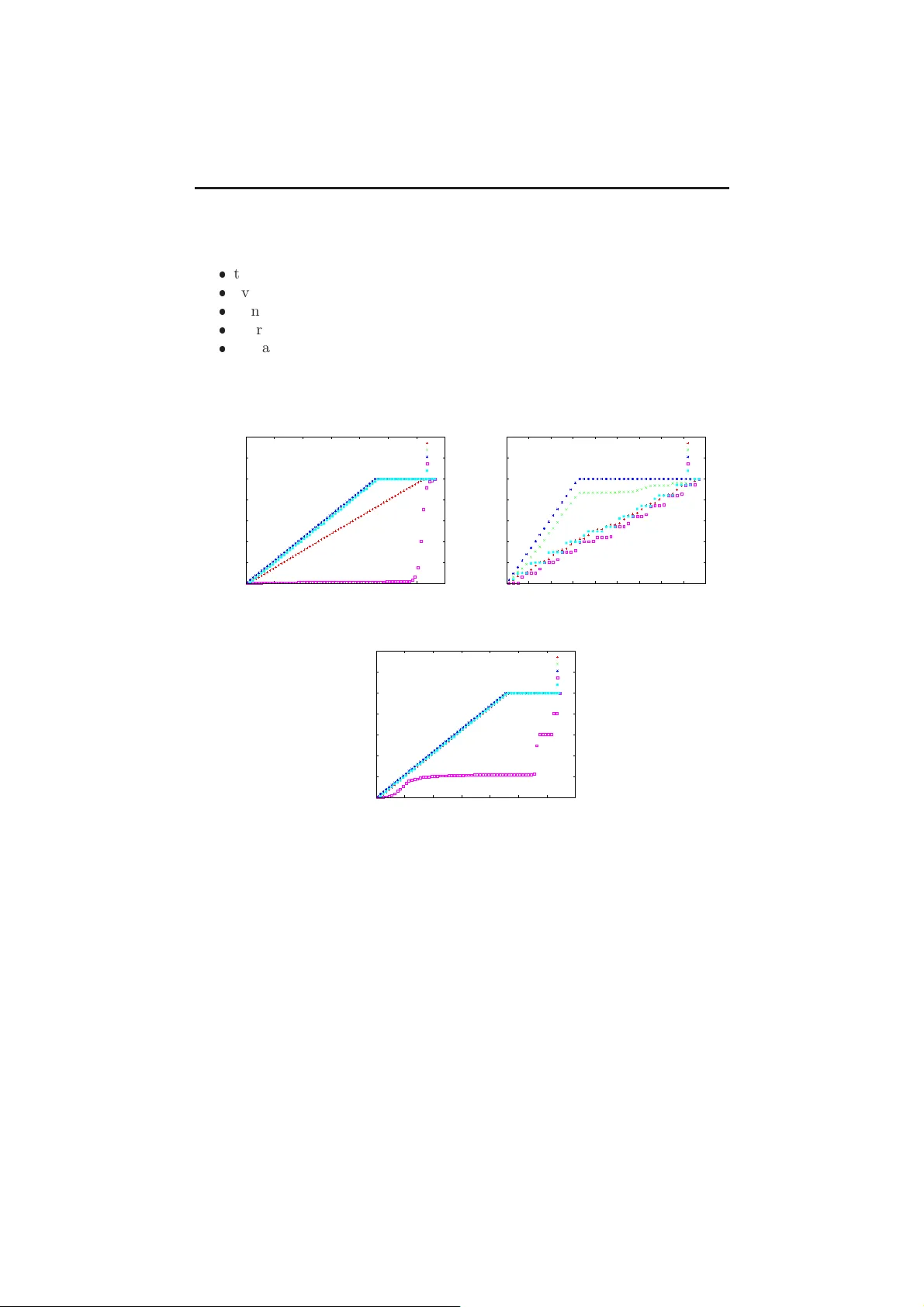
apport de recherche ISSN 0249-6399 ISRN INRIA/RR--6569--FR+ENG Thème COM INSTITUT N A TION AL DE RECHERCHE EN INFORMA TIQUE ET EN A UTOMA TIQUE W ireless Broadcast with Netw ork Coding in Mobile Ad-Hoc Netw orks: DRA GONCAST Song Y ean Cho, Cédric Adjih N° 6569 July 2008 Centre de recher che INRIA Paris – Rocquencour t Domaine de V oluceau, Rocquen court, BP 105, 78153 Le Chesnay Cedex Téléphone : +33 1 39 63 55 11 — Téléco pie : +33 1 39 63 53 30 Wireless Broadcast with Net w ork Co ding in Mobile Ad-Ho c Net w orks: DRA G ONCAST Song Y ean Cho, C´ edric Adjih Th` eme COM — Syst` emes communican ts ´ Equip e-Pro jet Hiperco m Rapp ort de recherche n ° 6569 — July 2008 — 23 pages Abstract: Net work co ding is a recently prop ose d metho d for tra nsmitting data, which has be e n shown to hav e p o tent ial to improv e wireless netw ork p er- formance. W e study net work coding for one sp ecific cas e of multicast, broad- casting, fr om one source to all no des of the netw ork. W e use netw ork co ding a s a los s toler ant, energy - efficient, metho d for bro ad- cast. Our emphasis is on mobile netw orks . Our contribution is the prop osa l of DRA GONCAST, a proto co l to perform net work co ding in suc h a dynamically evolving environmen t. It is based on three building blo cks: a metho d to per mit real-time deco ding of net work co ding, a metho d to adjust the net w ork co ding transmission rates , and a metho d for ensur ing the termination of the broadcast. The per formance and b ehavior of the metho d are explored exp erimentally by sim ulations; they illustr ate the excellent p erforma nce of the pro to c ol. Key-w ords: wireless netw or k s, netw ork co ding, br o adcasting, mu lti-hop, min- cut, hyper graph, control Diffusion dans les r ´ eseaux mobile ad-ho c a v ec le co dage r ´ eseau: DRA G ONCAST R´ esum´ e : Le co dage r´ esea u est une m´ etho de q ui a ´ et´ e prop os´ ee r´ ecemment, et don t le po ten tiel po ur am´ elio r er les p erfor mances des r´ e seaux sans fil a ´ e t´ e d´ emo ntr´ e. Dans ce rapp ort, nous ´ etudions le co da g e r´ eseau p o ur un ca s sp´ ecificique de communication multicast, la diffusion, d’une so urce ` a tous les no euds du r´ e seau. Nous utilisons le co da ge r´ eseau comme une m´ etho de de diffusion qui est tol´ erante aux p ertes de messages, et est aussi efficace en ´ energie. Notre contri- bution est la prop osition de DRA GONCAST, un pr o to cole utilisan t le co dag e r´ eseaux dans des environements ´ evoluan t dynamiquement. Il est bas ´ e sur trois briques: une m´ etho de qui p ermet le d´ ec o dage en temps r´ eel du coda ge r´ eseau, une m´ etho de p our a juster les d´ ebits des retr ansmissions, et une m´ etho de p our garantir la termina ison de la diffusion. La pe rformance et le comp ortement de la m ´ etho de sont explor´ es exp ´ er imen talement par des simulations: elles illustrent l’excellente p erformance du proto co le. Mots-cl´ es : r´ eseaux sans fil, coda ge de r´ esea u, diffusion, mult i-sa uts, coupe minimale, h yp ergr aphe, contrˆ ole WNC Br o adc ast in MANETs: DRAGONCAST 3 Con ten ts 1 In tro duction 4 2 Practical F ramew ork for Net work Co ding 5 2.1 Linear Co ding and Random Linear Co ding . . . . . . . . . . . . 5 2.2 Decoding, V ector Space, and Rank . . . . . . . . . . . . . . . . . 5 2.3 Rate Selection . . . . . . . . . . . . . . . . . . . . . . . . . . . . . 6 3 Theoretical P erformance of Wi reless Net w ork Co ding 6 4 Our Approac h: DRA GONCAST 7 4.1 F ramework for Bro adcast with Netw o rk Co ding . . . . . . . . . . 7 4.2 SEW: Enco ding for Real-time Deco ding . . . . . . . . . . . . . . 7 4.2.1 Overview of Real-time Deco ding . . . . . . . . . . . . . . 7 4.2.2 SEW (Sliding Enco ding Window) . . . . . . . . . . . . . . 9 4.3 DRA GON: Rate Selection . . . . . . . . . . . . . . . . . . . . . . 11 4.3.1 Static Heuristic IRON . . . . . . . . . . . . . . . . . . . . 11 4.3.2 Dynamic Heuristic DRAGON . . . . . . . . . . . . . . . . 11 4.4 T ermination P r oto col . . . . . . . . . . . . . . . . . . . . . . . . . 13 4.5 Pro o f of conv ergenc e o f DRAG ONCAST . . . . . . . . . . . . . . 13 5 Ev aluation Metrics for Experi men tal Results 15 5.1 Metric for E ner gy-efficiency . . . . . . . . . . . . . . . . . . . . . 16 5.2 Energy-efficiency reference po int fo r r outing . . . . . . . . . . . . 16 5.3 Real-Time Deco ding . . . . . . . . . . . . . . . . . . . . . . . . . 17 6 Exp erimental Res ults 17 6.1 Real-Time Deco ding: Effects of SEW . . . . . . . . . . . . . . . . 17 6.2 Efficiency and Rea d- Time Deco ding . . . . . . . . . . . . . . . . 19 7 Conclusion 21 RR n ° 6569 4 Song Y e an Cho, C´ edric A djih 1 Int ro duction The concept of n etwork c o ding , where intermediate no des mix informa tion from different flows, was introduced by seminal work from Ahlswede, Cai, L i and Y eung [1]. Since then, a rich litera ture has flourished for b o th theoretical and practical asp ects. In particular , sev eral results hav e es tablished net work co ding as an efficient method to broa dcast data to the whole wireless netw ork s (see Lun et al. [6] or F ragouli et al. [16] fo r instance), when efficiency consists in: minimizing the total num b er o f pack et transmissio ns for broadca sting from the source to all no des of the netw ork. F r om an informa tion-theoretic p oint of view, the c a se of broadca st with a single so urce in a s ta tic netw ork is well understo o d, s ee for instance Deb. et al [2 2] or Lun et a l. [3] and their referenc e s . In pra ctical netw or k s, the simple metho d r andom line ar c o ding from Ho et a l. [2] may b e used but several features sho uld b e added. Examples of practical pro to cols for multicast, are Co deCast from Park et al. [23] or MO RE o f Chach ulski e t al. [8]. Three practica l features that this article address es a re: real-time deco ding, ter mination, and retransmiss io n rate. • Real-time dec o ding: one desira ble feature is the ability to deco de without waiting for the who le set of (co ded) pa ck e ts from the source b eforehand: this has bee n previously a chiev ed by slicing the source stre a m in successive sequences of pack ets, called gener ations, a nd b y exclusively co ding pa ck e ts of the same generation together (as in Chou et al. [7], Co decast [23], and MORE [8]). Then deco ding is p erfor med genera tion per generation. • T ermination: a seco nd rela ted feature is the ability to b e able to get and dec o de all pack ets, at the end of the trans mis s ion or generation, even in cases w ith mobility and pack et losses . A sp ecific proto col may b e added: a termination proto col. • Retransmission (rate): this is related to functioning of random linea r co d- ing. Every node receives pack ets, and from time to time, will retra nsmit co ded pack ets. As indicated in section 3, the optimal retra nsmission fixed rates may be computed for static netw o rks ; how e ver in a mobile netw orks changes of top ology w ould cause optimal r ates to evolve contin uously 1 . Hence a net w ork co ding so lution should incorp orate a n algo rithm to determine when to retrans - mit packet s and how ma n y o f them, such as the o nes in F rago uli et al. [1 6], or MORE [8 ]. In this article, we prop ose a proto col for broadcas t in wir eless netw orks: DRA GONCAST. It provides the thre e previous features in a novel way and is based on simplicity and universality . Unlike previous approaches, it do es no t use explicitly or implicit knowledge relative to the top olog y (such as the dir ection or distance to the source , the loss r ate of the links, . . . ), hence is per fectly suited to ad-ho c netw orks with high mobility . It uses piggybacking o f no de state information on co ded pac kets. O ne co r - nerstone o f DRAGONCAST is the real-time deco ding metho d, SEW (Sliding Enco ding Window): it do e s not use the concept of generatio n; instead, the knowledge of the state of neighbors is used to cons tr ain the cont ent of gener- ated co ded pack ets. The other cornersto ne of DRAGONCAST is a rate adjust- men t method: every no de is retransmitting co ded pac kets with a certain rate; 1 also when loss probabilities evolv e in a unkno wn manner INRIA WNC Br o adc ast in MANETs: DRAGONCAST 5 this rate is adjusted dyna mically . E ssentially , the rate of the node increases if it detects some node s that lack to o ma n y co ded pack ets in the curr ent neigh- bo rho o d. This is called a “dimens ion g ap”, and the adaptation alg orithm is a Dynamic Rate Adjustmen t from Gap with Other Nodes (DRA GON). Finally , a termination pr oto col is integrated. The rest of the pap er is org anized as follows: section 2 provides some back- ground a bo ut netw ork co ding in pra ctical asp ects, section 3 presents some in theoretical a sp ects, section 4 de ta ils o ur appro a ch and pr oto cols, section 5 ex- plains ev aluatio n metrics, section 6 a nalyzes p erforma nc e from exp erimental results a nd se c tio n 7 concludes. 2 Pr actical F ramew ork for Net w ork Co ding In this section, we presen t the known practica l framework for net w ork co ding (see also F ragouli et al. [17] for tutorial) that is us e d in this a rticle. 2.1 Linear Co ding and Random Linear Co ding Net work co ding differs fro m classica l routing b y p ermitting co ding a t interme- diate no des. One p o ssible co ding a lgorithm is linea r co ding that pe r forms o nly linear tr a nsformations through addition and multiplication (see Li et al. [1 3] and Ko etter et al. [15]). Prec is ely , linear co ding a s sumes identically sized pack- ets and view s the pack e ts as vectors on a fixed Ga lois fie ld F n q . In the case of single source multicasting, all pack ets initially origina te from the source, and therefore any co ded pack et received at a node v a t any point of time is a linear combination of some source pack ets as: i th received co ded packet at no de v : y ( v ) i = j = k X j =1 a i,j P j where the ( P j ) j =1 ,...,k are k pack ets gener ated fr om the sour ce. The sequence of co efficients fo r a co ded pack et y ( v ) i (denoted “informa tio n v ector”) is [ a i, 1 , a i, 2 , . . . , a i,n ] (denoted “ global enco ding vector”). When a no de generates a co ded pack e t with linear coding , an issue is how to select co efficients. Wher eas centralized deterministic metho ds exist, Ho a nd al. [2] presented a novel co ding alg o rithm, which do es not req uire an y cen tral co ordination. The co ding algorithm is ra ndom line ar c o ding : when a node transmits a pack et, it co mputes a linea r combination of all data p ossess with randomly selected co efficients ( γ i ), and sends the result of the linear combi- nation: co ded pack et = P i γ i p ( v ) i . In pra ctice, a s pecia l header containing the co ding vector o f the tr ansmitted pa ck et ma y b e added as prop osed by Cho u et al. [7]. 2.2 Deco ding, V ect or Space, and Rank A node will recov er the so urce pac kets { P j } from the received pack ets { p ( v ) i } , considering the matrix of co efficients { a i,j } in section 2.1. Deco ding amounts to inv erting this ma tr ix, for instance with Gaussia n elimination. Thinking in terms o f coding vectors, a t an y point of time, it is poss ible to asso ciate with one no de v , the ve ctor sp ac e , Π v spawned by the co ding vectors, RR n ° 6569 6 Song Y e an Cho, C´ edric A djih and which is identified with the matrix. The dimension of that vector space, denoted D v , D v , dim Π v , is also the r ank of the matrix. In the rest of this article, by abuse o f language , we will ca ll r ank o f a n o de , that rank a nd dimen- sion. The rank of a no de is a dir ect metric for the amount of useful received pack ets, and a received pack et is called innovative when it increases the rank of the receiving no de. Ultimately a no de can deco de all source packets when its rank is equal to the the total num b er o f so ur ce pa ck ets ( gener ation size ). See also [16, 7 ]. When ano de will rec ov er the so urce pack e ts at once only at the e nd of net work co ding transmission, the deco ding pro cess is called as “blo ck de c o ding” . 2.3 Rate Selection When using random linear co ding, the rate of ea ch no de sho uld be decided. F or static netw orks, the optimal rates with resp ect to either energy - efficiency , or capacity maximization may be computed a s in the references in section 3. F o r dy na mic netw orks, the rate may evolves with time, a nd in our framework we assume a “ra te selection a lgorithm”: at every p oint of time, the algo rithm is deciding the rate of the no de. W e denote V the set o f no des, and C v ( τ ) the r ate of the no de v ∈ V at time τ . Then, ra ndom linear co ding op erates as indica ted on algorithm 1. Algorithm 1 : Random Linear Co ding with Rate Selection Source sc heduling: the source trans mits sequentially D v ectors 1.1 (pack ets) with rate C s . No des’ start and stop conditions: The no des star t transmitting 1.2 when they receive the first vector but they co nt inue transmitting unt il themselves and their curren t nei gh b ors hav e enough vectors to recov er the D source packets. No des’ s c heduling: every no de v retransmits linear com binations of the 1.3 vectors it has, and waits for a delay computed from the rate distribution. With this s chedulin g of Algorithm 1, the changing pa r ameter is the de- lay , and w e c hoo se to compute it as an approximation fro m the rate C v ( t ) as: delay ≈ 1 / C v ( t ). 3 T heoretical P erformance of Wireless Net w ork Co ding F o r s tatic netw orks, several impor tant results exist for netw ork co ding in the case o f sing le sour c e m ulticast. First, it has b een shown that the simple metho d of r andom line ar c o ding from Ho et al. [2] co uld asymptotica lly achieve maxima l multicast capacity (optimal per formance), and a lso o ptimal ener gy-efficiency (see [6]). Second, for ener gy- efficiency , o nly the average ra tes of the nodes are relev a n t. Third, the optimal av erage rates ma y b e found in p olynomial time with linear pr o grams as with INRIA WNC Br o adc ast in MANETs: DRAGONCAST 7 W u et a l. [5] Li et al. [4], Lun et al. [6] 2 . Last, p erfor ming r andom linea r co ding, with a sour ce rate slightly low er than the maximal one , will allow to deco de all pack ets in the long run (when time gr ows indefinitely , see [1 9, 3]). F o r mobile ad-ho c net w ork s, if one desires to us e the optimal rates at an y po int of time, an issue is that they ar e a function of the topo logy , whic h should then a ls o b e p erfectly known. 4 Ou r A p proac h : DRA GONCAST As men tioned in section 1, our con tribution is a metho d for broadc a st fro m a single so urce to the en tire netw o rk with net work co ding. It is bas e d on known pr inciples des crib ed in section 2 .3 ; and the general framework of our proto co l is described in sectio n 4.1. There are three comp o- nent s in this framework: SEW, a co ding metho d to allow real-time deco ding of the pack ets, de- scrib ed in section 4.2. DRA GON, a ra te selection algor ithm, pro p o s ed in [9] (extended version in [10]) and summarized in sectio n 4.3 A termina tion proto co l describ ed in section 4.4. 4.1 F ramew ork for Broadcast with Netw ork Co ding In this section, w e briefly describ e our practical framew ork for broadcast pro- to cols. It assumes the use of rando m linear co ding. It further details the ba sic op eration presented on algo rithm 1, and app ear s in a lgorithm 2. As describ ed in algor ithm 2, the source initiates broadca sting by s e nding its fir s t or iginal data pa ckets. O ther no des initiate transmission of enco ded data up o n receiving the first co ded pack et, and stay in a tra nsmission state where they will tr a nsmit pa ck ets with an interv al decided b y the rate selection algorithm. Upo n detectio n of termination, they will stop transmitting. 4.2 SEW: Enco ding for Real-time Deco ding In this section, we prop ose a metho d for real-time deco ding, whic h allows re- cov ery of some s o urce pack ets without r equiring to deco de all source pack ets a t once. This section is organized as follows: we first explain the deco ding pro - cess and the c oncept of rea l-time deco ding in section 4 .2.1, then intro duce our metho d for real- time deco ding its e lf in section 4.2.2. 4.2.1 O v erview of Real-time Decoding In this section, we explain the genera l deco ding pro ces s. Deco ding is a pro ces s to recov er the source pack ets fro m ac c umulated co ded packets inside a no de. 2 “optimal”, again, in the sense of energy-efficiency , an d assuming transmissi ons without int erferences – with our l inear cost model, ene rgy-efficiency is inv ariant by a scaling of the rates, hence we ar e assuming that the rates are scaled to b e well b elow c hannel capacit y . Therefore, the capacity l i mits of the wireless medium and the impact of interferences or of the scheduling, are a p eripherical i ssue for this perticular pr oblem of energy-efficiency , whi c h is en tirely different from the issue of m aximu m capacit y , and from practical issues when the source has an imm utable rate RR n ° 6569 8 Song Y e an Cho, C´ edric A djih Algorithm 2 : F ramework for Broa dcast with Net work Co ding Source data transmission sc he d ul ing: the source transmits 2.1 sequentially D vectors (pack ets) with rate C s . No des’ data transmission start condition: the no des sta r t 2.2 transmitting a vector when they re c eive the first vector. No des’ data storing condition: the no des store a received vector in 2.3 their lo cal buffer only if the received vector has new and differ e n t information fr om the vectors that the no des already have. No des’ term i nation condi tions: the no de s contin ue tr a nsmitting unt il 2.4 themselves and their curren t known neigh b ors in their lo cal information base have enough vectors to recov er the D sour ce pac kets. No des’ data transmission sc heduling: every no de retransmits linear 2.5 combinations of the vectors in its lo ca l buffer a fter waiting for a delay computed fr om the rate selection. No des’ data transmission restart condition: When one no de 2.6 receives a notification indicating that one neighbo ring no de requires mo re vectors to recover the D source pack ets and it has alrea dy stopp ed da ta transmission, the no de re-enters in a trans mission state. As explained in section 2 .1, any r eceived co de d pack ets are orig ina ted from the source, and are a set o f linear com binations of the original source pack ets a s represented in Fig. 1(a). In Fig. 1 (a ), ( P j ) j =1 ,...,k are k packets genera ted from the sourc e , and the set { y ( v ) i } is the set of pack e ts tha t w ere received by a node v . The sequence of co efficients for y ( v ) i , [ g i, 1 , g i, 2 , . . . , g i,k ] is the glob al enc o ding ve ctor of co ded packet ( y ( v ) i ). Considering the matr ix of co efficients [ g i,j ] of a set of c o ded pa ck e ts inside a no de, a no de ca n recov er the s ource pack ets [ P j ] from the accumulated pack ets [ p ( v ) i ] if the matrix o f co efficients has full r ank. Then, deco ding amounts to inv e r ting this matrix , for insta nce with Gaussian elimination as seen in Figure 1(b). (a) A set of co ded pack ets in a lo cal buffer of a no de (b) Deco ding with Gaussian El imination with k=n Figure 1 : Deco ding at a No de In the worst case, a no de may hav e to wait un til it has sufficient infor mation to deco de a ll pac kets at once (blo ck deco ding). Because blo ck deco ding delays recov ery of sourc e pack ets unt il the rank of a no de reaches at lea s t the genera tion size, the delay could be rather large. In order to shorten the delay o f the blo ck deco ding, Chou et al. [7 ] suggested that a n early deco ding process co uld INRIA WNC Br o adc ast in MANETs: DRAGONCAST 9 be p ossible by recov ering some sour ce pa ckets b efore a no de rec eives enough data for blo ck deco ding, but did not sp ecify a metho d to ensur e it. The early deco ding pro cess us es the fact that pa rtial dec o ding is poss ible [7] if a subset of enco ding v ectors co uld b e comb ined b y Gaussian elimination, yielding a low er triangular part of the matr ix as seen in Fig. 2. No tice that pack ets forming the low er tr iangular part do not need to b e on sequential r ows inside the no des’ buffers and rows o f the pack et could b e non-co nt inuous in a matrix o f the global enco ding vectors and informatio n vectors. Figure 2 : Low T riangle in Global E nco ding V ectors in Lo ca l Buffer An explicit mechanism to p ermit for early deco ding is use ful, since when the source rate appr oaches its “maximum broadcast rate”, in o ther terms as the source rate approaches optimality , the pro bability of b eing able to partially deco de after a fixed time decr eases (as implied by [19]). 4.2.2 SE W (Sliding Encodin g Window) In this s ection, we intro duce our real-time deco ding method, Sliding Enco ding Window (SEW). In order to enable re al-time deco ding, it ensur es the existence of a low tr iangle in global enco ding vectors sav ed in a no de. Hence the existence of a n ear ly deco dable par t a s in Fig. 2. Our approach is delib er a tly simpler than most co ding schemes, including for instance L T co des [12], Growth Co des [11] o r opp ortunistic coding approaches such as MORE [8]. Our rationale s ta rts from the observ ation that according to [3] for instance, ra ndom linea r coding is assymptotically capacity-ac hieving ; in other words, in theo ry , a sophistica ted co ding scheme is not nec e s sary (ig- noring the header overhead). Our intuition, is that adding simple constraints (the ones in SEW) to random linea r co ding , we will still b e able to be able to per form near to the performa nc e of random linear co ding (which is asymptoti- cally optimal). Compa red to other appr o aches, SE W has the a dded b enefit of making few ass umptions on the communication characteristics (loss proba bil- it y , stationar it y , average num b e r of neighbors , dir ection of the s o urce or of the destinations, . . . ). RR n ° 6569 10 Song Y e an Cho, C´ edric A djih The k ey of SEW, is to ensure the existence of an ear ly deco ding part, and to do so, the metho d SEW relies on tw o prop erties: Principles of SEW: SEW co ding rule: gener ates only co ded pack ets that are linear com- binations of the first L so urce pack ets, where L is a quantit y that increases with time. SEW deco ding rule: when deco ding, p erfor ms a Gaussian e limination, in such a w ay that one co ded pack et is only used to eliminate the so ur ce pack et with the highest p ossible index (i.e. the latest sourc e pa ck et). Before detailing the insig ht s b ehind these rules, we fir st define nota tions: the high index of a no de, I high , and the low index of a no de, I low . As expla ined in s e c tion 4.2.1, a co ded packet is a linear combination o f sourc e pa ck ets. If we assume that the most recently generated s ource packet has alwa ys the highest se quen c e n umb er , that is if the source is s uccessively sending pack ets P 1 , P 2 , P 3 , . . . with sequence num b er s 1, 2, 3, . . . , then it is meaningful to identify the highest and lowest such s equence n umber in the global encoding vector o f any co ded pack et. Let us refer to the hig hes t a nd lowest sequence num b ers as: highest a nd low est index of the co ded pack et r e spe c tiv ely . F or ins tance, a packet y = P 3 + P 5 + P 7 + P 8 , the highest index is 8 and the lowest index is 3. Because all enco ded pack ets ha ve their own highest index and lowest index, we can also compute the ma ximum of the hig hes t index of a ll not-y et deco ded pack ets in a no de, as w ell as the minimum of the low est index. W e refer to the maximum and the minim um as high index ( I high ) of a no de and low index ( I low ) of a no de. Notice that a no de will generally ha ve decoded the s ource pack ets from 1 up to its low index. The in tent of the SEW coding rule is to use knowledge about the sta te of neighbors of o ne node, namely their high and low index . A no de restricts the generated pack ets to a subset of the packet s of the source, until it is confir med that p erceived neighbor s o f the no de are able to decode nearly all of them, up to a margin K . Notice that once all its neighbor s ma y deco de up to the first L − K pac kets, it is unnecessary for the no de to include pack ets P 1 , . . . P L in its generated combinations. Hence, the general idea o f SEW is tha t it restr icts the mixed orig inal pack ets within an encoded pack et from a windo w of a fixed size K . In other words, a no de e nco des only source pack ets inside a fixed Enco ding Window a s: i th co ded pack et at no de v : p ( v ) i = j = k + K X j = k a i,j P j where the ( P j ) j = k,... ,k + K are K pack ets gener ated from the sourc e . The se- quence of co efficients for p ( v ) i is the following global enco ding vector: [0 , 0 , . . . , a i,k , a i,k +1 , . . . , a i,k + K , . . . , 0 , 0]. A no de will rep eat transmissions of new random combinations within the same window, until its neig h b ors hav e progre s sed in the deco ding pro cess. The inten t of the SE W deco ding rule, is to guarantee prop er functioning of the Gaussian elimination. An example of SEW decoding rule is the following: assume that no de v has received pa ck ets y 1 and y 2 , for instance y 1 = P 1 + P 9 and y 2 = P 1 + P 2 + P 3 . Then y 1 would b e use d to eliminate P 9 for newly incoming pack ets (the highest p ossible index is 9), and y 2 would b e used to eliminate INRIA WNC Br o adc ast in MANETs: DRAGONCAST 11 P 3 from fur ther inco ming packets. O n the contrary , if the SEW deco ding rule was not a pplied and if y 1 were used to eliminate P 1 , then it would b e used to eliminate it in y 2 , and would result into the computation of y 2 − y 1 = P 2 + P 3 − P 9 ; this quantit y now requires eliminatio n of P 9 , an higher index than the initial one in y 2 . In contrast the SEW deco ding rule guara n tees the following in v aria nt: during the Gaussian elimination pro cess, the hig hest index of every currently non-deco ded pa ck e t will always sta y identical or decreas e. Provided that neighbor state is pr o pe r ly exchanged and k nown, as a result, the combination of the SEW co ding rule and the SEW deco ding rule, guarantee that ultimately every no de will be a ble to deco de the packets in the w indow starting from its low est index; that is, they guara nt ee ear ly deco ding. Notice that improp er knowledge o f neighbor sta te might impact the p erfor- mance of the metho d but not its corre ctness: if a previously unknown neighbor is detected (for instance due to mo bilit y), the receiving node will prop erly ad- just its sending window. Conv ersely , in DRA GONCAST, obso lete neig h b or information, fo r instance ab out disapp eared neighbors, will ultimately expire. 4.3 DRA GON: Rate Selection In this s e ction, w e describ e r ate s election a lgorithms whic h complement the real-time deco ding metho d SEW, in the framework we previously pr op osed. Precisely , we introduce our cor e he ur istic for rate selec tio n, DRAGON. Be- fore that, we desc r ib e a simplified rate selection, IR ON, which is used la ter in simulations for reference, and that would appro ach the algebraic g ossip method of Deb et al. [1 5] in netw orks with high mo bilit y . These heur istics do not ass ume a sp ecific t yp e of netw ork top olog y; the only assumption is that one transmission r eaches several neighbor s at the s a me time. 4.3.1 Static Heuris tic IR ON The r eference heur istic, I RON, s tarts fro m the simple logic of setting the sa me rate on every no de: for instance let us assume that the every no de has an ident ical rate a s one, e.g. a pa ck e t p er a second. Now we further optimistically assume that near- optimal energy-efficiency is achiev ed and that every tr ansmission w ould br ing innovative informatio n to almost every rece iver, and w e denote M the average num ber of neig h b ors of a no de in the mobile netw or k . Then every no de will rec e ive on average M packets a seco nd. Hence the source should inject a t least M pac kets p er a seco nd. This constitutes the heuristic IRON: IRON (Iden tical Rate for Other No des than so urce): every no de retra ns- mits with the same rate, except from the source which has a rate M times higher. 4.3.2 Dynami c Heuris tic DRA GON The heuristic DRAGON has b een prop os e d and ana lyzed in [9] and [1 0]. W e briefly summar ize it in this s ection for completeness. The s tarting p oint of o ur heuristic DRA GON, is that the observ ation that, for real-time deco ding, the rank of no des inside the net work should b e clos e to RR n ° 6569 12 Song Y e an Cho, C´ edric A djih the index of the last source pa cket, and that in any case, they should at leas t evolv e in parallel. Thu s, o ne would exp ect the rank of a no de to g r ow at the same pace as the source transmissio n, as in the exa mple of optimal ra te selections f or static net works (see section 3). Decreas ing the rates o f in termediate no des by a to o large facto r , would not p ermit the prop er propa gation of source packets in real time. On the contrary , increasing exce ssively their rates, would not incr e ase the rate of the deco ded packets (naturally b ounded by the sour ce rate) while it would decr ease e nergy-efficiency (b y increa sing the amo un t of redundant tra ns - missions). The idea of the prop os ed rate selection is to find a balance b et ween these tw o inefficient states . As we have seen, idea lly the r ank of a no de would b e compar a- ble to the lastly sent so urce pack et. Since we wis h to hav e a simple decentralized algorithm, instead o f comparing with the source, we co mpare indirectly the rank of a no de with the r a nk of all its p erceived neighbors . The key idea is to p erform a control so that the rank of neighbor no des would tend to b e equalized: if a no de detects that one neighbo r had a rank which is to o low in compar ison with its own, it would tend to increase its ra te. Conv ersely , if all its neighbors hav e g reater r anks than itse lf, the no de need not to send pack ets in fact. Precisely , let D v ( τ ) denote the rank of a no de v at time τ , and let g v ( τ ) denote the maximum gap of rank with its neighbors, normalized by the n umber of ne ig hbors, that is: g v ( τ ) , max u ∈ H u D v ( τ ) − D u ( τ ) | H u | W e pro po se the following r a te s election, DRA GON, Dynamic R ate Ad apta- tion fr om Gap with Other No des , which adjusts the rates dynamically , based on that g ap of rank b etw een one no de and its neighbors as follows: DRA GON: the r ate of no de v is set to C v ( τ ) at time τ a s: • if g v ( τ ) > 0 then: C v ( τ ) = αg v ( τ ) where α is some co nstant • O therwise, the no de stops sending enco ded pack ets until g v ( τ ) b e- comes la rger than 0 Consider the tota l r ate o f the transmiss ions that one no de would receives from its neighbors: the lo c al r e c eive d r ate . In a static netw ork with the prev ious rate selection: DRA GON ensures that every no de will r eceive a total rate at least equa l to the av erage gap of one no de a nd its neighbors s caled by α . That is, the lo ca l received rate, a t time τ verifies: Lo cal Received Rate ≥ α 1 | H v | X u ∈ H v D u ( τ ) − D v ( τ ) ! This w ould ensure that the ga p with the neighbors would be closed in time ≈≤ 1 α if the neighbors did not r eceive new innov ative pack ets. Notice that this is independent fr om the size o f the g a p: the gr eater the ga p, the higher the rate. Overall, the time for closing the gap would b e iden tical. This is only an informal argument to describe the mechanisms of DRA GON; ho wev er exp erimental res ults in se ction 6, illustra te the prop er b ehavior of the algo rithm, and its sy nergy with SEW. INRIA WNC Br o adc ast in MANETs: DRAGONCAST 13 4.4 T ermination Proto c ol A netw ork co ding pro to c o l for broa dcast requires a terminatio n pro to c ol in order to decide when retrans mis sions of co ded pack ets sho uld stop. Our precise termina ting condition is as follows: when a no de (a source or an intermediate no de) itself and a ll its known neighbors have sufficien t data to recov er all source pack ets, the tr a nsmission stops. This stop condition requires information a bo ut the status o f neighbors including their ranks. Hence, each no de mana ges a lo cal information ba s e to store o ne hop neighbor infor ma tion, including their ra nk s. Algorithm 3 : Br ief Descr iption of Local Information Base Management Algorithm No des’ lo cal info notify sc hedul ing: The no des s tart notifying their 3.1 neighbors of their current rank and their lifetime when they start transmitting vectors. The notification can ge nerally b e piggybacked in data packets if the no des tra nsmit a vector within the lifetime interv al. No des’ lo cal info update scheduling: On receiving no tifica tion of 3.2 rank and lifetime, the r eceivers create or upda te their lo ca l information base by storing the sender ’s ra nk and lifetime. If the lifetime o f the no de information in the lo cal informa tion base expires, the infor mation is remov ed. In order to keep up-to-date informatio n a bo ut neighbors, every en try in the lo cal information base has lifetime. If a no de doe s not receive notification for upda te until the lifetime of an entry is expired, the entry is remo ved. Hence, every no de needs to pro vide an up date to its neighbors. In order to provide the upda te, each no de notifies its curr ent rank with new lifetime. The notification is usually pigg yback ed in an e nco ded data pa ck e t, but could b e delivered in a control pa ck et if a no de do es not hav e data to send during its lifetime. A precise algorithm to or ganize the lo cal infor mation bas e is des crib ed in algor ithm 3 The notification of rank has tw o functions: it acts b oth as a p ositive ac- knowledgemen t (A CK) and as a neg ative acknowledgemen t (NACK). When a no de has sufficient data to r ecov er all so urce pack ets, the notification works as ACK, and when a node needs more da ta to recov er all source pack ets, the notification has the function of an NACK. In this last case, a receiver of the NA CK could have already stopp ed trans mis s ion, and thus detects and acquires a new neighbor that ne e ds more data to recov er a ll source pac kets. In this case, the receiver restarts tra nsmission. The restar ted transmissio n contin ues until the new neighbor notifies that it has enough data, or until the ent ry of the new neighbor is expired and therefore r e mov ed. 4.5 Pro of of con v ergence of DRAGONCAST In this section, we prov e that when the sourc e has a finite num b er of pac kets, and when the net work is connected, the alg orithm SEW will always ensure that every no de may deco de the pack ets (in ass o ciation with the rest of the proto col DRA GONCAST). Note that we do not addr e ss p erfor mance issues. Our fir s t step tow ards the pr o of is a formal definition of the ass umption “netw ork connected”: RR n ° 6569 14 Song Y e an Cho, C´ edric A djih Conne ctivity Definition : If a netw o rk is c onne cte d , then for any pair of no des u et v , one may find a sequence of no des ( u 0 = u, u 1 , u 2 , . . . , u k − 1 , u k = v ), with the following proper ties (for any i = 0 , . . . k − 1) u i may send pac kets to u i +1 with a r a te g reater o r equa l to than some co nstant C and with av era g e los s probability lo wer or eq ual to some constant p max − loss and u i +1 may send pack ets to u i with the same prop erties This definition is more co mplex tha t a gr aph-theory definition, because it may be a pplied to mobile netw orks (even delay-tolera nt net works), netw orks with limited capacity , or with lossy transmissions, . . . . Our second imp ortant step, is to remar k one prop erty of DRA GON, de- scrib ed in s e ction 4.3.2: Neighb or T r ansmission A ssumption : If a no de detects that o ne neig h b or no de has a low er rank, it will s end co ded pack ets with a rate grea ter than some minimal r ate (actually at least so me constant α , s ee section 4.3.2) The third step is to note that the following prop er ty ca n be ensured in DRA GONCAST, in the ter mination pro to col (see section 4 .4) A dvertisement Assumption: Every no de, that cannot yet deco de, will advertise o nce its sta te at least with a rate g r eater than some constant C min − adv A technical detail is the ex piration time for k eeping neigh b or state informa tio n: in the rema ining we simply will a ssume that it is sufficiently large. With the previous assumptions, we can now prov e the following result: Theorem 1. Ult imately, every no de wil l b e able to de c o de (almost always, in the pr ob abilistic sense). Pro of: Note that for clarit y , the pr o of that follows is written informa lly , but a more formal version could be derived, as every de ta il is address ed. Consider a sour ce with a finite num b er of pack ets. W e will do a pro o f b y co nt radic tio n. Assume that DRAGONCAST is run for an arbitrar y large time on the netw ork. Co nsider the p oint in time, where no des receive no new inno v a tive pack ets. Because the num b er o f so urce pa ck ets is finite 3 , such a time a lways exists. Imagine tha t at that p oint of time, there exists at least one node that would not be a ble to deco de in the netw ork , a nd among such nodes, take the no de with the smallest low index I low denoted I low e st . The no de ass o ciated with this index is deno ted v low e st . Consider the so urce s : b y the c o nnectivity definition, there exis ts a path from the source to this no de ( u 0 = s, . . . , u k = v low e st ) satis fying the condition in the connectivity definition. 3 and this num ber of source pac ke t b ounds the rank of one no de, which is alwa ys i ncreased when receiving an i nno v ativ e pack et INRIA WNC Br o adc ast in MANETs: DRAGONCAST 15 Along this path, we will consider u i , the no de w ith the minimum i , such that its low index is I low e st (i.e. alo ng this pa th, the clo sest no de to the source with low index I low e st ) As lo ng as the no de u i cannot deco de, as the advertisement assumption indicates, the no de will retr ansmit its state (piggyba ck ed or no t) a t a gua ranteed minimal r ate. With the ass umptions o f the co nnec tiv ity definition such messages might ac tually b e sent only with a low er ra te ( C might be low er tha n C min − adv ), and will b e received with probability greater than 1 − p max − loss . The g lobal result is that as time τ converge to infinity , the pr obability that the no de u i − 1 receives the state message from u i increases exp onentially as 1 − e − β τ for some constant β > 0. By a large selecting τ prop erly , we ha ve hav e an arbritrar ily low pro ba bilit y p ǫ that a state messa g e fr o m any no de is no t received by its neighbor after a time τ . Once the sta te messa ge fr om u i is received by u i − 1 , b y using the neighbor transmission as sumption, we know that u i − 1 will retra nsmit pack ets at leas t with a cer tain frequency , and using the same r easoning as previous ly , a fter a time τ ′ , u i − 1 will receive such a pa cket, with a probability greater tha n 1 − p ǫ . The outcome is that as long a s u i cannot deco de, it will rece ive a c o ded pack et from u i − 1 with pr o bability g r eater than (1 − p ǫ ) 2 after a time τ + τ ′ Now consider the co n tent of the pack et: it is a set of co ded pac kets. Since the lo w index I low e st m ust be lo wer than the low index of u i − 1 , the no de u i − 1 may a t le a st send the I low e st -th pac ket from the so urce a s unco ded pack et, or in general a linear combination of some o f the sources packets with indices b etw e en I low e st and I low e st + K . In fact, as long as u i cannot deco de the I low e st -th pack et from the source, u i − 1 will send such co ded packets with probability (1 − p ǫ ) 2 , in ev ery τ + τ ′ time int erv als. Denote Q 0 the I low e st -th pack et from the s ource, a nd Q 1 to Q m the other pack ets in the buffer of u i − 1 with indices betw e en I low e st and I low e st + K . The po int b eing that u i − 1 m ust hav e deco ded Q 0 , but not neces s arily the other Q 1 , . . . , Q m that a re linear combination of sour ce pack ets. In any case, the key is that we have transmissio ns o f linear c o mb inations of Q 0 , Q 1 , . . . Q m by u i − 1 to u i , with a low er-b ounded rate. W e ca n use the classical random linear co ding r esults, to deduce that the pro bability of not b eing to deco de the ( Q i ) a fter several tra ns missions decrea ses exp onentially (or fas ter than that) with the num ber r eceived linear combinations. Hence ultimately , the no de u i will b e able to deco de the pack ets Q i , including sp ecifica lly Q 0 , which is a new so urce packet for it. This contradicts the hypothesis that no new innov ative pac kets is rece ived. Hence this proves the fact that ultimately no des can always deco de (almost alwa ys, since we dep end on even ts with probability 1). 5 Ev aluation Metrics for Exp erimen tal Results T o ev alua te the p e r formance of our broadcas ting proto co l DRA GONCAST, we are interested in tw o asp ects: firs t, the energy - efficiency of the metho d, and second, a quan titative ass essment of the abilit y to perform real-time decoding with SE W. RR n ° 6569 16 Song Y e an Cho, C´ edric A djih T o do s o, we provide tw o metrics, one for each a sp e ct: to ev aluate efficiency , we measure a quantit y denoted E ref − eff and wher eas to ev alua te real-time deco d- ing, we measure a quantit y denoted pr ovide RD T ; they are defined a s follows: E ref − eff = E bound E cost : the ratio b etw een E cost and E b ound , where E cost is a total num ber o f transmissio ns to broadcast o ne da ta pack et to the entire net work and E b ound is one low er b ound of the p ossible v alue of E cost . RT D : the average real-time dec o ding r a te p er unit time; the ratio b e tween the num b er o f deco ded pack et of a no de and the rank of the no de. They ar e further describ ed in the following sections. 5.1 Metric for Energy-efficiency The metr ic for efficiency , E ref − eff is always smaller than 1 and may appr oach 1 only when the proto col b ecomes clo se to optimality (the oppo site is false). As indicated previously , E cost , the quantit y appea ring in the expression of E ref − eff is the av erage n umber of pack et transmissions pe r one broadcast of a source pack et. W e compute directly E cost as E cost , T o tal num be r of transmitted pack ets Num b er of source pack ets . The numerator of E ref − eff , E b ound is a low er b ound of the n umber of tr a ns- missions to br oadcast one unit data to all N no des, and we compute it as N M avg − max where M avg − max is an av era ge of the maximum n umber of neig h b ors. The v alue of E b ound comes from assumption that a node has M avg − max neigh- bo rs at most and one tra ns mission can provide new and useful information to M max no des a t most. Notice the ma ximu m nu mber of neighbors ( M max ) evolves in a mobile netw o rk, a nd hence we compute the av erage o f M max as M avg − max for the whole broa dcast sessio n a fter measur ing M max at p erio dic int erv als. 5.2 Energy-efficiency reference p oin t for rout ing In our simulations, the p erformance of DRA GONCAST was not compared to the p erfor mance o f metho ds using routing. Indeed, many routing metho ds (such as connected do minating s e ts ), w ould suffer from changes of top o logy due to the mobility , and would need to b e sp ecially tuned o r ada ptable. In order to still obtain a reference p oint for r outing, we are using the upp er bo und o f efficiency without co ding ( E b ound − ref − eff ) of F r agouli et al. [16]. T heir argument w orks as follows: co nsider the broadcasting of one packet to an en tire net work a nd consider one no de in the netw ork which retra nsmits the pac ket. T o further propagate the pa cket to net work, another co nnected neig h b or must receive the for warded pa ck e t and retransmit it, as seen in Fig. 3. Co nsidering the inefficiency due to the fact tha t any no de inside the shared area receives duplica ted pa ck ets, an geometric upp er bo und o f for routing can b e deduced: E (no − co ding) rel − cost ≥ 6 π 2 π + 3 √ 3 . Notice that 6 π 2 π + 3 √ 3 ≈ 1 . 64 2 0 . . . > 1 INRIA WNC Br o adc ast in MANETs: DRAGONCAST 17 Figure 3 : E b ound − ref − eff without co ding 5.3 Real-Time Deco ding F o r a real-time deco ding metric, w e mea sure an a verage real-time deco ding rate ( RT D ). W e compute it a s a ratio b etw een the num b e r o f deco ded pack ets inside a no de and the n umber of r e c eived useful (inno v ative) pack ets of the node p er unit time. As explained in sectio n 2, the n umber of these useful pa ck ets is the rank o f a no de . Thus we compute RT D of all no des precis ely as RT D , T o tal num be r of deco ded pack ets at a no de Rank of the no de (and p er form averages). 6 Exp erimen tal Results In order to ev a luate the pro to c o l DRA GONCAST, we p erformed several sets of simulations using the NS-2 sim ulator. The sim ulation pa rameters ar e given in T a ble 1. Parameter V a lue (s ) Num b er of no des 200 transmission r ange 250m net work field size 1100m x 11 00m antenna omni-antenna propaga tion model t wo wa y ground MA C 802.11 Data Pack et Size 512 including heade r s Generation size 1000 Field F p , (xo r) p = 2 T a ble 1 : simulation parameter s of NS-2 Sim ulations were made with different scenario s and for the metrics descr ib ed in section 5. First w e assess the qualit y of a r eal-time de c o ding rate with o ur metho d SE W in section 6.1. Because re al-time deco ding sacrifices some energy- efficiency , we a nalyzed the impact of the introduction SEW on efficiency , and then the whole proto col DRA GONCAST in se ction 6.2. 6.1 Real-Time Deco ding: Effects of SEW In order to ev aluate the effects of our rea l- time dec o ding method SEW, simula- tions were run with par ameters in T a ble 1 and the following additional param- eters: SEW window size K = 100, high mobility (2 . 7 r a dio range/sec), and a source ra te M = 8 . 8 67. RR n ° 6569 18 Song Y e an Cho, C´ edric A djih W e used b o th ra te selection heur istics IRON a nd DRAGON, and drew the evolution of the following parameter s with time: the average rank of no des, av erage I high minim um I high , source ra nk av erage RT D The re s ults ar e repres e n ted on Fig. 4(a ) with rate selectio n IRON, whereas Fig. 4 (c) shows results using DRA GON, and Fig. 4 (b) shows results using IRON and SE W. The results for DRA GONCAST (DRA GON + SEW) ar e given in the next sectio n. 0 200 400 600 800 1000 1200 1400 0 20 40 60 80 100 120 140 rank time , G=1000, K=1000 avg. rank of nodes avg high index source rank avg decoded packet num min high index (a) IRON, wi thout SEW 0 200 400 600 800 1000 1200 1400 0 10 20 30 40 50 60 70 80 90 rank time , G=1000, K=1000 avg. rank of nodes avg high index source rank avg decoded packet num min high index (b) IRON, with SEW 0 200 400 600 800 1000 1200 1400 0 20 40 60 80 100 120 140 rank time , G=1000, K=1000 avg. rank of nodes avg high index source rank avg decoded packet num min high index (c) DRAGON, without SEW Figure 4: E volution of a vg. D , avg.( I high ), min.( I high ) and so ur ce rank, with high mobilit y , N=20 0 M=8.86 7 As seen in Fig. 4, SEW could decrease the gap betw een the av erage n um b er of decoded pack ets a nd average r ank o f no des . Hence this evidences the success of real-time deco ding : indeed, on that exa mple, and thanks to this small gap, a no de could deco de mor e then 8 0 p ercent of rec e ived pack ets, (the results for DRA GONCAST are compar able and are not rep orted here, but the next sec tio n evidence that even in the case with less mobility DRAGONCAST also achiev es 80 % rea l-time deco ding). On the contrary , the results witho ut SE W show that a no de can deco de only a frac tion of o f its received coded packets for most o f the simulation’s duration (in the example, ab out 5 % for IRON, and 20 % for DRAGON), and will then deco de most of the co ded pack ets s uddenly , at the end of the simulation. Such behavior is not uncommon: indeed the difference b etw een b eing able to deco de or no t a whole s et o f pack ets may be made by one s ingle additiona l pack et. INRIA WNC Br o adc ast in MANETs: DRAGONCAST 19 In this spirit, we can explain the different deco ding success rates by compar- ing the ev olution of I high and of the a verage rank of nodes. In the simulation without using SEW, the hig h index o f a no de I high stays hig her than the rank of the node and hence the node will not g e t a c hance to p erfor m rea l-time de- co ding: at the s ame time as the node gets more useful co ded pack ets for the deco ding pro c ess, it gets also get additional co efficients to eliminate. On the c o nt ra r y , in the simulation using SEW, the av erag e high index I high increases more slowly than the rank of the source and at the similar pace with the av erag e rank of no des, as seen in Figure 4 (b). This keeps I high close to the rank. Therefore, in these sim ulations, node s a re able to decode more than 80 per cent of received pack ets during almost all simulation time. Results only using DRAGON also show that DRA GON enables r eal-time deco ding from time to time without using SEW as seen in Figure 4(c). Fig- ure 4(c) shows that av erage rank of a ll no des and av erag e I high of a ll no des increases similarly . They increase a t the simila r pace but there steadily exists a small gap b etw een them. Hence, I high of a no de does no t meet a rank of a no de, and R TD o f only using DRA GON is ov erall low as 0 . 2 almost until the end of the s im ulation. Hence, even tho ug h DRA GO N is p erforming be tter than IR ON on this example, the results s how rea l-time deco ding cannot be exp e cted with DRA GON alo ne: hence the full DRA GONCAST pro to col (DRA GON+SEW) is necess a ry . 6.2 Efficiency and R ead-Time D eco ding Our metho d SEW enable s real-time deco ding , but the rea l-time deco ding rate is natura lly related with a SEW window s iz e K . As the SEW window size gets smaller, the real-time deco ding rate increases. Howev er, on the other ha nd, a to o sma ll SEW window size will decreas e innov ative pack et rates, b ecause it will force some no des to retra ns mit pack ets from the same subset mor e often un til some neighbors r each their own ra nk. These retr ansmissions from the s ame subset a re more likely to b e r e dunda n t to up-to-date neigh b ors and this ma y result in efficiency decrea se. Therefore, there exists a natural tra deoff b etw een ener gy-efficiency and the amount of rea l- time deco ding. Howev er, when the rate selection is ensuring globally an unifor m, re gular, increas e o f the ra nks of every no de, then the ga p betw een tw o neig h b ors would stay limited. This is, for instance , the inten t of DRA GON. In that case, one can hypothesize that the ideal window size of SEW would be on the order of magnitude o f the natural a verage g ap b etw een t wo neighbors. The impa ct of SEW o n ener gy-efficiency would then b e ex p ected to b e limited. Fig. 5 sho ws the relation b etw e e n efficiency a nd a r e al-time deco ding rate (R TD) in netw o rks with high mobility . In Fig. 5 , each v alue on x-axis (mobility) represents an average mo ving sp eed o f a no de (a v alue 0 . 25 corres p onds to 2 75 m/sec) The source r a te was fix e d as 10 pack ets p er s econd, a pa ck e t of 512 bytes. When using DRAGON, we tuned the a daption sp eed by setting the parameter α to α = 0 . 5. F r om Fig. 5 we obs erved s everal nota ble r esults. The first one is that, a s explained in the previous section, SEW c ould improv e R TD dramatically , as intended, up to a pproximately 0 . 8 in these simulations. Even if DRA GON would a llow some amo unt of r eal-time deco ding in some cases RR n ° 6569 20 Song Y e an Cho, C´ edric A djih 0 0.2 0.4 0.6 0.8 1 0 0.1 0.2 0.3 0.4 0.5 0.6 0.7 0.8 E rel-eff mobility IRON with SEW, K=100 IRON without SEW Ebound-rel-eff 0 0.2 0.4 0.6 0.8 1 6 7 8 9 10 11 12 E rel-eff mobility IRON with SEW, K=100 IRON without SEW (a) E r el − ef f of IRON 0 0.2 0.4 0.6 0.8 1 0 0.1 0.2 0.3 0.4 0.5 0.6 0.7 0.8 E rel-eff mobility DRAGON with SEW, K=100 DRAGON without SEW Ebound 0 0.2 0.4 0.6 0.8 1 6 7 8 9 10 11 12 E rel-eff mobility IRON with SEW, K=100 IRON without SEW (b) E r el − ef f of Dragon α = 0 . 5 0 0.2 0.4 0.6 0.8 1 0 0.1 0.2 0.3 0.4 0.5 0.6 0.7 0.8 Real-time decoding rate mobility IRON with SEW, K = 100 IRON without SEW (c) RT D of IRON 0 0.2 0.4 0.6 0.8 1 0 0.1 0.2 0.3 0.4 0.5 0.6 0.7 0.8 Real-time decoding rate mobility DRAGON with SEW, K=100 DRAGON without SEW (d) RT D of Dragon α = 0 . 5 Figure 5: E r el − ef f and deco ding rate with changing mobility , N=200 M=8 .867 with no mobility , also it a ppea rs that these o pp or tunities disa ppe a r with mo re mobility , and hence SEW app ears a s a necessity also here. The second one is the illustra tion of the ener gy-efficiency of DRAGONCAST: compared to the b o und of routing when the netw ork would b e static, it is within a factor 2 of that absolute upp er-b ound for energy-efficiency of r outing metho d (stro nger than the optimal br oadcast metho d). This indica tes how the combination of the simple algorithms of DRA GONCAST and net work coding per mits efficient broadca st in a context wher e broadcast with r outing could b e difficult (high mobilit y). The las t observ ation is the illustratio n of the tradeoff b etw een dec o ding and ener gy-efficiency: as one may see, using SEW ha s an limited but nega tive impact on the energy-efficiency of DRA GON. This impa c t is more mark ed for IRON, b ecause gener ally IRON fails to unifor mly spread information at a r ate comparable to the sour ce rate. Figure 6 sho ws simulation results in r elatively slow netw orks ( mobility = 33 m/sec). These sim ulations were done, this time. b y v a rying the sour c e rate ranging from 6 pack ets (3 Kbyte) per second to 12 pa ck e ts (6 Kbyte) p er seco nd. F o r these simulations, the par ameter for adaptation spee d with DRAGON was tuned to α = 0 . 2. F rom these r esults, represented in Fig . 6, a par t of the previous observ ations can be reiter ated, but one may obse rve new p oints. First, DRAGON and DRA GONCAST did sucessfully adapt the rate o f inter- mediate no des to the diverse s ource rates as the near- constant energ y-efficiency E ref − eff of DRA GON s hows in Fig. 6(d). Second, DRA GON do es not los e mu ch efficiency when it is combined with SE W. Fig. 6(d) shows that DRA GON loses at most 20 % efficiency (less than IR ON) there. INRIA WNC Br o adc ast in MANETs: DRAGONCAST 21 0 0.2 0.4 0.6 0.8 1 6 7 8 9 10 11 12 E rel-eff mobility IRON without SEW IRON wit SEW, K=100 Ebound-ref-eff (a) E r el − ef f of IRON 0 0.2 0.4 0.6 0.8 1 6 7 8 9 10 11 12 E rel-eff mobility DRAGON without SEW DRAGON wit SEW, K=100 Ebound-ref-eff (b) E r el − ef f of Dragon α = 0 . 2 0 0.2 0.4 0.6 0.8 1 6 7 8 9 10 11 12 Real-time decoding rate source rate IRON without SEW IRON wit SEW, K=100 (c) RT D of IRON 0 0.2 0.4 0.6 0.8 1 6 7 8 9 10 11 12 Real-time decoding rate source rate DRAGON without SEW DRAGON wit SEW, K=100 (d) RT D of Dragon α = 0 . 2 Figure 6: E r el − ef f and deco ding r ate with changing s o urce rate, sp eed=33m/s e c N=200 M=8 .867 In summary , the simulation results hav e shown several in teresting p oints: the first p oint is that the algor ithm SEW has limited impact in terms of energ y - efficiency . The second one is that SE W do es indeed permit r eal-time deco ding regar dless o f mobility , hence it is a neces sary co mpo nen t of the proto col DRAG- ONCAST. The las t p oint is that the ener gy-efficiency of DRAGONCAST is quite sa tisfying, even co mpared to a optimistic upp er b ound of the o ptimal non-co ding method, and even in netw orks with notable mobility . 7 Conclus ion W e ha ve introduce d a new pro to c ol for br oadcasting with net work co ding in a wireless mobile net work: DRAGONCAST. It relies on three building blo cks: a real-time deco ding alg o rithm SEW which constr ains the co ded packet tra nsmis- sions, but a llows deco ding the s ource stream without requiring to wait for its end; a rate adjustmen t algorithm, DRAGON, that perfor ms a con trol so that the co ded s ource pack ets are pr o pe rly propaga ted everywhere, while still staying energy-efficie nt; and a termination proto col. W e evidenced and investigated the per formance o f these building blo cks, exp erimentally by simulations. They hav e shown dr amatic improvemen t in real- time deco ding when SEW is used with a limited cost in energy-efficiency . They hav e shown als o more g enerally that, despite its simplicity , DR AGONCAST is an energ y-efficient pr oto col, that p erfor ms adequately in mobile context. RR n ° 6569 22 Song Y e an Cho, C´ edric A djih F uture work includes further inv estigation and mo deling of the re la tionship betw een the parameters and the exp ected per formance. References [1] R. Ahlsw ede, N. Cai, S.-Y. R. Li and R. W. Y eung, “Network Information Flow” , IEEE T rans. on Infor ma tion Theor y , vol. 46, no.4, J ul. 2000 [2] T. Ho, R. Koetter , M. M´ edar d, D. Karger and M. Effros, “The Benefits of Co ding over R outing in a R andomize d Set ting” , International Symposium on Information The o ry (ISIT 2003), J un. 20 03 [3] D. S. Lun, M. M´ edard, R. Ko etter, and M. Effros, “On c o ding for r eliable c ommun ic ation over p acket networks” , T echnical Rep ort #274 1, MIT LIDS, Jan. 2 007 [4] Z. Li, B. Li, D. Jiang, L. C. Lau, “On A chieving Optimal Thr oughput with Network Co ding” P ro c. INFOCOM 2005 . [5] Y. W u, P . A. Chou, and S.- Y. Kung, “Minimum-Ener gy Multic ast in Mobile A d Ho c N etworks using Network Co ding” , IEEE T r a ns. Co mm un., vol. 53, no. 11, pp. 19 0 6-191 8, Nov. 2005 [6] D. S. Lun, N. Ratnak ar, M. M ´ e da rd, R. Ko etter, D. R. Karger, T. Ho, E. Ahmed, and F. Zhao, “Minimum-Cost Multic ast over Co de d Packet Net- works” , IEEE/ A CM T r ans. Netw., vol. 52, no. 6, Jun. 2006 [7] P . A. Chou, Y. W u, and K. Jain, “ Practical Netw ork Co ding” , F or ty-third Ann ual Aller ton Conference on Communication, Control, and Computing, Monticello, IL, O ct. 2 003 [8] S. Chach ulski, M. Jennings , S. Katti and D. K atabi, “T r ading Structur e for R andomness in Wir eless Opp ortunistic Routing” , SIGCOMM’07 [9] S. Y. Cho and C . Adjih “Wir eless Br o adc ast with Network Co ding: Dynamic R ate Sele ction ” , Med- Ho c -Net 2 008, June 2008, Palma de Ma llorca, Spain [10] S. Y. Cho a nd C. Adjih “Network Co ding for Wir eless Br o adc ast: R ate Sele ction with Dynamic Heuristics” , INRIA Resea rch Rep or t RR-63 49, Nov 2007. [11] A. Ka mra, V. Misra, J. F eldman and D. Rubens tein “Gr owth Co des: Max- imizing Sen sor Network Data Persistenc e” SIGCOMM 2 0 06 [12] M.Lub y , “L T Co des” , 43rd Ann ual IEE E Sy mpos ium on F oundations of Computer Science, 20 02 [13] S.-Y. R. Li, R. W. Y eung, and N. Cai. ”Linear netw ork co ding ”. IEEE T r ansactions o n Infor mation Theory , F ebr uray , 200 3 [14] Y. W u, P . A. Chou, a nd S.-Y. K ung, “Minimum-Ener gy Multic ast in Mobile A d Ho c N etworks using Network Co ding” , IEEE T r a ns. Co mm un., vol. 53, no. 11, pp. 19 0 6-191 8, Nov. 2005 INRIA WNC Br o adc ast in MANETs: DRAGONCAST 23 [15] R. Ko etter, M. Medar d, “A n algebr aic appr o ach to n etwork c o ding” , IEEE/ ACM T r ansactions on Netw o rking, V olume 1 1, Issue 5, O ct. 200 3 [16] C. F ragouli, J. Widmer, and J.-Y. L. Boudec , “A Network Co ding A ppr o ach to Ener gy Efficient Br o adc asting” , P ro ceedings of INFOCOM 2006 , Apr. 2006 [17] C. F ragouli, J.-Y. L. Boudec, and J . Widmer, “Network Co ding : an In- stant Primer” , P ro ceedings of ACMSIGCOMM Computer Comm unicatino Review, vol. 3 6, no. 4, 2006 [18] A. Dana, R. Gow aik a r, R. Palanki, B. Hassibi, and M. Effro s, “Cap acity of Wir eless Er asur e Networks” , IEEE T r ans. on Information Theory , vol. 52, no.3, pp. 78 9 -804, Mar. 2 006 [19] D. S. Lun, M. M´ edard, R. Ko e tter , and M. Effro s , “F urther Re sults on Co ding for R eliable Communic ation over Packet Networks” International Sympo sium o n Informatio n Theory (ISIT 2 005), Sept. 2005 [20] B. Clark, C. Colb ourn, and D. Johnson, “U nit disk gr aphs” , Discrete Math- ematics, V ol. 86, Is sues 1- 3, Dec. 1 990 [21] C. F rago uli and E. Soljanin, ”A c onn e ction b etwe en n etwork c o ding and c onvolutional c o des” , IEEE International Conference on Communications (ICC), vol. 2, pp. 6 61-66 6, June 2004 . [22] S. Deb, M. Effros, T. Ho, D. Kar ger, R. Ko etter, D. Lun, M. Medar d a nd R. Ratnak ar, “ Network Co ding for Wir eless Applic ation A Brief T u torial” , IWW AN05 . [23] J. S. Park, M. Gerla, D.S. Lun, Y. Yi, a nd M. M´ edard, IEEE Personal Communic ations .V olume 13, Issue 5 , Octob er 2006 Page(s):76 - 81 [24] J.S. Park, D. S. Lun, F. So ldo, M. Gerla , a nd M. M´ edard Performanc e of network c o ding in ad ho c net works . Pro c. IEEE Milcom 200 6, Octob er 2 006. RR n ° 6569 Centre de recherche INRIA Paris – R ocqu encour t Domaine de V oluce au - R ocq uencour t - BP 105 - 78153 Le Chesnay Cedex (France) Centre de recherc he INRIA Bordeaux – Sud Ouest : Domaine Univ ersitaire - 351, cours de la Libération - 33405 T alence Cede x Centre de recherc he INRIA Grenoble – Rhône-Alpes : 655, aven ue de l’Europe - 38334 Montbonnot Saint-Ismie r Centre de recherc he INRIA Lille – Nord Europe : Parc Scientifiqu e de la Haute Borne - 40, av enue Halley - 59650 V ille neuve d’Ascq Centre de recherc he INRIA Nancy – Grand Est : LORIA, T echnopôle de Nancy-Braboi s - Campus scientifique 615, rue du Jardin Botani que - BP 101 - 54602 V illers-lè s-Nancy Cedex Centre de recherc he INRIA Rennes – Bretagne Atlantique : IRISA, Campus univ ersitaire de Beaulie u - 35042 Rennes Cedex Centre de recherc he INRIA Saclay – Île-de-Franc e : Parc Orsay Uni versi té - Z A C des V ignes : 4, rue Jacques Monod - 91893 Orsay Cedex Centre de recherc he INRIA Sophia Antipolis – Méditerran ée : 2004, route des Lucioles - BP 93 - 06902 Sophia Antipol is Cedex Éditeur INRIA - Domaine de V oluceau - Rocquencourt , BP 105 - 78153 Le Chesnay Cede x (France) http://www.inria.fr ISSN 0249 -6399
Original Paper
Loading high-quality paper...
Comments & Academic Discussion
Loading comments...
Leave a Comment