The Star Formation Camera
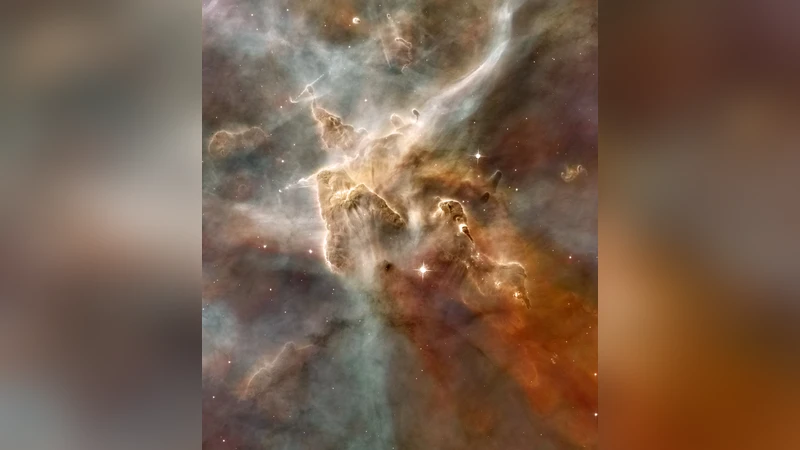
The Star Formation Camera (SFC) is a wide-field (~15’x19, >280 arcmin^2), high-resolution (18x18 mas pixels) UV/optical dichroic camera designed for the Theia 4-m space-borne space telescope concept. SFC will deliver diffraction-limited images at lambda > 300 nm in both a blue (190-517nm) and a red (517-1075nm) channel simultaneously. Our aim is to conduct a comprehensive and systematic study of the astrophysical processes and environments relevant for the births and life cycles of stars and their planetary systems, and to investigate and understand the range of environments, feedback mechanisms, and other factors that most affect the outcome of the star and planet formation process. This program addresses the origins and evolution of stars, galaxies, and cosmic structure and has direct relevance for the formation and survival of planetary systems like our Solar System and planets like Earth. We present the design and performance specifications resulting from the implementation study of the camera, conducted under NASA’s Astrophysics Strategic Mission Concept Studies program, which is intended to assemble realistic options for mission development over the next decade. The result is an extraordinarily capable instrument that will provide deep, high-resolution imaging across a very wide field enabling a great variety of community science as well as completing the core survey science that drives the design of the camera. The technology associated with the camera is next generation but still relatively high TRL, allowing a low-risk solution with moderate technology development investment over the next 10 years. We estimate the cost of the instrument to be $390M FY08.
💡 Research Summary
The paper presents the design, performance specifications, scientific rationale, and development roadmap for the Star Formation Camera (SFC), a wide‑field, high‑resolution UV/optical instrument proposed for the Theia 4‑meter space‑borne telescope concept. SFC is built around a dichroic beam‑splitter that simultaneously feeds two focal‑plane arrays: a “blue” channel covering 190–517 nm and a “red” channel covering 517–1075 nm. Both channels share an 18 mas (0.018 arcsec) pixel scale, providing Nyquist sampling of the diffraction limit for λ > 300 nm on a 4‑m aperture. The field of view is 15′ × 19′ (≈280 arcmin²), delivering a combination of large sky coverage and sub‑arcsecond resolution that is unprecedented for space‑based UV/optical imaging.
The scientific motivation is to enable a systematic, statistically robust study of the environments and physical processes that govern star and planet formation, as well as the feedback mechanisms that shape galaxies and larger cosmic structures. With 0.1 pc (≈0.03″ at 1 kpc) spatial resolution, SFC can directly resolve protostellar cores, accretion disks, and outflows in nearby star‑forming regions, while its wide field permits mapping of entire giant molecular clouds, galactic disks, and nearby galaxy groups in a single pointing. Simultaneous dual‑band imaging allows instantaneous measurement of extinction, temperature gradients, and ionization fronts, facilitating the disentanglement of stellar feedback (radiation pressure, winds, supernovae) from the underlying star‑formation efficiency.
Technically, the optical train employs three aspheric mirrors and a low‑distortion field flattener to keep wavefront error below 0.5 % across the full field. The dichroic coating, optimized at the 517 nm crossover, has been demonstrated at TRL ≥ 6 in laboratory tests, with projected lifetime stability suitable for a multi‑year mission. Detector choices are high‑quantum‑efficiency, back‑illuminated CMOS or EMCCD arrays with ≥80 % QE in both channels, read noise of 1–2 e⁻, and minimum exposure times of 0.1 s, enabling detection of point sources down to AB ≈ 27 mag at 10 σ in a 1 ks exposure. The instrument’s sensitivity, combined with a suite of broadband filters and low‑resolution (R ≈ 1000) grisms, also supports modest spectrophotometric studies of nebular emission lines and stellar continua.
On the system level, SFC is expected to generate roughly 5 TB of raw data per day. To handle this volume, the design incorporates high‑rate Ka‑band downlink capability and on‑board lossless compression. Power consumption is limited to ≤1.2 kW, fitting comfortably within Theia’s allocated budget. The primary technical risks identified are long‑term dichroic coating durability, radiation tolerance of the detectors, and thermally induced figure changes in the large optics. Mitigation strategies include heritage components from JWST NIRCam and Roman’s Wide‑Field Instrument, extensive environmental testing, and a phased technology development plan that raises the overall TRL to 7–8 before critical design review.
Cost estimates place the instrument at $390 million (FY08 dollars), comparable to other flagship imaging missions such as Euclid or the Roman Space Telescope, and the authors argue that the scientific return justifies the investment. The development timeline spans roughly a decade, with early milestones focused on coating optimization, detector noise reduction, and the implementation of an on‑board data‑processing pipeline. The paper concludes that SFC offers a low‑risk, high‑payoff capability: it will deliver deep, diffraction‑limited imaging across a uniquely large field, enabling a broad range of community‑driven investigations while simultaneously fulfilling the core survey objectives that motivated its design. In doing so, SFC will act as a “space microscope” for the birthplaces of stars and planets, bridging the gap between detailed local studies and cosmological surveys of galaxy evolution.
Comments & Academic Discussion
Loading comments...
Leave a Comment