Planetary dynamos
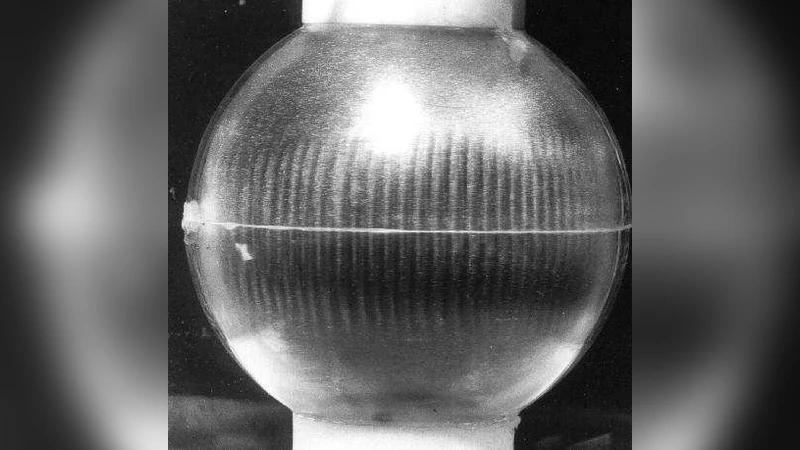
The theory of planetary dynamos and its applications to observed phenomena of planetary magnetism are outlined. It is generally accepted that convection flows driven by thermal or compositional buoyancy are the most likely source for the sustenance of global planetary magnetic fields. While the existence of dynamos in electrically conducting fluid planetary cores provides constraints on properties of the latter, the lack of knowledge about time dependences of the magnetic fields and about their toroidal components together with the restricted parameter regions accessible to theory have prevented so far a full understanding of the phenomena of planetary magnetism.
💡 Research Summary
The paper provides a comprehensive overview of the theory of planetary dynamos and its application to the magnetic fields observed on planets throughout the Solar System. It begins by reaffirming the widely accepted premise that the long‑term maintenance of a planet’s global magnetic field is driven by magnetohydrodynamic (MHD) induction in an electrically conducting fluid core. Convection within the core, powered by either thermal buoyancy (temperature gradients) or compositional buoyancy (chemical differentiation), creates fluid motions that stretch, fold, and amplify magnetic field lines. The authors emphasize that the governing equations—coupled Navier‑Stokes and Maxwell equations—are highly nonlinear, making analytical solutions impractical; therefore, most insight comes from dimensionless analysis and large‑scale numerical simulations.
Key dimensionless numbers are introduced: the Reynolds number (Re) characterizes inertial versus viscous forces, the magnetic Reynolds number (Rm = UL/η) measures the efficiency of magnetic field advection relative to diffusion, the Ekman number (E) quantifies rotational effects, and the Prandtl numbers (thermal and magnetic) describe diffusivity ratios. A dynamo can be sustained only when Rm exceeds a critical threshold, which depends on geometry, boundary conditions, and the nature of the buoyancy source. In Earth’s liquid iron‑nickel outer core, high electrical conductivity, vigorous convection, and rapid rotation combine to give Rm ≫ 1, allowing a robust, dipole‑dominated field.
The paper then surveys each Solar‑System body. Mercury’s small, partially molten core yields a marginal Rm, explaining its weak, highly variable field. Venus, despite a comparable size, rotates slowly and likely lacks vigorous convection, resulting in an absent dynamo. Mars shows evidence of an ancient dynamo in crustal magnetization, but its core has cooled and solidified, terminating the field. The gas giants Jupiter and Saturn host deep layers of metallic hydrogen that provide excellent electrical conductivity; their enormous size and fast spin produce extremely high Rm, generating strong, complex fields with significant toroidal components. Uranus and Neptune possess mixed ices and metallic hydrogen, giving rise to comparatively weaker and highly non‑dipolar fields.
A major limitation highlighted is the observational bias toward the external (poloidal) component of planetary fields. Current spacecraft magnetometers can infer the large‑scale dipole but are insensitive to the internal toroidal field, which remains largely hidden. Consequently, model validation is constrained. Moreover, temporal variability—such as Earth’s geomagnetic reversals, secular variation, and possible excursions on other planets—is poorly sampled because long‑term paleomagnetic records are scarce beyond Earth.
The authors discuss the challenges of numerical dynamo modeling. Real planetary parameters involve Reynolds numbers of order 10⁹–10¹⁰, magnetic Reynolds numbers of similar magnitude, and Ekman numbers as low as 10⁻¹⁵, far beyond the reach of present‑day supercomputers. Simulations therefore operate in a “parameter‑space gap,” using artificially high diffusivities and reduced rotation rates. While such models reproduce many qualitative features (dipole dominance, reversal statistics), quantitative extrapolation to actual planetary interiors remains uncertain. The paper advocates for a multi‑pronged strategy: (1) laboratory dynamo experiments with liquid metals or plasma to explore high‑Rm regimes; (2) high‑pressure, high‑temperature material studies to better constrain the electrical conductivity of metallic hydrogen and core alloys; (3) expanded spacecraft missions equipped with multi‑vector magnetometers and long‑duration observations to capture toroidal signatures and secular changes; and (4) development of advanced sub‑grid scale parameterizations that bridge the gap between accessible simulation regimes and true planetary conditions.
In conclusion, the paper underscores that while the dynamo paradigm successfully explains the existence of planetary magnetic fields, significant gaps persist in our understanding of their time dependence, internal structure, and the precise role of toroidal components. Closing these gaps will require coordinated efforts across geophysics, planetary science, high‑pressure physics, and computational fluid dynamics, ultimately leading to a more complete picture of how planetary magnetic fields originate, evolve, and interact with the surrounding space environment.
Comments & Academic Discussion
Loading comments...
Leave a Comment