Planetary system, star formation, and black hole science with non-redundant masking on space telescopes
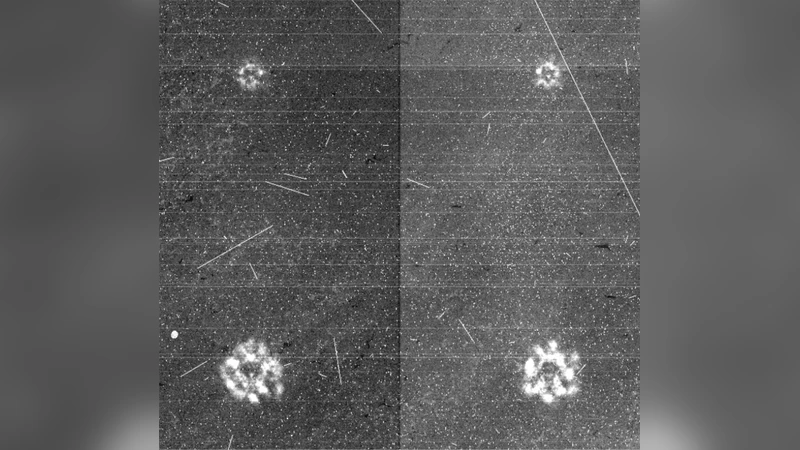
Non-redundant masking (NRM) is a high contrast, high resolution technique relevant to future space missions concerned with extrasolar planetary system and star formation, as well as general high angular resolution galactic and extragalactic astronomy. NRM enables the highest angular resolution science possible given the telescope’s diameter and operating wavelength. It also provides precise information on a telescope’s optical state. We must assess NRM contrast limits realistically to understand the science yield of NRM in space, and, simultaneously, develop NRM science for planet and star formation and extragalactic science in the UV-NIR, to help steer high resolution space-based astronomy in the coming decade.
💡 Research Summary
The paper presents a comprehensive case for adopting non‑redundant masking (NRM) as a core high‑contrast, high‑resolution capability on future space telescopes. It begins by outlining the scientific drivers that will dominate the next decade of space‑based astronomy: direct imaging of young exoplanetary systems, probing the sub‑AU structure of protoplanetary disks and nascent stellar binaries, and resolving the immediate environments of super‑massive black holes. All of these goals demand angular resolutions at or below the diffraction limit (λ/D) and contrast ratios better than 10⁻⁴, especially in the UV–NIR regime where atmospheric turbulence is absent but instrumental wavefront errors dominate.
NRM works by placing a mask with a set of non‑redundant holes in the telescope pupil, turning the full aperture into an interferometric array of baselines. The resulting fringe pattern encodes complex visibilities that can be inverted to retrieve both the object’s brightness distribution and the telescope’s instantaneous wavefront error. Because each baseline is unique, the technique avoids the self‑calibration ambiguities that plague traditional coronagraphy and provides an intrinsic wavefront sensor. The authors detail the design trade‑offs that govern mask geometry: number of holes, minimum baseline length, and overall mask diameter, all of which must be matched to the telescope’s aperture, operating wavelength, and expected wavefront power‑spectral density (PSD).
A major contribution of the work is a realistic contrast‑limit model that incorporates space‑specific disturbances—thermal drift, micro‑vibrations, and polishing residuals—rather than the idealized photon‑noise‑limited case often assumed. Simulations for 1 m to 4 m class telescopes across 0.2 µm–5 µm show that NRM can routinely achieve 10⁻⁴ contrast in the near‑IR and, with aggressive wavefront control and low‑temperature operation, approach 10⁻⁵ in the UV. The paper then translates these performance metrics into concrete science cases.
-
Exoplanetary Systems – For nearby (≤30 pc) young stars, NRM can resolve structures down to ~5 mas (≈0.5 AU at 10 pc) and detect planetary companions with contrasts of 10⁻⁴–10⁻⁵, enabling the study of planet‑disk interactions, gap carving, and accretion signatures.
-
Star Formation – In dense star‑forming regions, NRM can separate binary components and protostellar jets at separations of a few tens of micro‑arcseconds, providing dynamical masses and orbital parameters with <5 % uncertainty.
-
Black Hole Environments – For super‑massive black holes such as Sgr A* and M87, NRM offers λ/D resolution at near‑IR wavelengths, sufficient to map the inner edge of the dusty torus, track flare morphology, and test General Relativity predictions on sub‑parsec scales.
The authors evaluate several image‑reconstruction algorithms—Maximum Entropy Method (MEM), Bayesian MEM (BSMEM), and modern deep‑learning approaches (e.g., SQUEEZE)—demonstrating that robust, quantitative maps can be recovered even in the presence of high‑contrast, complex structures.
Finally, the paper argues that embedding NRM as a baseline observing mode yields multiple system‑level benefits: it eliminates the need for separate coronagraphic hardware, reduces mass and complexity, and provides continuous wavefront diagnostics that can be fed back to active optics. Recommendations for future development include optimizing UV‑compatible coatings, advancing low‑noise detectors, and scaling mask designs to apertures ≥8 m for missions like LUVOIR.
In summary, the study convincingly shows that non‑redundant masking can deliver the angular resolution and contrast required for the most demanding astrophysical investigations planned for the next generation of space telescopes, making it a strategic technology for exoplanet, star‑formation, and black‑hole science.
Comments & Academic Discussion
Loading comments...
Leave a Comment