New Mechanics of Generic Musculo-Skeletal Injury
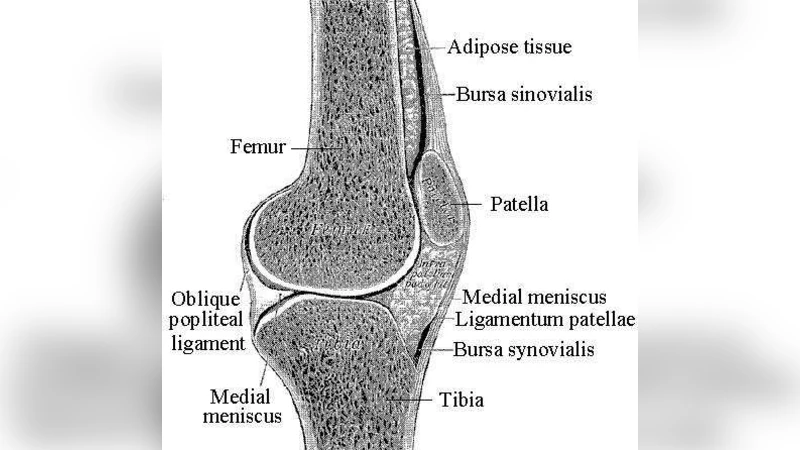
Prediction and prevention of musculo-skeletal injuries is an important aspect of preventive health science. Using as an example a human knee joint, this paper proposes a new coupled-loading-rate hypothesis, which states that a generic cause of any musculo-skeletal injury is a Euclidean jolt, or SE(3)-jolt, an impulsive loading that hits a joint in several coupled degrees-of-freedom simultaneously. Informally, it is a rate-of-change of joint acceleration in all 6-degrees-of-freedom simultaneously, times the corresponding portion of the body mass. In the case of a human knee, this happens when most of the body mass is on one leg with a semi-flexed knee – and then, caused by some external shock, the knee suddenly `jerks’; this can happen in running, skiing, sports games (e.g., soccer, rugby) and various crashes/impacts. To show this formally, based on the previously defined covariant force law and its application to traumatic brain injury (Ivancevic, 2008), we formulate the coupled Newton–Euler dynamics of human joint motions and derive from it the corresponding coupled SE(3)-jolt dynamics of the joint in case. The SE(3)-jolt is the main cause of two forms of discontinuous joint injury: (i) mild rotational disclinations and (ii) severe translational dislocations. Both the joint disclinations and dislocations, as caused by the SE(3)-jolt, are described using the Cosserat multipolar viscoelastic continuum joint model. Keywords: musculo-skeletal injury, coupled-loading–rate hypothesis, coupled Newton-Euler dynamics, Euclidean jolt dynamics, joint dislocations and disclinations
💡 Research Summary
The paper introduces a novel hypothesis for the generic cause of musculoskeletal injuries: the “coupled‑loading‑rate hypothesis,” which posits that injuries arise from an impulsive loading that simultaneously excites all six degrees of freedom of a joint. This impulsive loading is termed a Euclidean jolt or SE(3)‑jolt – essentially the time‑derivative of joint acceleration in the full SE(3) space, multiplied by the relevant portion of body mass. Using the human knee as a concrete example, the authors illustrate how a body‑weight‑bearing leg with a semi‑flexed knee can experience a sudden external shock (e.g., during running, skiing, soccer, rugby, or vehicular crashes) that generates such a jolt.
The theoretical foundation builds on the previously formulated covariant force law, which expresses force as the tensor product of mass and acceleration and remains invariant under coordinate transformations. By embedding this law into the coupled Newton‑Euler equations for joint dynamics, the authors obtain a set of nonlinear differential equations in which translational and rotational motions are tightly coupled. The equations take the familiar form
\
Comments & Academic Discussion
Loading comments...
Leave a Comment