Astrometric Detection of Earthlike Planets
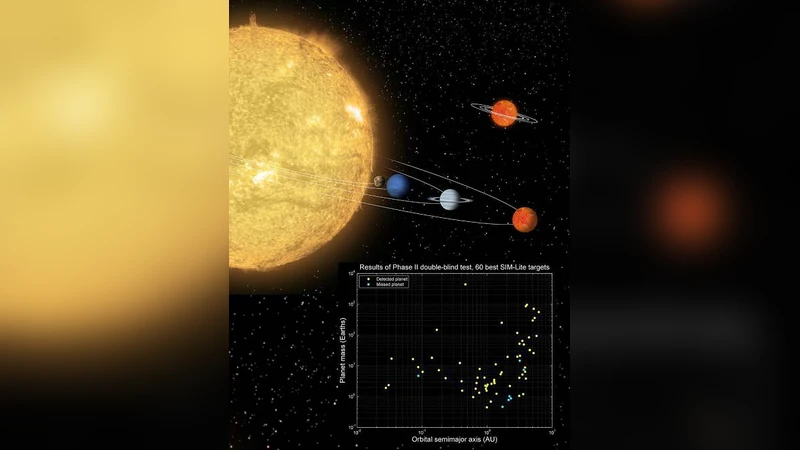
Astrometry can detect rocky planets in a broad range of masses and orbital distances and measure their masses and three-dimensional orbital parameters, including eccentricity and inclination, to provide the properties of terrestrial planets. The masses of both the new planets and the known gas giants can be measured unambiguously, allowing a direct calculation of the gravitational interactions, both past and future. Such dynamical interactions inform theories of the formation and evolution of planetary systems, including Earth-like planets. Astrometry is the only technique technologically ready to detect planets of Earth mass in the habitable zone (HZ) around solar-type stars within 20 pc. These Earth analogs are close enough for follow-up observations to characterize the planets by infrared imaging and spectroscopy with planned future missions such as the James Webb Space Telescope (JWST) and the Terrestrial Planet Finder/Darwin. Employing a demonstrated astrometric precision of 1 microarcsecond and a noise floor under 0.1 micro-arcseconds, SIM Lite can make multiple astrometric measurements of the nearest 60 F-, G-, and K-type stars during a five-year mission. SIM Lite directly tests theories of rocky planet formation and evolution around Sun-like stars and identifies the nearest potentially habitable planets for later spaceborne imaging, e.g., with Terrestrial Planet Finder and Darwin. SIM was endorsed by the two recent Decadal Surveys and it meets the highest-priority goal of the 2008 AAAC Exoplanet Task Force.
💡 Research Summary
The paper makes a compelling case that astrometry, specifically as implemented by the Space Interferometry Mission Lite (SIM Lite), is the only mature technology capable of detecting Earth‑mass planets in the habitable zones of nearby Sun‑like stars and of measuring their full three‑dimensional orbital architecture. After reviewing the limitations of radial‑velocity, transit, and direct‑imaging techniques—particularly their inability to unambiguously determine the mass and inclination of a 1 M⊕ planet at 1 AU—the authors turn to astrometry, which directly measures the tiny reflex motion of a star caused by an orbiting planet.
SIM Lite is described in detail: a space‑based optical interferometer with two 30 cm apertures, capable of controlling optical path differences to the picometer level. Laboratory tests have demonstrated an astrometric precision of 1 μas per observation and a long‑term noise floor below 0.1 μas. With such performance, the reflex motion induced by an Earth‑mass planet at 1 AU (≈0.3 μas) is well above the instrument’s detection threshold.
The mission concept calls for a five‑year survey of the 60 nearest F, G, and K dwarfs within 20 pc. Each target would be observed roughly 30 times, with individual integrations of about ten minutes, allowing the separation of planetary signals from stellar jitter (activity, rotation, and parallax). Simulations show that a 5‑σ detection of an Earth analog is achievable, and that the resulting data yield precise estimates of planetary mass, orbital inclination, eccentricity, and longitude of ascending node.
These measurements have three major scientific implications. First, they enable a direct reconstruction of the dynamical architecture of planetary systems, allowing researchers to calculate past and future gravitational interactions, test theories of planet formation (core accretion, migration, and dynamical scattering), and assess long‑term orbital stability. Second, the orbital parameters feed directly into climate and atmospheric models: inclination determines the seasonal insolation pattern, while eccentricity influences temperature extremes, both of which are critical for evaluating habitability. Third, the identified nearby Earth‑like planets become prime targets for follow‑up characterization with forthcoming facilities such as the James Webb Space Telescope, the Terrestrial Planet Finder, and ESA’s Darwin mission. The precise astrometric ephemerides will dramatically reduce the integration times needed for direct imaging and spectroscopy, making the detection of biosignature gases far more feasible.
The authors also discuss synergy with other detection methods. When combined with radial‑velocity data, astrometric inclination measurements reduce the mass uncertainty from the typical sin i ambiguity to less than 10 %, improving constraints on planetary composition. Joint astrometry‑transit analyses can refine planetary radii and densities, while astrometry‑direct‑imaging combinations can validate planet detections and calibrate instrument performance.
Importantly, the paper notes that SIM Lite’s capabilities align with the priorities set by two Decadal Surveys and the 2008 AAAC Exoplanet Task Force, which identified the detection of Earth‑mass planets around nearby Sun‑like stars as the highest‑priority exoplanet science goal. By delivering the required sub‑microarcsecond precision, SIM Lite provides a realistic pathway to achieve that goal within the next decade, bridging the gap between planet discovery and detailed atmospheric characterization.
In conclusion, the study argues that astrometry, as realized by SIM Lite, will not only uncover the nearest potentially habitable worlds but also supply the essential dynamical context needed to understand their formation, evolution, and suitability for life, thereby laying the groundwork for the next generation of exoplanet exploration missions.