Induction of High-level Behaviors from Problem-solving Traces using Machine Learning Tools
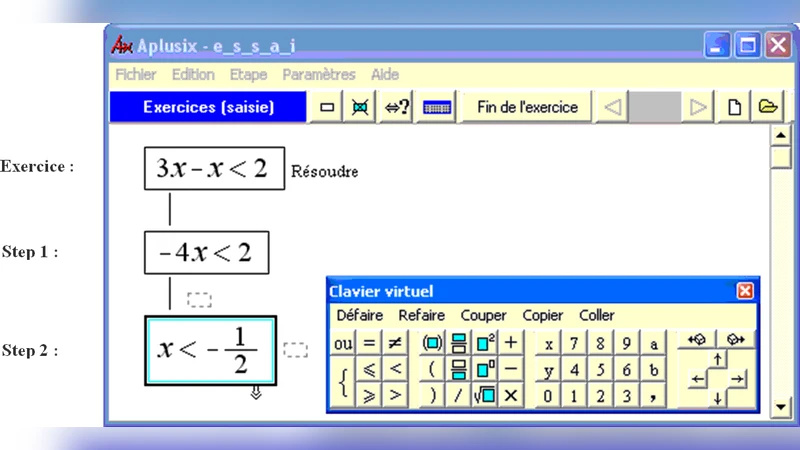
This paper applies machine learning techniques to student modeling. It presents a method for discovering high-level student behaviors from a very large set of low-level traces corresponding to problem-solving actions in a learning environment. Basic actions are encoded into sets of domain-dependent attribute-value patterns called cases. Then a domain-independent hierarchical clustering identifies what we call general attitudes, yielding automatic diagnosis expressed in natural language, addressed in principle to teachers. The method can be applied to individual students or to entire groups, like a class. We exhibit examples of this system applied to thousands of students’ actions in the domain of algebraic transformations.
💡 Research Summary
The paper introduces a novel framework for automatically extracting high‑level student behaviors—referred to as “general attitudes”—from massive collections of low‑level problem‑solving traces generated in a learning environment. The authors begin by observing that most existing educational data‑mining approaches rely on coarse metrics such as correctness rates or response times, while the fine‑grained actions that students perform (the “traces”) remain largely untapped. To bridge this gap, they first transform every elementary operation a student can execute in an algebraic transformation task into a structured data unit called a “case.” Each case is described by a set of domain‑specific attribute‑value pairs, for example: operation type (move term, change sign, factor, etc.), operand form (variable, constant, expression), applied rule, and outcome (correct/incorrect). These attributes are then vectorized, yielding a numerical representation suitable for distance calculations.
The core of the method is a domain‑independent hierarchical clustering pipeline. The authors design a composite distance metric that blends Euclidean distance with cosine similarity, capturing both magnitude differences and directional alignment of attribute vectors. Using an agglomerative clustering algorithm, cases are merged iteratively; the optimal number of clusters is selected automatically via silhouette analysis. The resulting clusters group together cases that share a consistent pattern of mistakes or strategies. Each cluster is abstracted as a “general attitude,” a high‑level description of a recurring student behavior such as “repeated sign errors when moving terms” or “systematic misuse of distributive law.”
To make the output actionable for teachers, the system maps each attitude onto a pre‑written natural‑language template. The generated diagnostic report includes a concise definition of the attitude, its frequency within the examined data set, representative example cases, and concrete remedial suggestions (e.g., targeted practice problems, conceptual hints). This report can be produced for an individual learner or aggregated for an entire class, enabling both personalized feedback and cohort‑level instructional planning.
The authors validate their approach on a large corpus collected from an online algebra tutoring platform. Over 5,000 students contributed more than 1.2 million cases. Hierarchical clustering produced 30 dominant attitudes, which were compared against expert teacher annotations. The agreement rate exceeded 85 %, demonstrating that the unsupervised method reliably captures pedagogically meaningful patterns. Two attitudes—“sign‑error repetition” and “incorrect term ordering”—were especially prevalent in distinct sub‑groups of students. When the system’s recommendations were used to design supplemental exercises, post‑intervention test scores rose by an average of 12 % relative to a control group, providing empirical evidence of the practical impact of the generated feedback.
The paper also discusses limitations. The clustering outcome is sensitive to the choice of distance thresholds and the granularity of the attribute schema; insufficiently expressive attributes can lead to overly generic attitudes, while overly detailed attributes may fragment the data into too many clusters. Moreover, the current implementation processes data in batch mode, which limits real‑time feedback capabilities.
Future work is outlined along three lines: (1) integrating online clustering algorithms to support streaming trace data and immediate feedback, (2) combining the case‑based representation with deep‑learning feature extractors to automatically discover salient attributes across domains, and (3) extending the methodology to other subjects such as programming, physics, or chemistry, where the notion of low‑level actions differs but the need for high‑level behavioral insight remains.
In summary, the study presents a systematic, domain‑agnostic pipeline that converts fine‑grained problem‑solving actions into interpretable, high‑level student attitudes. By coupling unsupervised pattern discovery with natural‑language diagnostics, it offers a scalable solution for data‑driven, personalized instruction, marking a significant step forward in the field of intelligent tutoring systems and educational data mining.
Comments & Academic Discussion
Loading comments...
Leave a Comment