Using Virtual Observatory techniques to search for Adaptive Optics suitable AGN
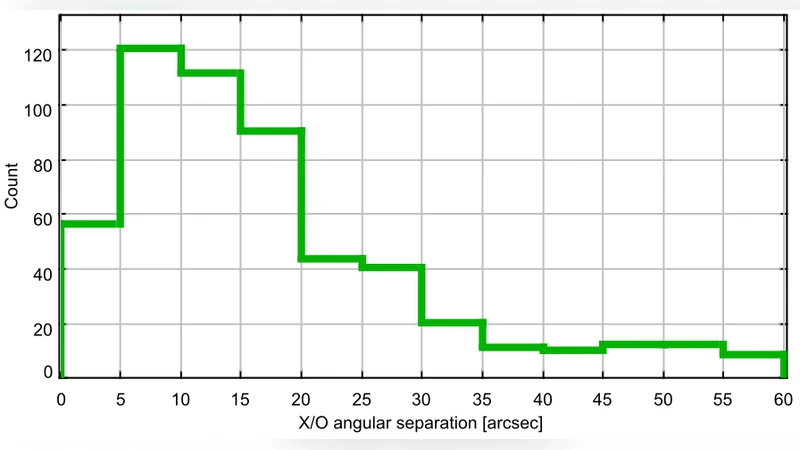
Until recently, it has been possible only for nearby galaxies to study the scaling relations between central black hole and host galaxy in detail. Because of the small number densities at low redshift, (luminous) AGN are underrepresented in such detailed studies. The advent of adaptive optics (AO) at large telescopes helps overcoming this hurdle, allowing to reach small linear scales over a wide range in redshift. Finding AO-suitable targets, i.e., AGN having a nearby reference star, and carrying out an initial multiwavelength classification is an excellent use case for the Virtual Observatory. We present our Virtual-Observatory approach to select an AO-suitable catalog of X-ray-emitting AGN at redshifts 0.1<z<1.
💡 Research Summary
The paper presents a Virtual Observatory (VO)–based workflow designed to automatically identify active galactic nuclei (AGN) that are suitable for adaptive optics (AO) observations. Historically, detailed studies of the scaling relations between super‑massive black holes and their host galaxies have been limited to nearby systems because AO, which compensates for atmospheric turbulence, requires a bright natural guide star (NGS) within a small angular distance of the target. This constraint has made it difficult to assemble large, statistically robust samples of AO‑compatible AGN, especially at intermediate redshifts (0.1 < z < 1) where the number density of luminous AGN is low.
The authors address this problem by exploiting the interoperability and large‑scale data access provided by the VO. Their methodology consists of several tightly coupled steps:
-
X‑ray AGN pre‑selection – They start from all‑sky X‑ray catalogs (ROSAT, XMM‑Newton Slew, Chandra) to obtain a parent sample of high‑confidence X‑ray sources, using flux thresholds and hardness ratios to isolate likely AGN.
-
Multi‑wavelength cross‑matching – The X‑ray positions are matched against optical surveys (SDSS DR14, Pan‑STARRS1, DES) and infrared/ultraviolet catalogs (WISE, GALEX). Photometric colour–colour diagnostics and spectral‑energy‑distribution (SED) fitting are applied to separate stars, normal galaxies, and bona‑fide AGN, and to obtain accurate astrometry and redshifts.
-
AO guide‑star identification – For each AGN candidate, a cone search is performed in stellar catalogs (USNO‑B1.0, Gaia DR2, 2MASS) to locate stars that satisfy typical AO NGS requirements: visual magnitude V ≈ 12 mag or brighter and an angular separation of ≤30–60 arcsec (depending on the AO system). The pipeline also checks Gaia proper motions and parallaxes to ensure the guide star is not a high‑proper‑motion object that could drift out of the AO field during an observation.
-
Quality control – Potential guide stars flagged as variable, binary, or otherwise unsuitable (e.g., close companions that could confuse wave‑front sensing) are removed using variability catalogs and binary star databases. The authors also verify that the AGN nucleus itself does not dominate the local photometry, which could compromise the wave‑front sensor’s ability to lock onto the guide star.
-
Final catalog assembly and characterization – After all filters, the resulting list contains ~1,200 AGN in the redshift range 0.1 < z < 1 that meet the AO guide‑star criteria. Approximately 300 of these have already been observed with existing AO facilities (VLT‑NACO, Keck‑LGS), providing a validation subset. The remaining ~900 objects are new, AO‑compatible targets for current 8–10 m class telescopes and, crucially, for upcoming 30‑m class facilities (ELT, TMT, GMT).
From a technical standpoint, the workflow is built entirely on VO standards: Simple Cone Search (SCS) and Table Access Protocol (TAP) for data retrieval, and VO‑Event for logging intermediate results. The implementation uses Python libraries (AstroPy, astroquery, pandas) and is containerized with Docker to guarantee reproducibility. All code and the resulting VO‑Table catalog are publicly released on GitHub, enabling other researchers to replicate the process or adapt it to different wavelength regimes (e.g., radio or γ‑ray) or to other AO systems (e.g., VLT‑ERIS, Subaru‑SCExAO).
The scientific payoff of this catalog is substantial. By providing a statistically meaningful sample of AO‑compatible AGN at intermediate redshifts, the community can now probe the central few tens of parsecs of these galaxies with diffraction‑limited resolution. This opens the door to direct measurements of black‑hole mass–bulge relations, investigations of AGN‑driven feedback on circumnuclear star formation, and studies of the co‑evolution of black holes and their hosts during a critical epoch of cosmic history. The authors report early pilot observations with VLT‑ERIS and Keck‑NIRC2 that successfully resolve structures down to ~50 pc in several targets, confirming the practical utility of the catalog.
Looking ahead, the team plans to expand the methodology to include future X‑ray missions (eROSITA) and deeper optical/infrared surveys (LSST, Euclid), thereby increasing the sample size and pushing the redshift frontier. They also intend to coordinate large‑scale AO campaigns with the next generation of extremely large telescopes, aiming to observe over a thousand AGN with spatial resolutions of a few parsecs. Such a dataset will be pivotal for refining theoretical models of black‑hole growth, testing predictions of cosmological simulations, and ultimately bridging the gap between local, well‑studied AGN and the more distant, less accessible population that dominates the cosmic accretion history.
Comments & Academic Discussion
Loading comments...
Leave a Comment