Investigations of the Formation and Evolution of Planetary Systems
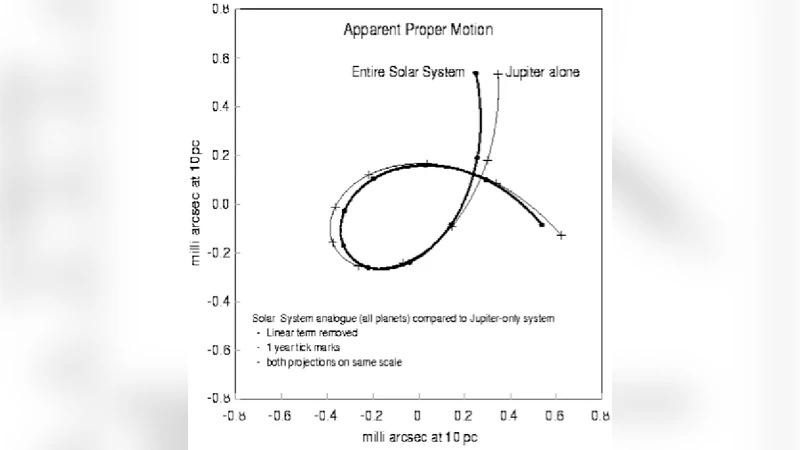
Stars and planets are the fundamental objects of the Universe. Their formation processes, though related, may differ in important ways. Stars almost certainly form from gravitational collapse and probably have formed this way since the first stars lit the skies. Although it is possible that planets form in this way also, processes involving accretion in a circumstellar disk have been favored. High fidelity high resolution images may resolve the question; both processes may occur in some mass ranges. The questions to be answered in the next decade include: By what process do planets form, and how does the mode of formation determine the character of planetary systems? What is the distribution of masses of planets? In what manner does the metallicity of the parent star influence the character of its planetary system? In this paper we discuss the observations of planetary systems from birth to maturity, with an emphasis on observations longward of 100 $\mu$m which may illuminate the character of their formation and evolution. Advantages of this spectral region include lower opacity, availability of extremely high resolution to reach planet formation scales and to perform precision astrometry and high sensitivity to thermal emission.
💡 Research Summary
**
The paper sets out to clarify how planets form and evolve, contrasting planetary formation with the well‑established process of stellar birth. While stars are widely accepted to arise from the gravitational collapse of molecular clouds, the dominant paradigm for planets has been core‑accretion within a circumstellar disk: solid particles collide, grow into planetesimals, form a massive core, and then accrete gas. Recent high‑resolution observations, however, have revived the possibility that some planets—especially massive gas giants—might also form directly by gravitational instability in the disk. The authors frame four central questions for the coming decade: (1) By what physical process do planets originate, and how does that process imprint on the architecture of planetary systems? (2) What is the statistical distribution of planetary masses across different stellar environments? (3) How does the metallicity of the host star influence the outcome of planet formation? (4) How do the two competing formation pathways—core‑accretion and disk instability— coexist or dominate in various mass and metallicity regimes?
To answer these questions, the authors argue that observations at wavelengths longer than 100 µm are uniquely powerful. In the far‑infrared and sub‑millimeter regime, dust opacity is low, allowing astronomers to peer deep into the dense interiors of protoplanetary disks. Facilities such as ALMA, NOEMA, and the SMA provide angular resolutions down to a few milliarcseconds, corresponding to sub‑AU scales in nearby star‑forming regions. This resolution enables direct imaging of disk substructures—gaps, rings, spirals, and clumps—that are the hallmarks of planet formation in action. Moreover, the high sensitivity of these instruments to thermal emission makes it possible to measure the temperature and surface density profiles of disks, essential inputs for theoretical models. Precision astrometry at these wavelengths further allows the detection of minute reflex motions caused by embedded planetary-mass objects, offering a complementary method to direct imaging.
The paper reviews current observational evidence. On one hand, massive, cold clumps observed in young, massive disks sometimes exceed the Jeans mass and appear to be collapsing on dynamical timescales, supporting the gravitational‑instability scenario for the formation of super‑Jovian planets. On the other hand, the majority of disks display concentric rings and localized dust traps that are best explained by the gradual growth of solids and the subsequent formation of planetary cores, consistent with core‑accretion. Statistical studies also reveal a strong correlation between stellar metallicity and the occurrence rate of smaller, rocky planets, indicating that a higher abundance of heavy elements accelerates core formation. In contrast, low‑metallicity environments seem to favor the rapid formation of massive gas giants via disk instability, where the paucity of solids does not hinder the direct collapse of gas.
Looking ahead, the authors outline a roadmap for the next ten years. First, they advocate for coordinated campaigns that combine ALMA’s sub‑millimeter imaging with the upcoming next‑generation Very Large Array (ngVLA) to monitor the temporal evolution of disk structures and gas kinematics. Second, they emphasize the role of space‑based infrared observatories such as JWST and the proposed SPICA mission to obtain high‑resolution spectra of disk chemistry, which will constrain the availability of volatiles and refractory materials during planet formation. Third, large‑scale surveys from optical time‑domain facilities (e.g., LSST) and dedicated exoplanet missions (e.g., PLATO) will expand the sample of planets with well‑determined masses, orbital parameters, and host‑star metallicities, enabling robust statistical tests of formation theories. By integrating high‑resolution imaging, precise astrometry, and comprehensive population studies, the community aims to resolve whether planetary systems are primarily the product of core‑accretion, gravitational instability, or a hybrid of both, and how stellar metallicity steers the outcome. The paper concludes that far‑infrared and sub‑millimeter observations will be pivotal in answering these fundamental questions, ultimately illuminating the pathways that lead from dust and gas to the diverse planetary architectures observed today.
Comments & Academic Discussion
Loading comments...
Leave a Comment