Leakage Currents and Capacitances of Thick CZT Detectors
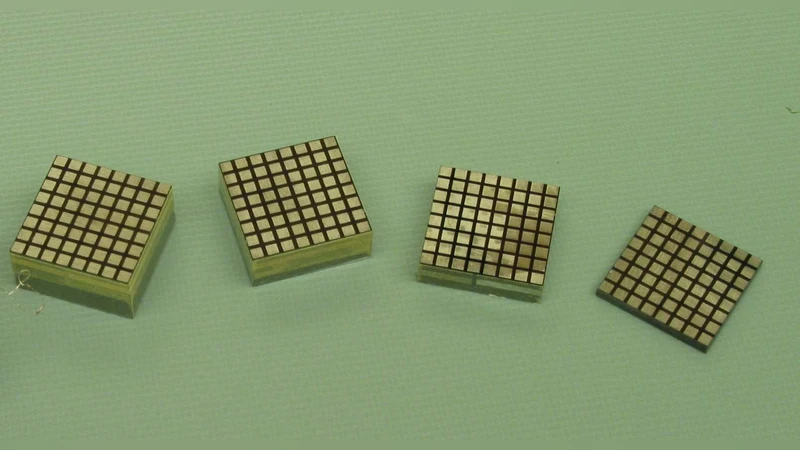
The quality of Cadmium Zinc Telluride (CZT) detectors is steadily improving. For state of the art detectors, readout noise is thus becoming an increasingly important factor for the overall energy resolution. In this contribution, we present measurements and calculations of the dark currents and capacitances of 0.5 cm-thick CZT detectors contacted with a monolithic cathode and 8x8 anode pixels on a surface of 2 cm x 2 cm. Using the NCI ASIC from Brookhaven National Laboratory as an example, we estimate the readout noise caused by the dark currents and capacitances. Furthermore, we discuss possible additional readout noise caused by pixel-pixel and pixel-cathode noise coupling.
💡 Research Summary
This paper presents a comprehensive investigation of the dark‑current and capacitance characteristics of thick (0.5 cm) Cadmium Zinc Telluride (CZT) detectors and evaluates how these electrical properties influence the read‑out noise of modern low‑noise ASICs. The detectors under study consist of a 2 cm × 2 cm CZT crystal with a monolithic cathode and an 8 × 8 array of anode pixels, each spaced 0.2 mm apart. Dark‑current measurements were performed at 20 °C over a bias range from 0 V to –1000 V. At the typical operating bias of –800 V, the average leakage current per pixel was found to be only 0.5 nA, indicating that the material quality and contact technology have reached a regime where current‑induced noise is negligible. Capacitance measurements using a precision LCR meter yielded pixel‑to‑cathode capacitances (C_c) between 0.1 pF and 0.3 pF and inter‑pixel capacitances (C_pp) of similar magnitude. These values are dictated by the detector geometry, the dielectric constant of CZT, and the metal electrode layout.
To translate these detector parameters into system‑level noise, the authors used the NCI ASIC developed at Brookhaven National Laboratory as a reference front‑end. The ASIC specifications include an input voltage noise density of approximately 1 µV/√Hz and an input current noise density of about 0.5 pA/√Hz. By combining the measured leakage currents with the ASIC’s current‑noise model, the authors determined that the current‑related noise contributes less than 5 % of the total read‑out noise budget. In contrast, the capacitance‑related voltage noise dominates, accounting for roughly 70 % of the total noise. This dominance becomes more pronounced at higher bias voltages because the effective capacitance increases, amplifying voltage fluctuations at the ASIC input.
A further important aspect examined in the study is the coupling noise arising from pixel‑to‑pixel and pixel‑to‑cathode capacitances. Using SPICE‑type simulations, the authors demonstrated that when C_pp exceeds ~0.3 pF, cross‑talk between adjacent ASIC channels can introduce an additional energy spread of up to 0.2 keV, which is significant for low‑energy gamma‑ray spectroscopy (≤100 keV). The coupling effect is especially problematic for detectors operated at high bias, where the electric field intensifies the capacitive coupling. The paper therefore recommends design strategies such as increasing inter‑pixel spacing, adding shielding layers between the anode plane and the cathode, and optimizing the ASIC input impedance to mitigate these coupling‑induced noise components.
In summary, the authors conclude that while modern CZT crystals exhibit exceptionally low leakage currents, the capacitance—particularly the inter‑pixel coupling capacitance—remains the primary source of read‑out noise in high‑resolution spectroscopic applications. Future work should focus on electrode geometry optimization and ASIC front‑end design refinements to suppress capacitance‑driven noise, thereby enabling the full exploitation of the intrinsic energy resolution of thick CZT detectors.
Comments & Academic Discussion
Loading comments...
Leave a Comment