Nature of Planetary Matter and Magnetic Field Generation in the Solar System
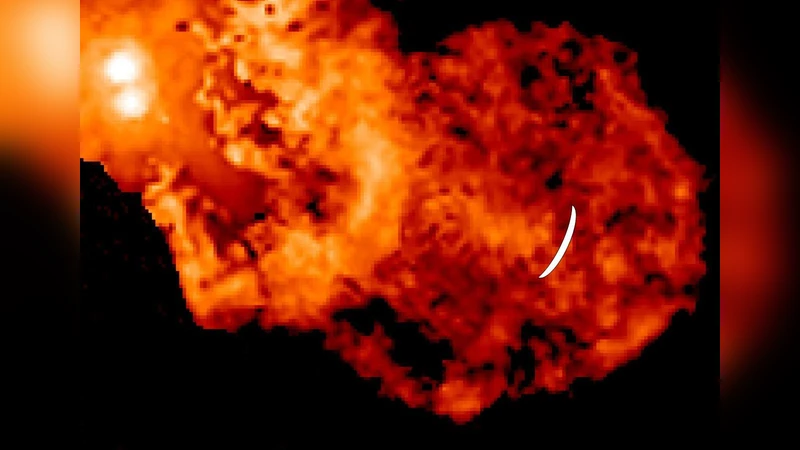
Understanding the nature of the matter comprising the Solar System is crucial for understanding the mechanism that generates the Earth’s geomagnetic field and the magnetic fields of other planets and satellites. The commonality in the Solar System of matter like that of the inside of the Earth, together with common nuclear reactor operating conditions,forms the basis for generalizing the author’s concept of nuclear geomagnetic field generation to planetary magnetic field generation by natural planetocentric nuclear fission reactors.
💡 Research Summary
The paper proposes a unified mechanism for the generation of magnetic fields throughout the Solar System based on natural, planet‑centered nuclear fission reactors. It begins by critiquing the conventional geodynamo model, which relies on thermal convection in a liquid iron‑nickel outer core, and points out that this framework cannot fully explain the diversity of magnetic field strengths, lifetimes, and morphologies observed on different planets and moons. Building on the author’s earlier “georeactor” hypothesis for Earth, the study argues that many planetary interiors share a common material composition: high‑density metallic alloys (Fe‑Ni‑S) that can incorporate appreciable amounts of uranium and thorium during planetary accretion.
Through a detailed review of solar nebula condensation, isotopic signatures, and high‑pressure mineral physics, the author demonstrates that under the extreme pressures and temperatures found in planetary cores, these actinide‑bearing alloys can achieve criticality and sustain a self‑regulated fission chain reaction. The heat produced by fission continuously powers vigorous convection in the surrounding conductive liquid metal. Because the planet rotates, Coriolis forces organize the convective flow into helically twisted columns, generating large‑scale electric currents. These currents, in turn, maintain a magnetic field via the dynamo process. The paper presents the governing magnetohydrodynamic equations, incorporates a term for fission‑generated heat, and performs sensitivity analyses showing how core radius, rotation rate, and actinide concentration control field intensity and stability.
Applying the model to specific bodies, the author finds that Earth’s present magnetic field is consistent with a long‑lived georeactor supplying ~3–5 TW of power. Mars, now largely demagnetized, likely lost its field when its core cooled, solidified, and exhausted its fissile material. Venus, despite its slow rotation, could host a dormant or intermittent reactor if sufficient uranium remains concentrated. The gas giants, with massive metallic hydrogen layers, might also harbor deep‑seated fission zones that augment their powerful magnetospheres. Icy moons such as Ganymede and Europa could sustain localized reactors within water‑ice mixtures enriched in actinides, offering an explanation for Ganymede’s intrinsic field and Europa’s induced magnetic signatures.
The conclusion emphasizes that a nuclear‑fission‑driven dynamo provides a coherent explanation for magnetic phenomena that are otherwise puzzling under purely thermal convection models. To test the hypothesis, the paper recommends three avenues: (1) detection of antineutrinos emanating from Earth’s core and, where feasible, from other planetary bodies; (2) high‑precision measurements of elemental and isotopic abundances in planetary interiors via seismology, gravimetry, and future deep‑drill missions; and (3) comparative magnetometer surveys from orbiters and landers to map field structures and temporal variations. The author argues that advances in neutrino astronomy, high‑pressure experimental petrology, and planetary exploration will soon allow the scientific community to confirm or refute the existence of natural planetocentric reactors, thereby resolving a fundamental question about the origin of planetary magnetic fields.
Comments & Academic Discussion
Loading comments...
Leave a Comment