Geometrical and transport properties of single fractures: influence of the roughness of the fracture walls
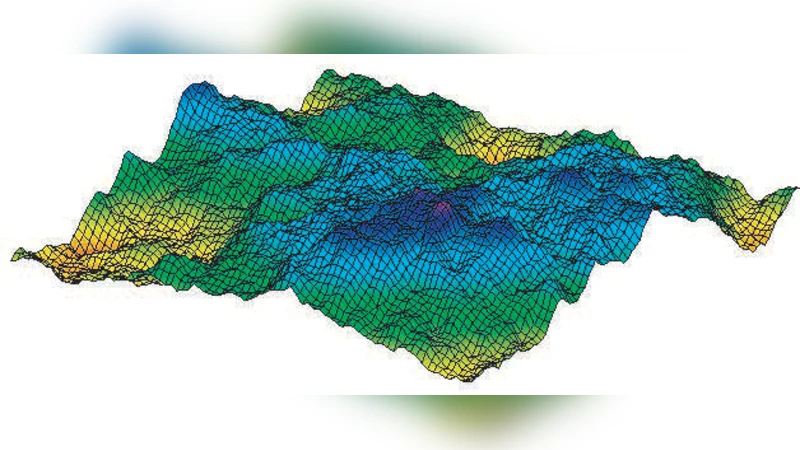
This article reviews the main features of the transport properties of single fractures. A particular attention paid to fractures in geological materials which often display a roughness covering a broad range of length scales. Because of the small distance separating the fracture walls, the surface roughness is a key parameter influencing the structure of the void space. Studies devoted to the characterization of the surface roughness are presented as well as works aimed at characterizing the void space geometry. The correlation of the free space is found to be crucially function of the failure mechanism (brittle, quasi brittle or plastic…) but also of possible shear displacements during the failure. The influence of the surface roughness on the mechanical behavior of fractures under a normal load and a shear stress is also described. Finally, experimental, numerical and theoretical works devoted to the study of the influence of the fracture void geometry on the permeability and on the hydrodynamic dispersion of a dissolved species are discussed.
💡 Research Summary
The paper provides a comprehensive review of the transport properties of single fractures, with a particular focus on the role of surface roughness that spans a wide range of length scales in geological materials. It begins by highlighting the importance of fractures in subsurface flow, hydrocarbon recovery, and geothermal energy, noting that traditional models often reduce a fracture to a simple aperture while neglecting the complex geometry of the walls. The authors then discuss methods for characterizing surface roughness, including optical profilometry, laser scanning, and electron microscopy, and describe how statistical descriptors such as the root‑mean‑square height, power‑spectral density, and Hurst exponent capture the self‑affine nature of natural rock surfaces.
The core of the review examines how roughness controls the geometry of the void space between two opposing fracture faces. Depending on the failure mechanism—brittle, quasi‑brittle, or plastic—the spatial correlation of the aperture varies dramatically. Brittle fractures tend to produce relatively uniform, narrow gaps with short‑range correlation, whereas quasi‑brittle and plastic fractures, especially when subjected to shear displacement, generate long‑range correlated channels and asymmetric aperture fields. The authors introduce a “shear shift” parameter to quantify the effect of lateral displacement on aperture distribution, showing that shear can both increase the mean aperture and produce highly non‑uniform flow pathways.
Mechanical behavior under normal load and shear stress is then analyzed. Normal stress reduces the mean aperture by enlarging contact area, while shear stress re‑arranges contacts, creating a “shear aperture” that depends on both the roughness exponent and the magnitude of the shear displacement. The paper extends classic Hertzian contact theory with a roughness‑corrected model, yielding an analytical relationship between contact area, normal load, and shear displacement. Experimental data confirm a nonlinear coupling between normal and shear stresses, which is critical for predicting fracture closure and re‑opening during seismic cycles.
Transport properties are addressed in two major subsections: permeability and solute dispersion. Permeability is shown to follow the cubic law with respect to the average aperture only in the absence of significant channelization. When roughness‑induced channels dominate, the effective permeability can increase by one to two orders of magnitude relative to the cubic‑law prediction. Numerical simulations using lattice‑Boltzmann and direct numerical methods reproduce this behavior and introduce a “channelization index” that quantifies the degree to which flow is confined to a few high‑conductivity pathways.
Solute transport is examined through tracer experiments and high‑resolution velocity measurements. The authors demonstrate that channelization leads to strong shear‑dispersion: the longitudinal dispersion coefficient grows with the product of mean velocity and the square of the aperture, multiplied by a factor that scales with the channelization index. Moreover, the presence of asymmetric channels produces direction‑dependent dispersion, a phenomenon that must be accounted for when modeling contaminant migration in fractured rock.
Finally, the review outlines practical implications and future research directions. The integrated roughness‑shear framework can be incorporated into groundwater flow models, enhanced oil recovery simulations, and post‑seismic fluid migration forecasts. The authors recommend extending the analysis to fracture networks, investigating non‑Newtonian fluids, and developing four‑dimensional imaging techniques (spatial‑temporal CT) to capture the evolution of aperture fields in real time.
In conclusion, the paper establishes surface roughness as a pivotal parameter that governs fracture aperture geometry, mechanical response, permeability, and solute dispersion. By linking roughness statistics to mechanical loading and transport phenomena, the authors provide a unified perspective that advances both fundamental understanding and applied modeling of flow in fractured geological media.
Comments & Academic Discussion
Loading comments...
Leave a Comment