Increasing the Number of Underrepresented Minorities in Astronomy at the Undergraduate, Graduate, and Postdoctoral Levels (Paper I)
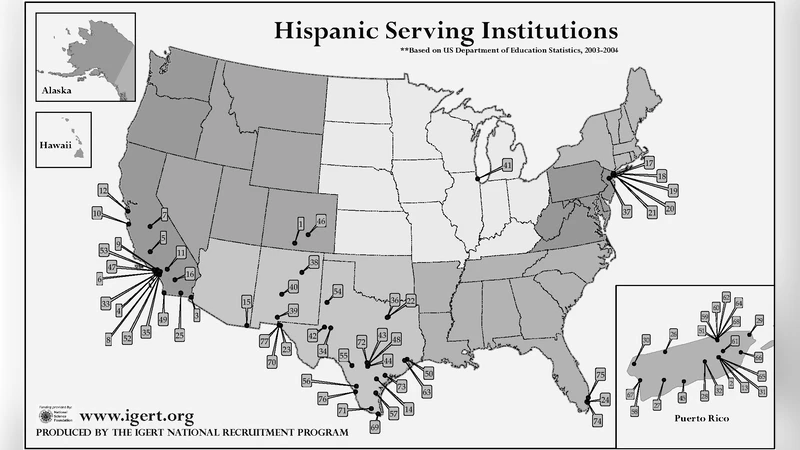
If the ethnic makeup of the astronomy profession is to achieve parity with the general population within one generation (~30 years), the number of underrepresented minorities earning graduate degrees in astronomy and astrophysics must increase in the coming decade by a factor of 5 to 10. To accomplish this, the profession must develop and invest in mechanisms to more effectively move individuals across critical educational junctures to the PhD and beyond. Early and continuous research engagement starting in the undergraduate years is critical to this vision, in which the federally funded research internship programs (e.g. NSF REU, NASA GSRP) and national centers/observatories play a vital role. Regionally based partnerships with minority-serving institutions (MSIs) are crucial for tapping extant pools of minority talent, as are post-baccalaurate and/or masters degree “bridging” programs that provide critical stepping stones to the PhD. Because of the strong undergraduate physics, engineering, and computer science backgrounds of many students from MSIs, we suggest that instrument development and large scale computing/data-mining are particularly promising avenues for engagement in the coming decade.
💡 Research Summary
The paper confronts the stark under‑representation of minorities—specifically African‑American, Hispanic, and Native American individuals—in the United States astronomy and astrophysics workforce. By comparing the current demographic composition of the field with that of the general U.S. population, the authors conclude that achieving parity within a single generation (approximately 30 years) will require a five‑ to ten‑fold increase in the number of under‑represented minority (URM) graduate degrees awarded over the next decade.
To reach this ambitious target, the authors map the “pipeline” of talent development and identify three critical transition points where URM attrition is highest: (1) the move from undergraduate study to graduate school, (2) the progression from graduate research to post‑doctoral positions, and (3) the long‑term retention of post‑doctoral scholars in permanent research or faculty roles. Their analysis of NSF and NASA data shows that while roughly 5 % of undergraduate physics, engineering, and computer‑science majors at minority‑serving institutions (MSIs) are URM, fewer than 1 % of Ph.D. recipients in astronomy belong to these groups. Economic barriers, limited mentorship, and a lack of early research exposure are identified as the primary drivers of loss at each stage.
The paper proposes a multi‑tiered strategy. At the undergraduate level, it calls for a massive expansion of federally funded research experiences such as NSF REU (Research Experiences for Undergraduates) and NASA GSRP (Graduate Student Research Programs). Crucially, these programs must be structured so that participation leads to tangible scholarly outcomes—co‑authorship on papers, conference presentations, and direct pathways into graduate labs. The authors also stress the importance of regional partnerships between research universities, national observatories, and MSIs, enabling local students to engage in hands‑on projects without relocating.
A “bridging” or post‑baccalaureate master’s phase is recommended for students who are not yet ready for a Ph.D. This intermediate stage would combine intensive research internships, technical training in instrumentation and high‑performance computing, and personalized mentorship. By providing a concrete stepping‑stone, the bridging model is expected to raise URM graduate enrollment and improve completion rates.
For the graduate‑to‑post‑doc transition, the authors advocate the creation of a national URM research network that supplies targeted career development resources: dedicated grant lines, leadership workshops, and a mentorship database linking senior URM scientists with early‑career scholars. Long‑term retention is further supported by policies that recognize and reward contributions to diversity initiatives in tenure and promotion decisions.
A distinctive element of the proposal is its focus on leveraging the existing strengths of MSI students—particularly their solid backgrounds in physics, engineering, and computer science. The authors argue that these skill sets align naturally with two growth areas in modern astronomy: (a) the design, construction, and testing of next‑generation instrumentation (e.g., infrared detectors, fiber‑fed spectrographs) and (b) large‑scale data mining, machine‑learning pipelines, and simulation frameworks. By embedding URM trainees directly into instrument development consortia and data‑science collaborations, institutions can simultaneously advance scientific capability and diversify the workforce.
Financially, the paper calls for earmarked federal funding streams within NSF and NASA budgets, as well as joint university‑observatory scholarship programs specifically for URM students. It also recommends systematic evaluation of diversity initiatives using clear metrics—numbers of URM Ph.D. graduates, post‑doc conversion rates, authorship representation, and grant success—to create a feedback loop that can refine policies in real time.
In conclusion, the authors present a comprehensive, evidence‑based roadmap that moves beyond ad‑hoc outreach. By integrating early research exposure, structured bridging programs, strategic MSI partnerships, and targeted investment in instrumentation and data‑intensive research, the astronomy community can realistically achieve a five‑ to ten‑fold increase in URM Ph.D. production within the next ten years, thereby laying the foundation for a more inclusive and innovative scientific enterprise.
Comments & Academic Discussion
Loading comments...
Leave a Comment