The Future of the European VLBI Network
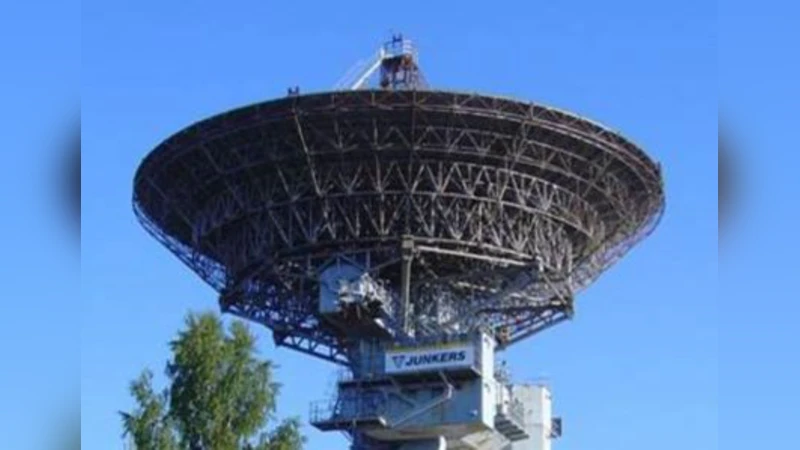
Guided by the recently published science case for the future of European VLBI, EVN2015, a roadmap for the future of the EVN is sketched out in this paper. The various desired technical improvements are being discussed with an emphasis on the role of e-VLBI. With this innovation new scientific capabilities are introduced. In this way the EVN is also positioned as an interesting platform for exercising new techniques and operational models, complementary to other SKA pathfinders. In return, the technology development for the SKA can have a positive impact on the scientific capabilities of VLBI, for example on the development of a next generation correlator, capable to process much larger data-rates. The development of cheap, frequency agile antennas can also be of great importance for VLBI. This adds to the potential for maintaining a Northern hemisphere, global VLBI array in the SKA era.
💡 Research Summary
The paper presents a forward‑looking roadmap for the European Very Long Baseline Interferometry (VLBI) Network (EVN) that is anchored in the recently published science case “EVN2015”. It begins by outlining the scientific drivers that now demand higher sensitivity, broader instantaneous bandwidth, and real‑time data handling – requirements that cannot be fully met by the traditional disk‑based recording and modest‑capacity correlators that have underpinned EVN operations for decades. The authors argue that the EVN must evolve along three tightly coupled technical strands if it is to remain a premier northern‑hemisphere VLBI facility in the era of the Square Kilometre Array (SKA).
First, the transition to electronic VLBI (e‑VLBI) is positioned as a non‑negotiable step. By leveraging pan‑European high‑capacity fiber links capable of 10 Gbps or more per station, raw voltage data can be streamed directly to a central processing hub. This eliminates the latency inherent in shipping physical media, enables on‑the‑fly quality control, and opens the door to rapid response observations of transient phenomena such as fast radio bursts, jet ejections, and black‑hole flares. The paper stresses the need for a unified data format (VDIF) and a coordinated network‑management layer to guarantee interoperability across the heterogeneous set of national observatories.
Second, the authors propose a next‑generation correlator architecture that departs from the legacy hardware‑centric design. The envisioned system combines field‑programmable gate arrays (FPGAs) for deterministic, high‑throughput channelisation with graphics processing units (GPUs) for flexible cross‑multiplication and accumulation. This hybrid platform would comfortably ingest several gigabits per second per station, support thousands of spectral channels, and incorporate real‑time radio‑frequency interference (RFI) excision and lossless compression. By containerising the processing pipeline and deploying it on a scalable cloud infrastructure, the correlator can be expanded or re‑configured without major hardware overhauls, thereby future‑proofing the EVN against the rapidly increasing data rates expected from wider bandwidth receivers.
Third, the paper highlights the strategic importance of frequency‑agile, low‑cost antennas. Traditional EVN dishes are often equipped with narrow‑band feeds that require physical replacement when switching observing bands. The authors advocate for electronically steerable, broadband feeds covering roughly 1–30 GHz, coupled with actuator‑driven sub‑reflector systems that can retune the antenna optics on demand. Such “software‑defined” antennas would enable simultaneous multi‑band observations, improve uv‑coverage for spectral‑line studies, and align the EVN’s frequency capabilities with those of the SKA, facilitating joint campaigns.
Beyond the hardware upgrades, the authors discuss an operational model that tightly integrates the EVN with SKA pathfinders. While the SKA will deliver unprecedented sensitivity and survey speed on short to intermediate baselines, it lacks the ultra‑long baselines (>10 000 km) required for milli‑arcsecond resolution. By equipping the EVN with real‑time e‑VLBI and a high‑performance correlator, the two facilities can operate in a hybrid mode: the SKA provides a deep, low‑resolution backdrop, and the EVN supplies the high‑resolution “zoom‑in” on selected targets. This synergy is expected to boost scientific productivity across a range of topics, from probing the innermost regions of active galactic nuclei to mapping the detailed structure of gravitational‑wave electromagnetic counterparts.
The roadmap is divided into three phases. Phase 1 (years 1‑3) focuses on establishing the high‑capacity fiber network, conducting pilot e‑VLBI experiments, and standardising data formats. Phase 2 (years 4‑7) targets the design, prototyping, and field testing of the hybrid FPGA‑GPU correlator, alongside the development of real‑time RFI mitigation algorithms. Phase 3 (years 8‑10) aims at the large‑scale deployment of broadband, frequency‑agile antennas at key EVN stations and the full integration of EVN operations with SKA observing schedules. The authors stress that a staged approach mitigates financial risk, allows incremental scientific returns, and provides ample time for community training and software development.
In conclusion, the paper makes a compelling case that the EVN can retain its relevance and scientific leadership by embracing e‑VLBI, a next‑generation correlator, and agile antenna technology. These upgrades not only address the immediate performance gaps but also create a natural bridge to the SKA, ensuring that Europe maintains a world‑class, northern‑hemisphere VLBI array well into the next decade and beyond.
Comments & Academic Discussion
Loading comments...
Leave a Comment