Modeling tumor cell migration: from microscopic to macroscopic
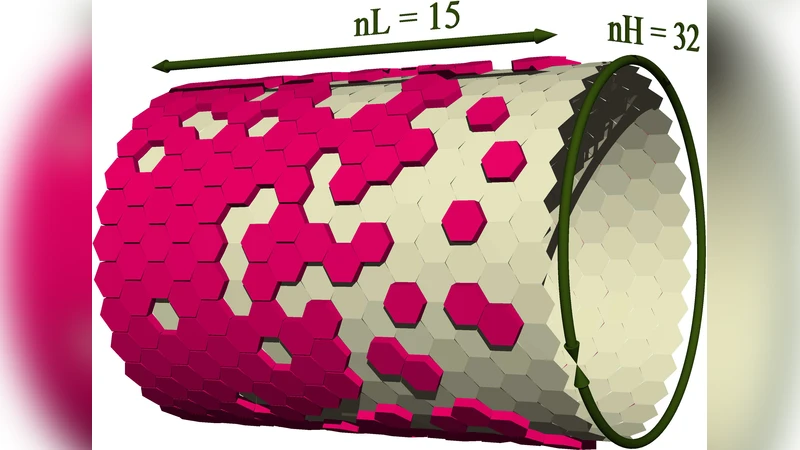
It has been shown experimentally that contact interactions may influence the migration of cancer cells. Previous works have modelized this thanks to stochastic, discrete models (cellular automata) at the cell level. However, for the study of the growth of real-size tumors with several millions of cells, it is best to use a macroscopic model having the form of a partial differential equation (PDE) for the density of cells. The difficulty is to predict the effect, at the macroscopic scale, of contact interactions that take place at the microscopic scale. To address this we use a multiscale approach: starting from a very simple, yet experimentally validated, microscopic model of migration with contact interactions, we derive a macroscopic model. We show that a diffusion equation arises, as is often postulated in the field of glioma modeling, but it is nonlinear because of the interactions. We give the explicit dependence of diffusivity on the cell density and on a parameter governing cell-cell interactions. We discuss in details the conditions of validity of the approximations used in the derivation and we compare analytic results from our PDE to numerical simulations and to some in vitro experiments. We notice that the family of microscopic models we started from includes as special cases some kinetically constrained models that were introduced for the study of the physics of glasses, supercooled liquids and jamming systems.
💡 Research Summary
The paper tackles a central challenge in mathematical oncology: how to incorporate microscopic cell‑cell contact interactions into a macroscopic description of tumor cell migration that remains computationally tractable for tumors containing millions of cells. The authors begin with a highly simplified yet experimentally validated cellular automaton (CA) model. In this lattice‑based framework each lattice site can host at most one cell, and a cell may move to a neighboring site only if that site is empty. The movement probability is proportional to the number of empty neighboring sites, thereby encoding a “contact inhibition” rule: the more crowded the local environment, the less likely a cell will migrate. This rule is mathematically identical to the kinetic constraints used in models of glasses, super‑cooled liquids, and jamming, establishing a bridge between tumor biology and statistical physics.
From the CA, the authors write down the master equation for the probability distribution of occupation numbers. By invoking a mean‑field approximation (replacing local occupation variables with the average cell density ρ(x,t)) and taking the continuum limit (lattice spacing a → 0), they systematically expand the transition rates in powers of the density and its gradients. The leading‑order term yields a diffusion‑type flux, but because the transition rates depend on the local occupancy, the diffusion coefficient becomes a function of ρ. The resulting macroscopic equation is a nonlinear diffusion equation:
∂ρ/∂t = ∇·
Comments & Academic Discussion
Loading comments...
Leave a Comment