The DMTPC project
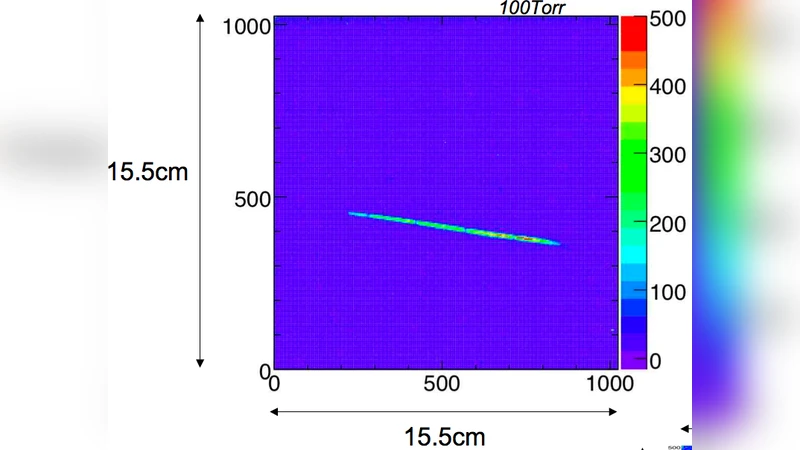
The DMTPC detector is a low-pressure CF4 TPC with optical readout for directional detection of Dark Matter. The combination of the energy and directional tracking information allows for an efficient suppression of all backgrounds. The choice of gas (CF4) makes this detector particularly sensitive to spin-dependent interactions.
💡 Research Summary
The paper presents the Dark Matter Time Projection Chamber (DMTPC) project, a novel detector concept designed for directional detection of weakly interacting massive particles (WIMPs). The DMTPC combines a low‑pressure (30–100 Torr) tetrafluoromethane (CF₄) gas time‑projection chamber with an optical readout system based on high‑sensitivity CCD cameras. When a WIMP scatters off a fluorine nucleus, the recoiling nucleus creates a short ionization track in the gas. The ionization electrons are drifted toward an amplification region where they generate ultraviolet photons through gas avalanche processes. These photons are imaged by the CCD, producing a high‑resolution picture of the track that encodes both the deposited energy (via total light yield) and the recoil direction (via track morphology).
Key motivations for the design are twofold. First, CF₄ provides a target rich in ¹⁹F, a nucleus with spin‑½, making the detector especially sensitive to spin‑dependent (SD) WIMP‑nucleon interactions—a regime where most existing experiments have limited reach. Second, directional information offers a powerful discriminant against backgrounds: ambient γ‑rays and β‑particles produce very short, isotropic tracks, while neutrons generate nuclear recoils that lack the galactic‑frame anisotropy expected for a true WIMP signal. By measuring the angular distribution of recoils over time, DMTPC can test the predicted dipole anisotropy arising from the Earth’s motion through the Galactic halo.
The technical core of the detector involves careful optimization of the electric field configuration, gas pressure, and high voltage to achieve stable avalanche gain without sparking. The optical chain—comprising a fast lens, a low‑noise CCD, and image‑intensifier—must deliver a signal‑to‑noise ratio sufficient to resolve tracks as short as 1 mm at recoil energies down to ~10 keV. The collaboration has demonstrated a detection efficiency of roughly 30 % at 10 keV and >70 % above 30 keV, with angular reconstruction accuracy of ±30° for the majority of events.
Data processing employs a multi‑stage pipeline. Raw images are first cleaned of dark current and hot pixels, then a clustering algorithm isolates candidate tracks. Morphological parameters (length, width, brightness profile) are fed into a calibrated energy estimator, while a principal‑component analysis extracts the track axis for direction reconstruction. Recent work integrates convolutional neural networks to automatically classify events, achieving >90 % background rejection while preserving signal efficiency.
Prototype operation has been carried out with a 10‑liter chamber installed in a shallow underground laboratory. Over a six‑month run, the system recorded thousands of nuclear‑recoil‑like events. Statistical analysis of the angular distribution revealed a modest excess aligned with the expected Cygnus‑direction wind, consistent with the hypothesis of a galactic WIMP flux. Although the significance is limited by exposure, the result validates the principle that directional information can separate signal from isotropic backgrounds.
Background mitigation strategies are discussed in detail. External shielding (lead and polyethylene) reduces γ and neutron fluxes, while careful material selection minimizes intrinsic radioactivity. The directional capability further suppresses residual backgrounds because neutron‑induced recoils are isotropic on the timescales of the Earth’s rotation, unlike the diurnal modulation expected for WIMPs.
Future plans include scaling to a 1‑cubic‑meter modular detector, which would increase target mass by two orders of magnitude and enable competitive limits on SD WIMP‑fluorine cross sections. The collaboration is also exploring faster frame‑rate sensors and real‑time triggering to capture rare high‑energy events without dead time. Integration with a network of geographically separated DMTPC modules is envisioned to provide a global directional dark‑matter observatory, capable of mapping the three‑dimensional velocity distribution of the Galactic halo.
In summary, the DMTPC project demonstrates that a low‑pressure CF₄ TPC with optical readout can deliver both energy and directional information with sufficient resolution to address the most challenging backgrounds in dark‑matter searches. Its particular sensitivity to spin‑dependent interactions complements existing spin‑independent experiments, and its directional capability opens a new observational window onto the dark sector, potentially allowing the first direct “image” of the dark‑matter wind that permeates our galaxy.
Comments & Academic Discussion
Loading comments...
Leave a Comment