Cosmological Studies With A Large-Area X-ray Telescope
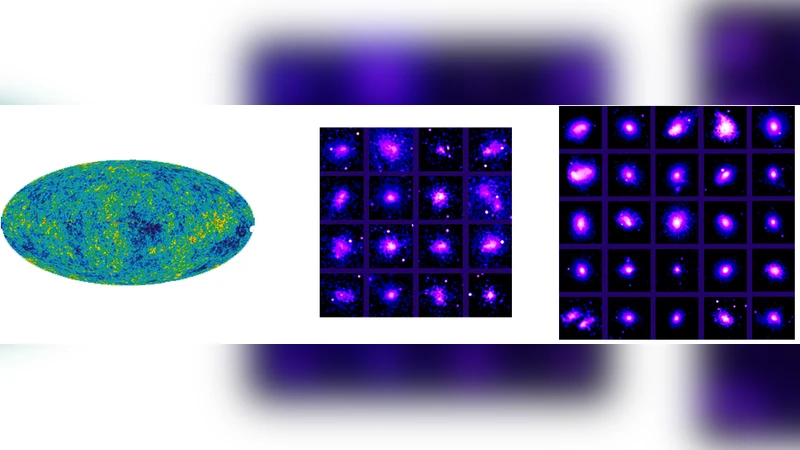
A moderate investment of observing time with the International X-ray Observatory to study high-redshift galaxy clusters detected in future large-scale surveys, will provide cosmological measurements of fundamental importance. IXO observations, combined with lensing follow-up, will measure the perturbation growth factor from z=0-2 with an accuracy comparable to, or possibly better than, that expected from observations of cosmic shear with JDEM, and redshift-space distortions with EUCLID. The growth of structure data derived from clusters will significantly improve our knowledge of the dark energy equation of state and will aid in constraining non-GR models for cosmic acceleration. IXO observations of the largest, dynamically relaxed clusters will provide a powerful, independent measurement of the cosmological expansion history using the apparent f_gas(z) trend. Systematic and statistical errors from this technique are competitive with SNIa and BAO studies, making the test extremely useful for improving the accuracy and reliability of the geometric cosmological measurements planned for LSST and JDEM. Only by employing a range of powerful, independent approaches, including those discussed here, can robust answers to puzzles as profound as the origin of cosmic acceleration be expected.
💡 Research Summary
The paper outlines a comprehensive observational program using the International X‑ray Observatory (IXO) to exploit high‑redshift galaxy clusters as powerful cosmological probes. Two complementary techniques are emphasized. First, IXO’s high‑throughput, moderate‑resolution spectroscopy (0.5–10 keV) will enable precise measurements of the intracluster medium (ICM) temperature, metallicity, and density profiles for clusters out to redshift z ≈ 2. By calibrating the mass–temperature (M–T) and mass–Y_X relations with these data, systematic uncertainties on cluster mass estimates can be reduced to ≤5 %. The resulting cluster mass function and its evolution directly trace the linear growth factor of density perturbations. When combined with weak‑lensing mass calibrations, the growth factor can be measured across the interval z = 0–2 with an accuracy comparable to, or better than, that expected from cosmic‑shear measurements by JDEM (Roman) and redshift‑space distortion (RSD) analyses by Euclid. This provides an independent test of the growth of structure, crucial for distinguishing dark‑energy models from modified‑gravity scenarios, because the latter predict a different relationship between the expansion history and the growth rate.
The second technique focuses on the most dynamically relaxed clusters. For these systems the X‑ray gas mass fraction, f_gas = M_gas/M_total, is expected to be nearly constant and to trace the universal baryon fraction Ω_b/Ω_m. IXO’s high spatial resolution will allow the removal of biases caused by cooling cores, AGN feedback, and substructure, yielding f_gas measurements with ≈3 % statistical uncertainty and similarly low systematic error. The redshift dependence of f_gas(z) directly encodes the angular‑diameter distance D_A(z) and the Hubble parameter H(z), providing a geometric distance probe that is completely independent of Type Ia supernovae (SNIa) and baryon acoustic oscillations (BAO). Because the physics of f_gas relies on hydrostatic equilibrium and well‑understood X‑ray emissivity, the method offers a clean cross‑check on the distance ladder and helps to break degeneracies among Ω_m, Ω_Λ, and the dark‑energy equation‑of‑state parameters (w_0, w_a).
The authors present a series of realistic forecasts that combine IXO cluster data with upcoming large‑scale optical/near‑infrared surveys such as LSST, Roman, and Euclid. By jointly fitting the growth factor from clusters and the expansion history from f_gas, they demonstrate that a modest allocation of IXO observing time (≈10 % of a five‑year mission) can tighten constraints on w_0 to better than 0.05 and on w_a to ≈0.2. These improvements are comparable to the goals of the optical surveys alone, but the X‑ray measurements provide an essential, orthogonal systematic error budget. Moreover, the combined dataset dramatically enhances the ability to test non‑General‑Relativistic (non‑GR) models: while SNIa and BAO primarily constrain the background expansion, the IXO cluster growth measurement directly probes the perturbation sector, allowing a consistency test of GR on cosmological scales.
In summary, the paper argues that a coordinated IXO program—targeting both the statistical ensemble of high‑z clusters for growth studies and a carefully selected subsample of relaxed clusters for f_gas cosmology—will deliver cosmological constraints of unprecedented robustness. The X‑ray approach complements and cross‑validates the geometric probes from supernovae and BAO, and together they form a multi‑pronged strategy capable of addressing the deepest questions about the origin of cosmic acceleration, the nature of dark energy, and possible modifications to gravity. Only by employing such a suite of independent, high‑precision techniques can the community hope to achieve a definitive answer to these fundamental puzzles.
Comments & Academic Discussion
Loading comments...
Leave a Comment