The role of magnetic fields in star formation
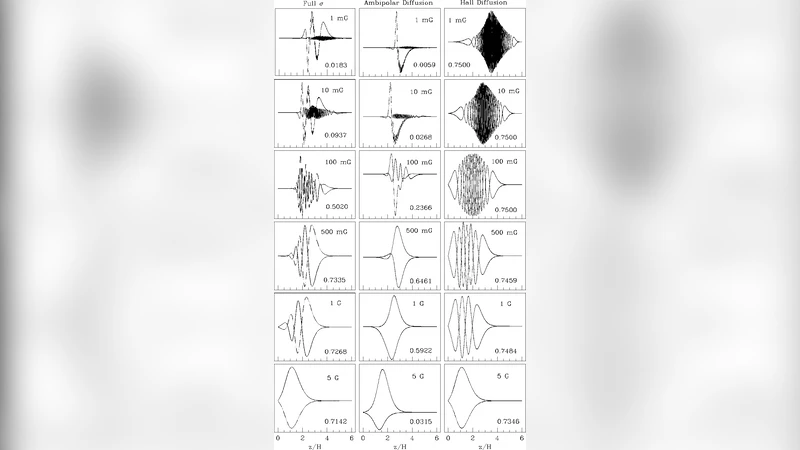
Star formation is thought to be triggered by the gravitational collapse of the dense cores of molecular clouds. Angular momentum conservation during the collapse results in the progressive increase of the centrifugal force, which eventually halts the inflow of material and leads to the development of a central mass surrounded by a disc. In the presence of an angular momentum transport mechanism, mass accretion onto the central object proceeds through this disc, and it is believed that this is how stars typically gain most of their mass. However, the mechanisms responsible for this transport of angular momentum are not well understood. The most promising are turbulence viscosity driven by the magnetorotational instability (MRI), and outflows accelerated centrifugally from the surfaces of the disc. Both processes are powered by the action of magnetic fields and are, in turn, likely to strongly affect the structure, dynamics, evolutionary path and planet-forming capabilities of their host discs. The weak ionization of protostellar discs, however, may prevent the magnetic field from effectively coupling to the gas and drive these processes. Here I examine the viability and properties of these magnetically driven processes in protostellar discs. The results indicate that, despite the weak ionization, the field is able to couple to the gas and shear for fluid conditions thought to be satisfied over a wide range of radii in these discs.
💡 Research Summary
The paper investigates how magnetic fields enable angular‑momentum transport in protostellar disks, a prerequisite for the bulk of stellar mass accretion. Starting from the well‑known problem that weak ionization in dense, cold disks could decouple the magnetic field from the gas, the author builds a comprehensive chemical‑ionization model that includes cosmic‑ray, X‑ray, and radionuclide sources. From these ionization rates the electrical conductivity is derived, accounting for Ohmic, Hall, and ambipolar diffusion. The resulting magnetic Reynolds numbers are shown to be sufficiently high over a wide radial range (∼0.1–100 AU) and for typical temperatures (10–200 K) and densities (10⁸–10¹⁴ cm⁻³) to allow the magnetorotational instability (MRI) to grow.
A key insight is that even though the disk interior may form a “dead zone” where Ohmic diffusion suppresses MRI, a thin surface layer remains ionized enough to stay magnetically active. Moreover, the Hall effect can generate asymmetric currents that partially revive MRI activity within the dead zone, especially when the magnetic field has a vertical component.
Three‑dimensional magnetohydrodynamic simulations are then employed to explore the second major transport channel: centrifugally driven winds launched from the disk surface. When the magnetic field geometry includes a strong vertical component, the simulations produce steady, magnetocentrifugal outflows that efficiently extract angular momentum from the disk. The wind’s efficiency depends sensitively on the magnetic field strength, inclination, and the spatial distribution of conductivity.
By combining the MRI‑driven turbulence in the active layers with the magnetocentrifugal wind from the surface, the study demonstrates a “hybrid” transport regime that can operate across most of the disk. This regime provides a natural explanation for observed accretion rates onto young stars and predicts that magnetic fields, despite weak ionization, remain dynamically important throughout the disk’s evolution.
The author concludes that magnetic coupling is robust enough to sustain both MRI turbulence and disk winds, shaping the disk’s structure, its evolutionary pathway, and its capacity to form planets. The paper calls for high‑resolution ALMA observations to detect signatures of magnetically driven winds and for further development of non‑ideal MHD models that incorporate realistic ionization chemistry.
Comments & Academic Discussion
Loading comments...
Leave a Comment