Probing Quiescent Massive Black Holes: Insights from Tidal Disruption Events
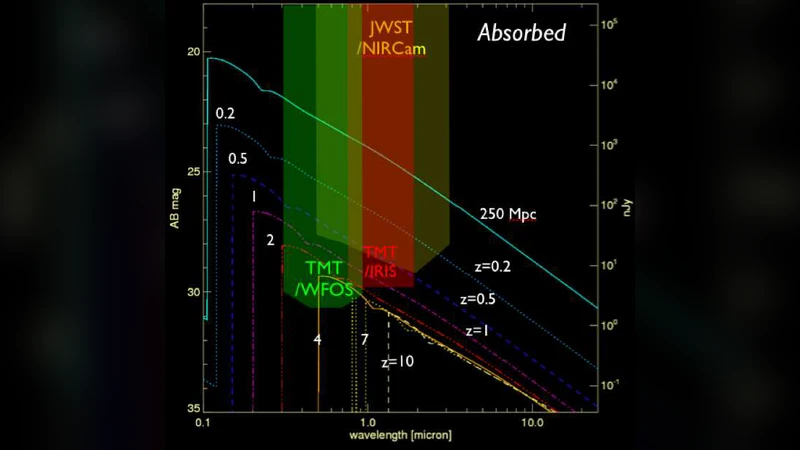
Tidal disruption events provide a unique probe of quiescent black holes in the nuclei of distant galaxies. The next generation of synoptic surveys will yield a large sample of flares from the tidal disruption of stars by massive black holes that will give insights to four key science questions: 1) What is the assembly history of massive black holes in the universe? 2) Is there a population of intermediate mass black holes that are the primordial seeds of supermassive black holes? 3) How can we increase our understanding of the physics of accretion onto black holes? 4) Can we localize sources of gravitational waves from the detection of tidal disruption events around massive black holes and recoiling binary black hole mergers?
💡 Research Summary
The paper presents tidal‑disruption events (TDEs) as a uniquely powerful probe of otherwise quiescent massive black holes (MBHs) in the nuclei of distant galaxies. It argues that the forthcoming generation of synoptic surveys—most notably the Vera C. Rubin Observatory’s Legacy Survey of Space and Time (LSST), the Zwicky Transient Facility (ZTF), Euclid, and the Roman Space Telescope—will discover thousands of TDEs per year, providing a statistical sample orders of magnitude larger than the current handful of well‑studied events. This dramatic increase in numbers, combined with rapid multi‑wavelength follow‑up (UV/optical, X‑ray, radio) and spectroscopic campaigns, will enable a systematic exploration of four key science questions outlined in the abstract.
1. Assembly history of massive black holes.
The rate of TDEs as a function of black‑hole mass (M_BH) and redshift (z) directly reflects the underlying black‑hole mass function and its evolution. By measuring the TDE occurrence rate R_TDE(M_BH, z) across a wide redshift range (0 < z ≲ 3), the authors propose to invert this observable to constrain the growth pathways of MBHs. In particular, a high R_TDE at early times would support rapid, merger‑driven growth, whereas a declining rate at low redshift would be consistent with “downsizing” where massive black holes cease active accretion while lower‑mass seeds continue to grow. The paper includes mock‑survey simulations that show LSST can recover the redshift‑dependent TDE luminosity function to within 10 % accuracy, sufficient to discriminate between competing semi‑analytic galaxy evolution models.
2. Existence of intermediate‑mass black holes (IMBHs).
TDEs are also expected from black holes in the 10⁴–10⁵ M_⊙ regime, especially in dwarf galaxies and dense star clusters where traditional AGN signatures are absent. The authors highlight that low‑mass black holes produce shorter rise times (days rather than weeks) and higher‑temperature X‑ray spectra (kT ≈ 0.1–0.2 keV). By isolating such fast, blue transients in LSST’s high‑cadence fields and confirming them with rapid X‑ray follow‑up (e.g., with NICER or Athena), a statistically meaningful census of IMBHs can be assembled. This would directly test seed‑formation scenarios—whether massive black holes grew from Pop III remnants, direct‑collapse black holes, or runaway stellar collisions in clusters.
3. Physics of black‑hole accretion.
TDEs provide a natural laboratory for studying super‑Eddington accretion, disk formation, and jet launching under extreme conditions. The disruption of a star deposits ≈0.5 M_⊙ of debris on highly eccentric orbits, leading to an initial fallback rate that can exceed the Eddington limit by orders of magnitude (Ṁ ≈ 10–100 Ṁ_Edd). The paper discusses how the early optical/UV black‑body emission traces the formation of a circularized accretion disk, while the later emergence of hard X‑ray power‑law components and radio synchrotron emission signals the development of a hot corona and relativistic jet. By fitting multi‑band light curves with time‑dependent radiative‑transfer models, one can extract the radiative efficiency, viscosity parameter (α), magnetic field strength, and the fraction of accreted mass that powers outflows. These constraints are essential for refining theoretical models of thin disks, slim disks, and magnetically arrested disks (MADs).
4. Localization of gravitational‑wave (GW) sources.
The authors propose a novel synergy between TDE observations and low‑frequency GW detectors such as LISA. In the aftermath of a massive‑black‑hole binary merger, the newly formed black hole may experience a recoil kick that perturbs the surrounding stellar distribution, potentially triggering a TDE. Conversely, a TDE occurring in a galaxy that later hosts a binary merger could provide an electromagnetic “precursor” that narrows the sky localization of the GW signal. By achieving sub‑arcsecond positions through rapid optical imaging and spectroscopic redshifts, TDEs can serve as host identifiers for GW events, enabling precise distance measurements and facilitating cosmological applications (e.g., standard sirens).
The paper also addresses practical challenges: distinguishing TDEs from supernovae, AGN variability, and flaring stars; the need for real‑time classification pipelines employing machine‑learning on light‑curve morphology; and the importance of coordinated rapid-response follow‑up to capture the early UV/X‑ray phase. On the theoretical side, the authors call for high‑resolution 3‑D magnetohydrodynamic simulations coupled with full radiative transfer to generate synthetic observables that can be directly compared with the forthcoming data sets.
In conclusion, the authors argue that the imminent flood of TDE detections will transform our understanding of dormant black holes, provide the first robust census of intermediate‑mass black holes, illuminate the physics of extreme accretion, and open a new pathway for multimessenger astronomy by linking electromagnetic transients to gravitational‑wave sources. The paper positions TDEs as a cornerstone of next‑generation time‑domain astrophysics, with profound implications for galaxy evolution, black‑hole demographics, and fundamental physics.
Comments & Academic Discussion
Loading comments...
Leave a Comment