Young Massive Clusters as probes of stellar evolution
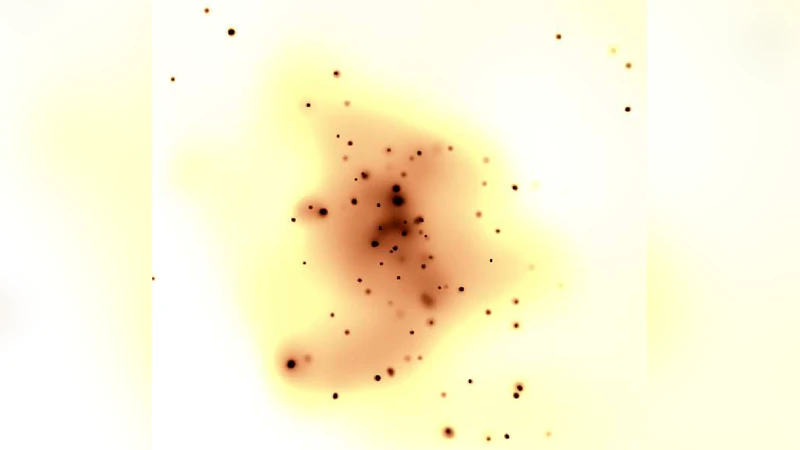
Young Massive Clusters (YMCs) represent ideal testbeds in which to study massive stellar evolution as they contain large, coeval, chemically homogeneous, samples of massive stars. By studying YMCs with a range of ages (and hence turn-off masses), we can investigate the post main-sequence evolution of massive stars as a function of initial mass. Recent discoveries of YMCs over a range of ages within our own Galaxy - where we can successfully resolve individual stars - offers the unprecedented opportunity to test our ideas of massive stellar evolution. Here, I review some of the recent works in this field, and describe how we can use YMCs to investigate several topics, including (a) the evolutionary state of H-rich Wolf-Rayet stars; (b) the influence of binarity on stellar evolution in dense clusters; and (c) Red Supergiants and the post-supernova remnants they leave behind.
💡 Research Summary
Young Massive Clusters (YMCs) provide an unparalleled laboratory for testing massive‑star evolution because they contain thousands to tens of thousands of coeval, chemically homogeneous stars spanning a wide range of initial masses. By selecting YMCs of different ages—typically from about 5 Myr to 30 Myr—researchers can map the turn‑off mass of each cluster to a specific post‑main‑sequence phase, effectively creating a mass‑ordered sequence of evolutionary stages: O‑type → H‑rich Wolf‑Rayet (WNh) → Luminous Blue Variable → Red Supergiant (RSG) → supernova (SN).
One of the most contentious topics is the nature of H‑rich Wolf‑Rayet stars. Unlike classical WR stars, WNh objects retain a substantial hydrogen envelope while exhibiting the extreme mass‑loss rates characteristic of WR spectra. In a YMC, WNh stars can be directly compared with neighboring O‑type stars of the same age, allowing astronomers to determine whether WNh objects are simply O‑stars that have shed mass, or whether additional factors such as rapid rotation, magnetic fields, or binary interaction are required to explain their spectral properties.
The dense environment of a YMC dramatically boosts the binary fraction; recent infrared and radio surveys show that more than 70 % of massive stars in these clusters belong to binary or higher‑order multiple systems. Binary mass transfer, common‑envelope evolution, and mergers can dramatically alter the canonical single‑star pathways. For instance, a star that would normally evolve to an RSG can be stripped early by a companion and become a blue supergiant or a WR star, while the merger of two massive components can produce an ultra‑massive object that may collapse directly into a black hole without a visible supernova. These processes must be incorporated into population‑synthesis models to accurately predict the rates of different supernova types and the formation of massive compact remnants.
Red supergiants occupy a pivotal role as the immediate progenitors of many core‑collapse supernovae. Within YMCs, the statistical sample of RSGs at known ages enables precise measurement of their lifetimes, mass‑loss mechanisms (e.g., pulsation‑driven winds, episodic eruptions), and surface chemistry evolution. By cross‑matching the positions of RSGs with observed supernova remnants (SNRs) in the same cluster, researchers can directly link individual RSGs to specific SN subclasses (II‑P, II‑L, IIn) and infer the mass distribution of the resulting neutron stars or black holes.
Overall, the paper argues that YMCs act as natural experiments where the three axes—initial mass, age, and environmental density—are simultaneously controlled. This makes it possible to (a) pin down the evolutionary status of H‑rich WR stars, (b) quantify how binary interactions reshape massive‑star evolution in crowded settings, and (c) establish a concrete connection between RSGs and the supernova remnants they leave behind. Incorporating these empirical constraints will refine theoretical models, improve predictions of galactic supernova rates, and enhance our understanding of the origins of massive black holes.
Comments & Academic Discussion
Loading comments...
Leave a Comment