Magnetospheric Emission from Extrasolar Planets
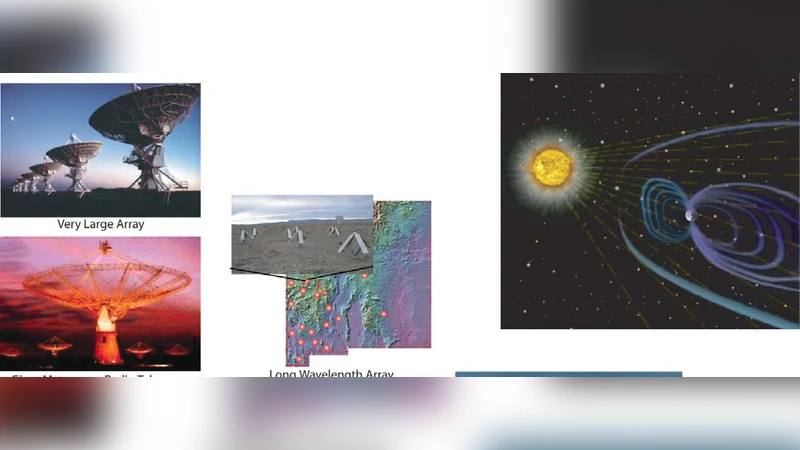
The magnetospheric emissions from extrasolar planets represent a science frontier for the next decade. All of the solar system giant planets and the Earth produce radio emissions as a result of interactions between their magnetic fields and the solar wind. In the case of the Earth, its magnetic field may contribute to its habitability by protecting its atmosphere from solar wind erosion and by preventing energetic particles from reaching its surface. Indirect evidence for at least some extrasolar giant planets also having magnetic fields includes the modulation of emission lines of their host stars phased with the planetary orbits, likely due to interactions between the stellar and planetary magnetic fields. If magnetic fields are a generic property of giant planets, then extrasolar giant planets should emit at radio wavelengths allowing for their direct detection. Existing observations place limits comparable to the flux densities expected from the strongest emissions. Additional sensitivity at low radio frequencies coupled with algorithmic improvements likely will enable a new means of detection and characterization of extrasolar planets within the next decade.
💡 Research Summary
The paper “Magnetospheric Emission from Extrasolar Planets” presents a forward‑looking assessment of radio detection of exoplanet magnetic fields and argues that this technique will become a cornerstone of exoplanet science within the next decade. It begins by reminding the reader that every giant planet in the Solar System, as well as Earth, produces low‑frequency radio emission through the interaction of its intrinsic magnetic field with the solar wind. The emission mechanism is identified as the electron cyclotron maser instability (CMI), which generates coherent, highly polarized radiation at a frequency proportional to the local magnetic field strength (ν ≈ 2.8 MHz · B
Comments & Academic Discussion
Loading comments...
Leave a Comment