Ultradiscretization of a solvable two-dimensional chaotic map associated with the Hesse cubic curve
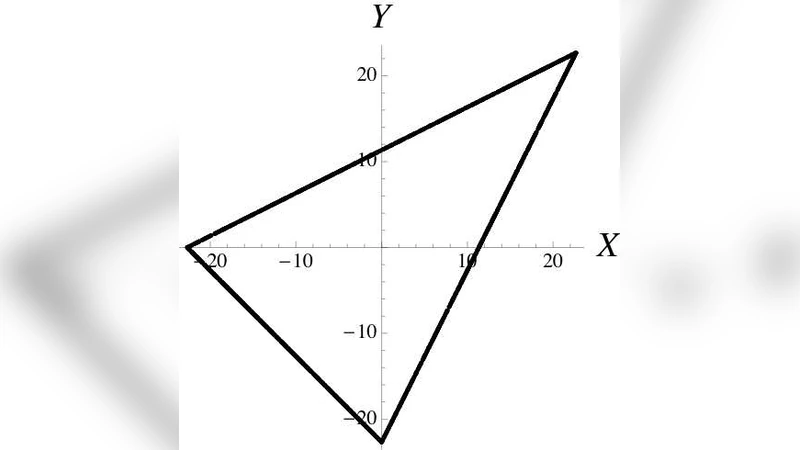
We present a solvable two-dimensional piecewise linear chaotic map which arises from the duplication map of a certain tropical cubic curve. Its general solution is constructed by means of the ultradiscrete theta function. We show that the map is derived by the ultradiscretization of the duplication map associated with the Hesse cubic curve. We also show that it is possible to obtain the nontrivial ultradiscrete limit of the solution in spite of a problem known as “the minus-sign problem.”
💡 Research Summary
The paper investigates a novel two‑dimensional piecewise‑linear chaotic map that emerges from the ultradiscretization of the duplication map on the Hesse cubic curve. The authors begin by recalling that the Hesse cubic, defined by (x^{3}+y^{3}+z^{3}=3\lambda xyz), possesses a rich algebraic structure and a well‑known duplication map (P\mapsto2P) on its Jacobian. This map is integrable in the complex setting: its orbits can be expressed through elliptic functions and theta‑function series, and it conserves the invariant associated with the cubic.
To bridge the continuous algebraic world with tropical (piecewise‑linear) geometry, the authors first tropicalize the Hesse cubic, obtaining a tropical cubic curve consisting of a finite set of linear edges arranged in a hexagonal pattern. The duplication map on the tropical curve becomes a linear transformation that moves points along these edges. However, a direct ultradiscretization—taking the limit (\varepsilon\to0) after the logarithmic change of variables (X=\varepsilon\log x)—fails because the original duplication formula contains terms with opposite signs. This “minus‑sign problem” prevents a straightforward replacement of addition by the max‑operation.
The key technical contribution is the introduction of an ultradiscrete theta function, which is the max‑plus analogue of the classical theta series. By rewriting the continuous solution in terms of a finite sum of exponentials and then applying the logarithmic scaling, the authors obtain a piecewise‑linear function that retains the periodicity of the original theta function while eliminating negative contributions. This construction allows the authors to write an explicit ultradiscrete solution for the duplicated point in terms of integer variables ((X_n,Y_n)).
The resulting map is given by
\
Comments & Academic Discussion
Loading comments...
Leave a Comment