X-ray Studies of Planetary Systems: An Astro2010 Decadal Survey White Paper
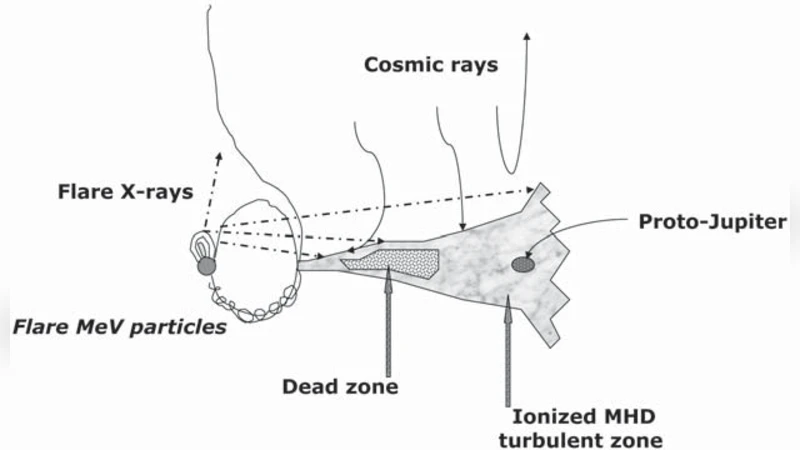
While it may seem counterintuitive that X-ray astronomy should give any insights into low-temperature planetary systems, planets orbit stars whose magnetized surfaces divert a small fraction of the stellar energy into high energy products: coronal UV and X-rays, flare X-rays and energetic particles, and a high-velocity stellar wind. In our Solar System, X-ray emission gives unique insights into the solar activity, planetary atmospheres, cometary comae, charge exchange physics, and space weather across the Solar System. The stellar activity of young stars is greatly elevated and can substantially affect protoplanetary disks and planet formation processes. We highlight six studies achievable with the planned International X-ray Observatory which address in unique ways issues in planetary sciences: probing X-ray irradiation of protoplanetary disks with the iron fluorescent line and its effects on disk turbulence; study the complex charge-exchange X-ray emission from Jupiter and the Martian exosphere; elucidate charge-exchange processes in cometary comae; understanding heliospheric charge-exchange emission and the interpretation of the soft X-ray background; and examining the magnetic activity of planet-hosting stars and its evaporation of planetary atmospheres.
💡 Research Summary
The white paper “X‑ray Studies of Planetary Systems” makes the case that high‑energy astrophysics, far from being irrelevant to cold planetary environments, actually provides a uniquely powerful diagnostic of the processes that shape planetary atmospheres, protoplanetary disks, cometary comae, and the heliospheric background. The authors begin by reminding the reader that virtually every star possesses a magnetized outer atmosphere that diverts a small fraction of its total luminosity into coronal UV/X‑ray emission, flares, energetic particles, and a fast stellar wind. In the Solar System these high‑energy outputs have already proven indispensable for probing solar activity, planetary exospheres, charge‑exchange (CX) physics, and space weather. Because young stars are orders of magnitude more active than the present Sun, their X‑ray and UV radiation can dramatically alter the ionisation state, chemistry, and turbulence of surrounding protoplanetary disks, thereby influencing planet formation pathways.
The paper outlines six concrete science investigations that would be uniquely enabled by the International X‑ray Observatory (IXO), whose combination of high‑throughput, sub‑arcsecond imaging and ≤2.5 eV spectral resolution opens a new window on faint, line‑rich CX emission.
-
Probing Disk Irradiation with the Fe Kα Fluorescent Line – Hard X‑rays from a young star penetrate the inner few AU of a disk, photo‑ionising neutral Fe atoms and producing a 6.4 keV fluorescence line. The line’s intensity and profile directly trace the X‑ray flux that reaches the disk mid‑plane, the column density of intervening material, and the geometry of the irradiated surface. By measuring the line in a sample of disks spanning ages 0.5–10 Myr, IXO can quantify how X‑ray heating drives magnetorotational instability (MRI) turbulence, thereby linking stellar activity to accretion rates and planetesimal formation.
-
Jupiter’s Complex CX Spectrum – Jupiter’s auroral and equatorial X‑ray emission is a superposition of CX lines from solar wind ions (e.g., O VII, O VIII, Ne IX) interacting with H₂ and CH₄, and bremsstrahlung from precipitating electrons. IXO’s high‑resolution spectrometer will separate these components, allowing precise determination of ion charge states, solar wind velocities, and the spatial distribution of CX zones. This will refine models of Jovian magnetospheric dynamics and provide a benchmark for interpreting CX emission from exoplanetary magnetospheres.
-
Martian Exospheric CX Emission – The thin Martian exosphere produces a faint, diffuse CX glow when solar wind ions charge‑exchange with escaping O and CO₂. Because Mars lacks a global magnetic field, the CX emission directly maps the interaction region and can be used to infer atmospheric escape rates. IXO’s sensitivity will enable time‑resolved mapping of the CX halo as solar wind conditions vary, yielding the first quantitative link between solar activity, CX X‑ray brightness, and atmospheric loss.
-
Cometary Coma CX Diagnostics – As a comet approaches the Sun, sublimated volatiles (H₂O, CO, CO₂) form a neutral coma that becomes a bright CX X‑ray source when bombarded by solar wind ions. The resulting spectrum contains dozens of lines from C, N, O, and Ne ions, each with a characteristic intensity ratio that depends on solar wind composition and speed. IXO will obtain high‑signal spectra at multiple cometary distances, allowing reconstruction of the solar wind ion distribution and, simultaneously, a precise inventory of cometary volatiles.
-
Heliospheric CX and the Soft X‑ray Background – A substantial fraction of the observed soft X‑ray background (0.1–1 keV) originates from CX between solar wind ions and interstellar neutral H and He flowing through the heliosphere. This foreground contaminates measurements of the Galactic halo and the warm‑hot intergalactic medium. By performing all‑sky surveys with IXO’s wide‑field imager and exploiting the instrument’s spectral discrimination, the authors propose to map the spatial and temporal variability of heliospheric CX, thereby enabling accurate subtraction of this component from extragalactic studies.
-
Stellar Activity and Planetary Atmosphere Evaporation – High‑energy photons and particles from active host stars can heat the upper atmospheres of close‑in exoplanets, driving hydrodynamic escape. The paper advocates a systematic IXO survey of planet‑hosting stars across a range of spectral types and ages, measuring their X‑ray luminosities, flare frequencies, and coronal temperatures. Coupled with atmospheric escape models, these data will establish empirical scaling laws linking stellar X‑ray output to planetary mass‑loss rates, a critical input for assessing planetary habitability and the long‑term evolution of exoplanet atmospheres.
Each investigation is accompanied by quantitative exposure estimates, showing that IXO can achieve signal‑to‑noise ratios sufficient to resolve individual CX lines in exposures as short as 10–30 ks for the brightest targets, and ≤100 ks for fainter sources such as distant protoplanetary disks or the Martian exosphere. The authors emphasize that the synergy between IXO’s capabilities and existing UV, optical, and infrared facilities (e.g., HST, JWST, ALMA) will enable multi‑wavelength studies that can disentangle the complex feedback loops between high‑energy radiation, disk chemistry, and planet formation.
In conclusion, the paper argues that X‑ray observations are not a peripheral curiosity but a central pillar of planetary science. By exploiting the diagnostic power of fluorescent lines, CX emission, and time‑variable high‑energy fluxes, IXO will transform our understanding of how stellar activity sculpts planetary environments from the earliest stages of disk evolution through the mature epoch of atmospheric escape. This interdisciplinary approach promises to bridge the gap between astrophysics and planetary science, delivering insights that are essential for interpreting the growing inventory of exoplanets and for placing our own Solar System in a broader cosmic context.
Comments & Academic Discussion
Loading comments...
Leave a Comment