The Galactic Center: A Laboratory for Fundamental Astrophysics and Galactic Nuclei
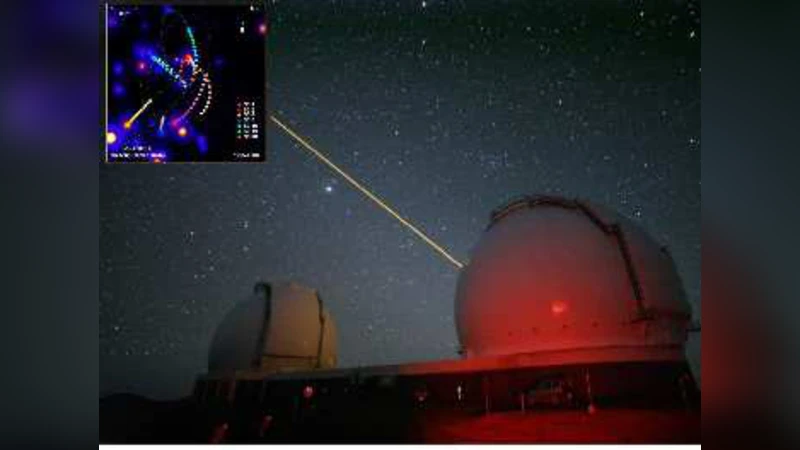
As the closest example of a galactic nucleus, the Galactic center presents an exquisite laboratory for learning about supermassive black holes (SMBH) and their environs. Detailed studies of stellar dynamics deep in the potential well of a galaxy, with exisiting and future large ground-based telescopes, offer several exciting directions in the coming decade. First, it will be possible to obtain precision measurements of the Galaxy’s central potential, providing both a unique test of General Relativity (GR) and a detection of the extended dark matter distribution that is predicted to exist around the SMBH. Tests of gravity have not previously been possible on the mass scale of a SMBH. Similarly, only upper limits on the extended matter distribution on small scales currently exist; detection of dark matter on these scales is an important test of Lambda-CDM and the detection of stellar remnants would reveal a population that may dominate the stellar dynamics on the smallest scales. Second, our detailed view of the SMBH and its local gas and stellar environment provides insight into how SMBHs at the centers of galaxies form, grow and interact with their environs as well as on the exotic processes at work in the densest stellar clusters in the Universe. The key questions, still unanswered, of when and how SMBHs formed in the early universe, and the myriad ways in which feedback from SMBHs can affect structure formation, can be informed by directly observing the physical processes operating at the SMBH.
💡 Research Summary
The paper presents the Galactic Center (GC) as the most accessible laboratory for studying supermassive black holes (SMBHs) and the complex environment that surrounds them. Because the Milky Way’s central black hole, Sagittarius A*, lies only ~8 kpc away and has a mass of ~4 × 10⁶ M⊙, it offers an unprecedented opportunity to resolve individual stellar orbits, gas dynamics, and electromagnetic emission on scales that are impossible in external galaxies. The authors argue that the next decade of observational capability—driven by thirty‑meter class ground‑based telescopes (ELT, TMT, GMT), advanced near‑infrared interferometers (GRAVITY+, MICADO), high‑resolution radio VLBI, and eventually space‑based gravitational‑wave detectors (LISA)—will transform GC studies from qualitative to quantitative astrophysics.
Key scientific objectives are fourfold.
-
Precision tests of General Relativity (GR) in the strong‑field regime.
Current measurements of the S‑star cluster (especially S2) have confirmed the existence of a point‑mass potential and have detected modest relativistic effects such as periapse precession and gravitational redshift. However, the precision (∼0.5 mas positional accuracy, ∼10 km s⁻¹ velocity errors) and temporal baseline are insufficient to isolate higher‑order post‑Newtonian terms, frame‑dragging, or the black‑hole spin. With astrometric precision better than 10 μas and radial‑velocity accuracy of ∼1 km s⁻¹, future observations will map the full relativistic orbit, measure the Schwarzschild precession to a few percent, detect the Lense‑Thirring precession, and jointly constrain mass, spin, and quadrupole moment. This will constitute the first direct test of GR on the mass scale of a SMBH. -
Detection of an extended mass distribution (dark matter spike and stellar remnants).
ΛCDM cosmology predicts that the growth of a SMBH should compress the surrounding dark‑matter halo into a steep “spike” (ρ∝r⁻¹·⁵) on sub‑parsec scales. Presently only upper limits exist because the stellar orbital data cannot separate the point‑mass contribution from a possible extended component. By fitting the non‑Keplerian terms in the stellar accelerations, and by statistically characterising stochastic perturbations caused by a population of compact remnants (white dwarfs, neutron stars, stellar‑mass black holes), the new data set will either reveal the spike or place stringent constraints that challenge the standard model. Detecting a significant extended mass would also clarify the dynamical role of unseen stellar remnants, which may dominate the relaxation processes in the innermost 0.01 pc. -
Understanding SMBH feedback and the co‑evolution of the black hole with its gaseous and stellar environment.
The GC hosts a dense, rotating molecular disk, ionised gas streams (the “mini‑spiral”), and a young, massive stellar cluster (the S‑cluster). High‑resolution spectroscopy and interferometric imaging will trace gas inflow, outflow, and heating mechanisms, while simultaneous monitoring of flares from Sgr A* will link accretion variability to changes in the surrounding medium. By quantifying radiation pressure, mechanical jet power, and thermal winds, researchers can test theoretical feedback prescriptions that are currently implemented in galaxy‑formation simulations as sub‑grid models. -
Constraining the formation pathways of SMBHs in the early universe.
The physical processes observed in the Milky Way’s nucleus—gas accretion, stellar collisions, tidal disruption events, and compact‑object dynamics—represent a “near‑field” analogue of the conditions that may have existed in high‑redshift quasars. By establishing a detailed, time‑resolved picture of how Sgr A* grows and interacts with its environment, the GC study provides empirical constraints on competing seed‑formation scenarios (direct collapse, massive Pop III stars, runaway stellar mergers).
Broader impact and outlook.
The authors emphasize that the GC will become a benchmark for testing fundamental physics (GR, dark‑matter microphysics) and for calibrating the feedback recipes used in cosmological simulations of galaxy evolution. The synergy of multi‑wavelength observations, long‑term monitoring, and sophisticated dynamical modelling will enable a unified description of the central potential, the distribution of invisible mass, and the energy exchange between the black hole and its surroundings. In this way, the Galactic Center will not only illuminate the specific history of our own Milky Way but also serve as a template for interpreting the co‑evolution of SMBHs and galaxies across cosmic time.
Comments & Academic Discussion
Loading comments...
Leave a Comment