Probing Stellar Dynamics in Galactic Nuclei
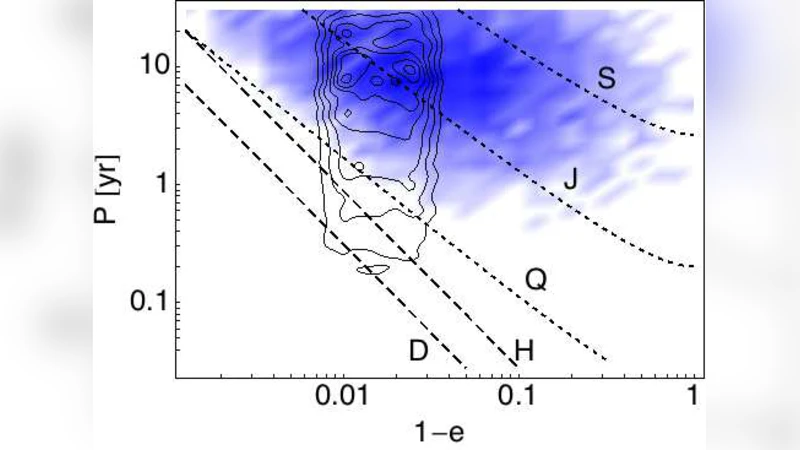
Electromagnetic observations over the last 15 years have yielded a growing appreciation for the importance of supermassive black holes (SMBH) to the evolution of galaxies, and for the intricacies of dynamical interactions in our own Galactic center. Here we show that future low-frequency gravitational wave observations, alone or in combination with electromagnetic data, will open up unique windows to these processes. In particular, gravitational wave detections in the 10^{-5}-10^{-1} Hz range will yield SMBH masses and spins to unprecedented precision and will provide clues to the properties of the otherwise undetectable stellar remnants expected to populate the centers of galaxies. Such observations are therefore keys to understanding the interplay between SMBHs and their environments.
💡 Research Summary
Over the past decade and a half, electromagnetic (EM) observations have firmly established that supermassive black holes (SMBHs) are central to galaxy evolution, yet many aspects of the dynamical interplay between SMBHs and the dense stellar remnants that populate galactic nuclei remain hidden from traditional telescopes. This paper argues that low‑frequency gravitational‑wave (GW) astronomy, operating in the 10⁻⁵–10⁻¹ Hz band, will open a uniquely powerful window onto these processes, both on its own and when combined with EM data.
The authors first outline the two principal GW sources that dominate this frequency range. Massive black‑hole binaries (MBHBs) in the final stages of coalescence emit chirps whose phase evolution encodes the masses and spins of the two SMBHs with sub‑percent precision—far surpassing the typical 10‑30 % uncertainties achievable through reverberation mapping, stellar dynamics, or gas‑dynamical modeling. Precise spin measurements, in particular, will allow us to discriminate between growth channels (coherent gas accretion versus chaotic mergers) and to test predictions of spin‑orbit alignment from galaxy‑scale simulations.
The second, and arguably more revolutionary, source class is the extreme‑mass‑ratio inspiral (EMRI). Compact remnants—stellar‑mass black holes, neutron stars, or massive white dwarfs—spiral into an SMBH on highly relativistic, eccentric orbits, emitting thousands of GW cycles within the LISA band. The intricate modulation of amplitude and phase carries a detailed map of the inspiralling object’s mass, orbital eccentricity, inclination, and the SMBH’s multipole moments. By fitting these waveforms with Bayesian inference, one can reconstruct the distribution of otherwise invisible stellar remnants in the nucleus, probe mass segregation, and measure the relaxation time of the nuclear star cluster. Such information is essential for testing theories of cusp formation, resonant relaxation, and the role of “dark” stellar populations in feeding the central black hole.
A major strength of the paper is its emphasis on multi‑messenger synergy. EM observations provide the large‑scale context: gas kinematics, star‑formation rates, nuclear luminosities, and direct imaging of accretion disks. When paired with GW‑derived SMBH parameters, these data can be used to calibrate accretion‑efficiency models, constrain the geometry of the surrounding torus, and verify whether observed AGN variability correlates with the spin‑driven jet power inferred from GW measurements. Moreover, the detection of EMRIs will pinpoint the locations of compact objects that may later become tidal‑disruption event progenitors, linking GW catalogs to transient EM surveys.
From a technical standpoint, the paper discusses the capabilities of the Laser Interferometer Space Antenna (LISA) and pulsar‑timing arrays (PTAs). LISA’s planned sensitivity (noise floor ~10⁻²⁰ Hz⁻¹/²) and multi‑year observation windows are ideal for detecting MBHBs with total masses 10⁵–10⁷ M⊙ out to redshift z≈5, and for observing EMRIs out to z≈1–2. PTAs, operating at nanohertz frequencies, complement LISA by probing the very early inspiral of the most massive binaries (M>10⁹ M⊙), thereby offering a continuous evolutionary picture from gigayear‑scale orbital decay down to the final merger. The authors argue that simultaneous detections by both facilities would enable unprecedented tests of general relativity in the strong‑field regime and provide a full timeline of binary evolution.
Data analysis challenges are acknowledged: EMRI waveforms inhabit a high‑dimensional parameter space (hundreds of parameters), requiring sophisticated template banks, reduced‑order modeling, and machine‑learning‑accelerated likelihood evaluations. The paper proposes a hierarchical Bayesian framework that incorporates EM priors (e.g., host‑galaxy redshift, SMBH mass estimates from spectroscopy) to tighten GW parameter posteriors and reduce computational cost.
In conclusion, low‑frequency GW observations will deliver SMBH mass and spin measurements with unprecedented accuracy and will reveal the hidden population of compact stellar remnants in galactic nuclei. By integrating these GW insights with existing and forthcoming EM surveys, astronomers will finally be able to quantify the feedback loop between SMBHs and their environments, test models of galaxy‑SMBH co‑evolution, and explore relativistic dynamics in the most extreme astrophysical laboratories. The paper makes a compelling case that the upcoming era of space‑based GW astronomy, especially with LISA, will be transformative for our understanding of galactic nuclei.
Comments & Academic Discussion
Loading comments...
Leave a Comment