New Astrophysical Opportunities Exploiting Spatio-Temporal Optical Correlations
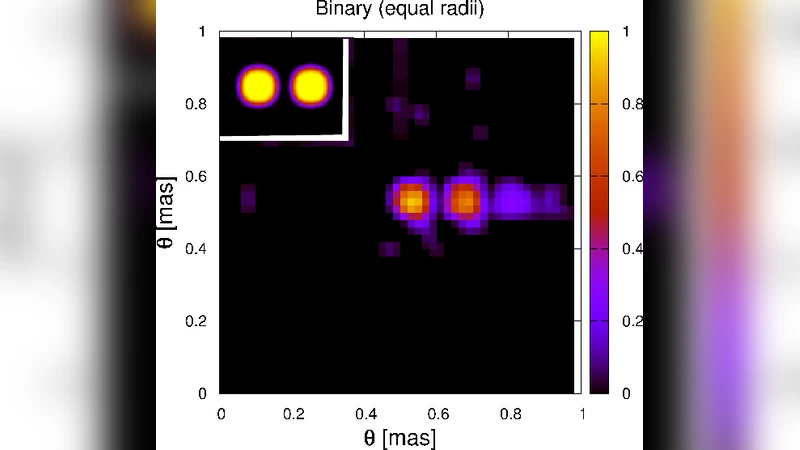
The space-time correlations of streams of photons can provide fundamentally new channels of information about the Universe. Today’s astronomical observations essentially measure certain amplitude coherence functions produced by a source. The spatial correlations of wave fields has traditionally been exploited in Michelson-style amplitude interferometry. However the technology of the past was largely incapable of fine timing resolution and recording multiple beams. When time and space correlations are combined it is possible to achieve spectacular measurements that are impossible by any other means. Stellar intensity interferometry is ripe for development and is one of the few unexploited mechanisms to obtain potentially revolutionary new information in astronomy. As we discuss below, the modern use of stellar intensity interferometry can yield unprecedented measures of stellar diameters, binary stars, distance measures including Cepheids, rapidly rotating stars, pulsating stars, and short-time scale fluctuations that have never been measured before.
💡 Research Summary
The paper presents a forward‑looking case for reviving stellar intensity interferometry (SII) by exploiting both spatial and temporal correlations of photon streams, a capability that modern detector technology now makes feasible. Traditional astronomical interferometry—most often of the Michelson type—relies on measuring complex amplitude coherence (the first‑order correlation function) and therefore extracts phase information from the wavefront. While this approach has delivered spectacular results such as high‑resolution imaging of stellar surfaces and exoplanet environments, it is fundamentally limited by the need for sub‑wavelength path‑length stability and by the difficulty of extending baselines beyond a few hundred meters.
In contrast, intensity interferometry measures the second‑order correlation function g²(τ, r), i.e., the probability that two photons are detected at two separate stations with a time lag τ and a spatial separation r. The Hanbury Brown–Twiss (HBT) effect demonstrated that g² contains information about the source’s angular size without requiring phase stability. Historically, the original HBT experiments were constrained by the relatively slow photomultipliers of the 1950s and by the inability to record many simultaneous baselines, so the technique never reached its full scientific potential.
The authors argue that the situation has changed dramatically. Superconducting nanowire single‑photon detectors (SNSPDs), avalanche photodiodes (APDs) with jitter below 10 ps, and silicon photomultipliers now provide quantum efficiencies above 80 % and timing resolutions an order of magnitude better than the original devices. When these detectors are arranged in arrays of thousands of elements and linked by low‑loss optical fibers or free‑space links, baselines of several kilometers become practical. Modern field‑programmable gate arrays (FPGAs) and GPU‑accelerated pipelines can compute cross‑correlations in real time for billions of photon pairs per second, delivering high‑signal‑to‑noise g² measurements even for relatively faint stars.
By combining spatial and temporal information, the technique opens a suite of scientific opportunities that are inaccessible to amplitude interferometry. First, stellar diameters can be measured with an order‑of‑magnitude improvement in precision, because the g² signal scales with the square of the source’s coherence area. Second, binary systems can be characterized directly from the modulation of the g² function with baseline orientation, yielding independent estimates of orbital inclination, component masses, and distances. Third, Cepheid variables can be monitored on sub‑second timescales, allowing a direct calibration of the period‑luminosity relation without relying on indirect photometric methods. Fourth, rapidly rotating stars (e.g., Be stars) exhibit latitude‑dependent temperature and brightness; the asymmetry of the temporal‑spatial correlation pattern can map these latitudinal variations and test models of gravity darkening. Fifth, high‑frequency phenomena such as pulsar optical pulses, magnetar flares, or micro‑variability in accretion disks can be captured because the intensity interferometer does not require phase coherence and can tolerate nanosecond‑scale fluctuations.
The paper also outlines the technical challenges that must be overcome. For faint targets, the statistical convergence of g² demands integration times of many hours, so atmospheric transmission variations and fiber dispersion must be continuously calibrated. Precise synchronization of detector clocks to the femtosecond level is required; the authors propose a laser‑based timing distribution network to achieve sub‑picosecond alignment across the array. Data volumes will reach petabyte scales for multi‑night campaigns, necessitating lossless compression and machine‑learning‑driven background subtraction to isolate genuine photon coincidences.
A phased implementation plan is proposed. A pilot facility with a modest 100‑m baseline and a handful of high‑speed detectors will first target bright, nearby stars to validate system performance. Subsequent upgrades will expand the baseline to several kilometers, increase detector count, and incorporate adaptive optics on the collection telescopes to maximize photon throughput. The ultimate goal is a global network of intensity‑interferometer stations that can jointly observe Cepheids in external galaxies, resolve the surfaces of supergiants in the Local Group, and provide an independent rung on the cosmic distance ladder.
In conclusion, the authors contend that the convergence of ultra‑fast photon counting, massive parallel data processing, and robust timing distribution makes stellar intensity interferometry a viable, high‑impact tool for 21st‑century astronomy. By measuring both spatial and temporal photon correlations, astronomers can access a new class of observables—stellar diameters, binary dynamics, rapid variability, and precise distances—with a simplicity and scalability that complement existing amplitude‑based interferometers and open a pathway to revolutionary discoveries about the structure and evolution of the Universe.
Comments & Academic Discussion
Loading comments...
Leave a Comment