Social Networking: An astronomers field guide
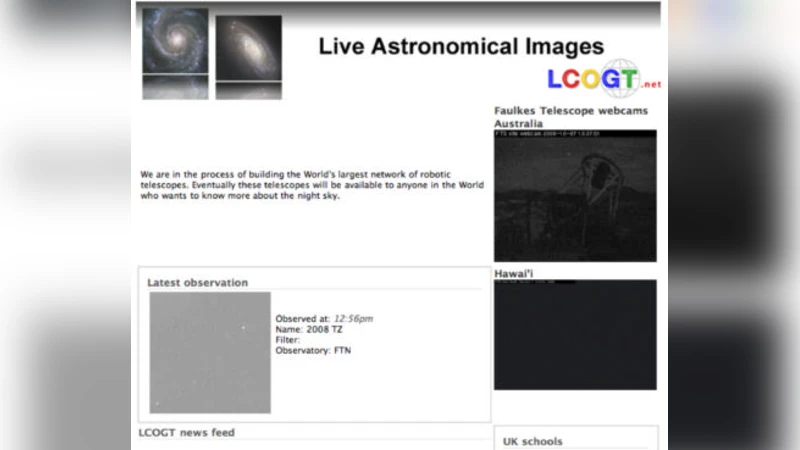
We present a brief introduction to the phenomenon of “social networking” and its potentially powerful use as an astronomy outreach and educational tool. We briefly discuss the development of applications for websites and facebook and the use of web trackers e.g. Google Analytics to analyze your audience. Finally we discuss how social bookmarking can be used to promote your work to unexpected audiences.
💡 Research Summary
The paper provides a concise yet thorough introduction to the concept of social networking and demonstrates how it can be harnessed as a powerful outreach and educational tool for astronomy. It begins by defining “social networking” in the context of modern digital communication and contrasts it with traditional science outreach methods such as public lectures, printed materials, and museum exhibits. The authors argue that social platforms offer unique advantages: real‑time interaction, viral dissemination, low cost, and the ability to reach diverse, global audiences that might otherwise never encounter astronomical content.
The core of the manuscript focuses on practical implementation. First, the authors walk the reader through the creation of a dedicated Facebook presence for an astronomy project. They discuss page design principles—consistent visual branding, high‑resolution images from telescopes, and clear, jargon‑free descriptions—to attract both enthusiasts and laypersons. Using the Facebook Graph API, they illustrate how to automate posting schedules, set up event invitations for star‑gazing nights, and embed interactive elements such as polls and quizzes. Sample code snippets are provided, showing how to retrieve page insights, respond to comments programmatically, and manage permissions securely.
Next, the paper delves into analytics, with a particular emphasis on Google Analytics (GA). The authors explain how to embed the GA tracking code on an astronomy website or blog, define conversion goals (e.g., newsletter sign‑ups, video completions, or downloads of data sets), and interpret key metrics such as sessions, bounce rate, average session duration, and traffic source breakdowns. They demonstrate the creation of custom segments to isolate visitors by device type, geographic region, or referral channel, enabling astronomers to tailor content for mobile users in the Southern Hemisphere or to optimize SEO for specific search terms like “galaxy images” or “exoplanet discovery.” The paper also outlines how to set up automated alerts for unusual traffic spikes, which could indicate a successful media pick‑up or, conversely, a potential bot attack.
The discussion then shifts to social bookmarking platforms—Reddit, StumbleUpon (now Mix), Digg, and Pinterest—as complementary channels for reaching “unexpected” audiences. The authors note that these sites operate on community‑driven curation algorithms, rewarding content that sparks discussion or visual appeal. They provide concrete strategies: posting concise, well‑formatted summaries of recent observations to relevant subreddits (e.g., r/astronomy, r/space), creating pinboards on Pinterest that showcase high‑resolution nebula photographs with educational captions, and submitting “mixes” on Mix that aggregate links to open‑access papers, data visualizations, and outreach videos. Timing, appropriate tagging, and adherence to each community’s etiquette are highlighted as critical for maximizing visibility and avoiding removal.
A dedicated section addresses the ethical and legal considerations inherent in digital outreach. The authors stress the importance of obtaining explicit consent when collecting user data, complying with GDPR or comparable privacy regulations, and respecting copyright when sharing telescope images or third‑party videos. They recommend establishing a pre‑publication review workflow involving at least one subject‑matter expert to verify scientific accuracy, thereby mitigating the risk of misinformation spreading rapidly through social channels. Additionally, they advise setting up moderation pipelines to filter spam, harassment, or off‑topic comments, and to respond promptly to any factual errors identified by the community.
In the concluding remarks, the paper underscores that social networking should not replace traditional outreach but rather augment it, creating a synergistic ecosystem where each channel reinforces the others. By leveraging analytics, astronomers can adopt a data‑driven approach to refine messaging, measure impact, and allocate resources efficiently. The authors propose future research directions, including the integration of artificial‑intelligence recommendation engines to personalize content feeds, the use of virtual‑reality (VR) and augmented‑reality (AR) experiences shared via social platforms, and the development of cross‑platform dashboards that aggregate metrics from Facebook, Twitter, YouTube, and bookmarking sites into a single, actionable view. Overall, the manuscript serves as a practical roadmap for astronomers seeking to navigate the digital landscape, expand their public reach, and foster a more scientifically literate society.
Comments & Academic Discussion
Loading comments...
Leave a Comment