Anglo-Australian Observatory February 2009 newsletter
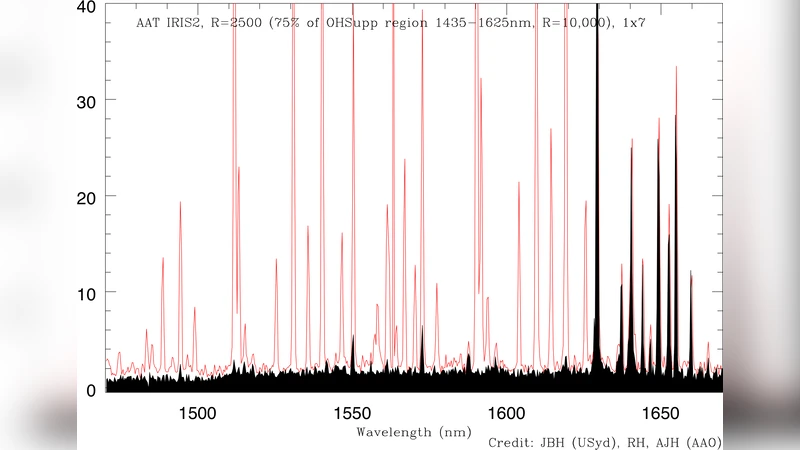
The February 2009 edition of the AAO newsletter contains articles on the preliminary results from the WiggleZ dark energy survey, the analysis of near-IR observations of the galaxy IRAS18293-3413, the early results from the SPIRAL IFU investigation of the dynamics of a sample of nearby star forming galaxies, a summary of the successful outcome of the first on-sky test of photonic OH suppression and a number of regular features.
💡 Research Summary
The February 2009 edition of the Anglo‑Australian Observatory (AAO) newsletter presents a compact yet comprehensive snapshot of the institute’s scientific output and technical developments at the close of the first decade of the 21st century. The issue is organized around four flagship research articles, each illustrating a distinct facet of modern observational astronomy, followed by regular columns that keep the AAO community informed about infrastructure, education, and strategic planning.
The first feature reports on the early results of the WiggleZ dark‑energy survey, a large‑scale spectroscopic programme that uses the AAOmega multi‑object spectrograph on the 3.9‑m Anglo‑Australian Telescope to map the distribution of star‑forming galaxies in the redshift interval 0.5 ≤ z ≤ 1.0. By analysing roughly 200 hours of exposure time, the WiggleZ team derived precise measurements of the galaxy bias and the amplitude of the matter power spectrum at intermediate redshifts. These measurements translate into new constraints on the dark‑energy equation‑of‑state parameter w and the density parameter ΩΛ, confirming consistency with the ΛCDM model while tightening the allowed parameter space. The article details the data‑reduction pipeline, systematic error mitigation (including sky‑line subtraction and fibre‑throughput calibration), and the statistical methods used to extract the redshift‑space distortion signal.
The second article shifts focus to the near‑infrared (near‑IR) study of the luminous infrared galaxy IRAS 18293‑3413. Using a combination of VLT/ISAAC and AAO’s IRIS2 instrument, the authors obtained high‑resolution K‑band spectra that include diagnostic lines such as Pa β, Br γ,
Comments & Academic Discussion
Loading comments...
Leave a Comment