We define a normalized impact factor suitable to assess in a simple way both the strength of scientific communities and the research influence of individuals. We define those ones with $NIF \geq 1$ as being scientific leaders since they would influence their peers at least as much as they are influenced by them. The NIF is distinguished because (a) this has a clear and universal meaning being applicable with equal efficiency to individuals belonging to scientific communities with quite different publication and citation traditions and (b) this is robust against self-citation expedient. This is eventually applied to a community derived from the list of outstanding referees recognized by the American Physical Society in 2008.
Deep Dive into What are scientific leaders? The introduction of a normalized impact factor.
We define a normalized impact factor suitable to assess in a simple way both the strength of scientific communities and the research influence of individuals. We define those ones with $NIF \geq 1$ as being scientific leaders since they would influence their peers at least as much as they are influenced by them. The NIF is distinguished because (a) this has a clear and universal meaning being applicable with equal efficiency to individuals belonging to scientific communities with quite different publication and citation traditions and (b) this is robust against self-citation expedient. This is eventually applied to a community derived from the list of outstanding referees recognized by the American Physical Society in 2008.
arXiv:0809.0290v2 [physics.soc-ph] 25 Feb 2009
What are scientific leaders? The introduction of a normalized impact factor
George E. A. Matsas
Instituto de F´ısica Te´orica, Universidade Estadual Paulista,
Rua Pamplona 145, 01405-900, S˜ao Paulo, SP, Brazil
We define a normalized impact factor suitable to assess in a simple way both the strength of
scientific communities and the research influence of individuals. We define those ones with NIF ≥
1 as being scientific leaders since they would influence their peers at least as much as they are
influenced by them. The NIF is distinguished because (a) this has a clear and universal meaning
and (b) this is robust against self-citation expedient. We show how a single lognormal function
obtained from a simplified version of the NIF leads to a clear “radiography” of the corresponding
scientific community. As an illustration, this is eventually applied to analyze a community derived
from the list of outstanding referees recognized by the American Physical Society in 2008.
PACS numbers: 02.50.-r,01.75.+m,89.65.-s
One of the most challenging aspects to define compre-
hensive scientometric indexes concerns the fact that this
is not obvious in general how to take into account the
field idiosyncrasies [1]. On the other hand, some agree-
ment on what scientometric guiding criteria are useful
is crucial to allow the proper agencies to formulate gen-
eral policies and optimize the use of financial resources.
As a consequence a continuous effort to improve the ac-
tual parameters can be witnessed. In order to take into
account the publishing and citation traditions of differ-
ent areas to rank scientific journals some authors have
suggested, for instance, alternatives to the journal im-
pact factor (JIF) [2]. One such example was proposed
by Bergstrom who reports the development of an algo-
rithm which captures the percentage of the time that li-
brary users spend with a given journal [3]: “Eigenfactor
Scores and Article Influence Scores rank journals much
as Google ranks websites”. (See also Refs. [4] for previ-
ous related work.) More recently Nicolaisen and Frand-
sen have defined the reference return ratio (3R). The 3R
exhibits a strong correlation with the JIF yet the “3R
appears to correct for citation habits, citation dynamics,
and composition of document types” [5]. In the same year
Zitt and Small proposed the audience factor (AU) [6] as
a way to normalize the standard JIF by the journal field.
As part of the broad program of defining scientomet-
ric parameters whose interpretation is as independent as
possible from the research field, we define here the nor-
malized impact factor (NIF) to assess the strength of sci-
entific communities and the influence of individual re-
search. The NIF is distinguished because (a) this has a
clear and universal meaning being applicable with equal
efficiency to individuals belonging to quite distinct com-
munities and (b) this is robust against self-citation ex-
pedient. For the sake of illustration, we use the NIF to
analyze a community derived from the list of outstand-
ing referees recognized by the American Physical Society
(APS) in 2008 [7]. We compare the NIF with the h-index
and show that no clear correlation between them is seen
indicating that both indexes carry different pieces of in-
formation.
Eventually we discuss the NIF limitations.
1
2
3
4
5
6
SNIF
0.2
0.4
0.6
0.8
1
f
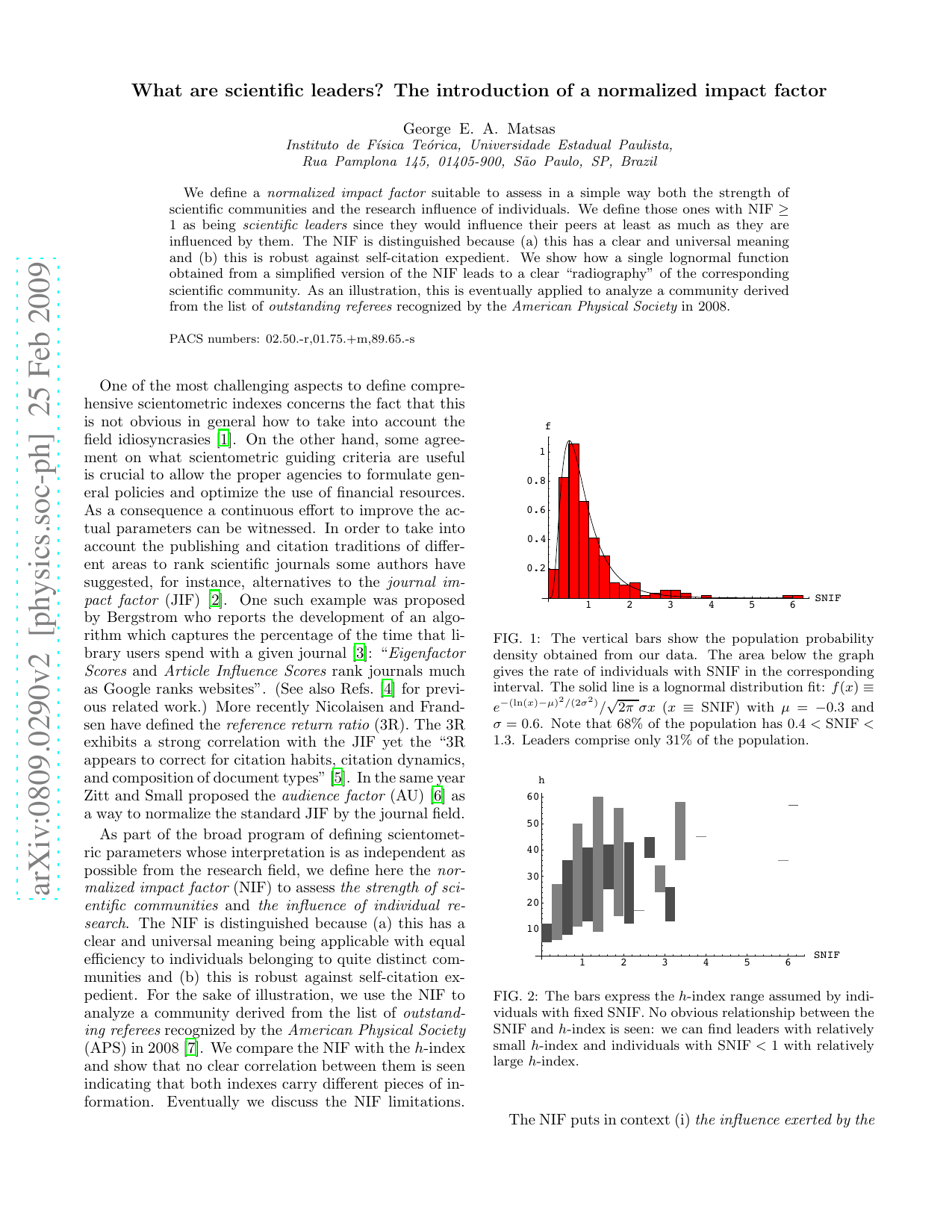
FIG. 1: The vertical bars show the population probability
density obtained from our data. The area below the graph
gives the rate of individuals with SNIF in the corresponding
interval. The solid line is a lognormal distribution fit: f(x) ≡
e−(ln(x)−µ)2/(2σ2)/
√
2π σx (x ≡SNIF) with µ = −0.3 and
σ = 0.6. Note that 68% of the population has 0.4 < SNIF <
1.3. Leaders comprise only 31% of the population.
1
2
3
4
5
6
SNIF
10
20
30
40
50
60
h
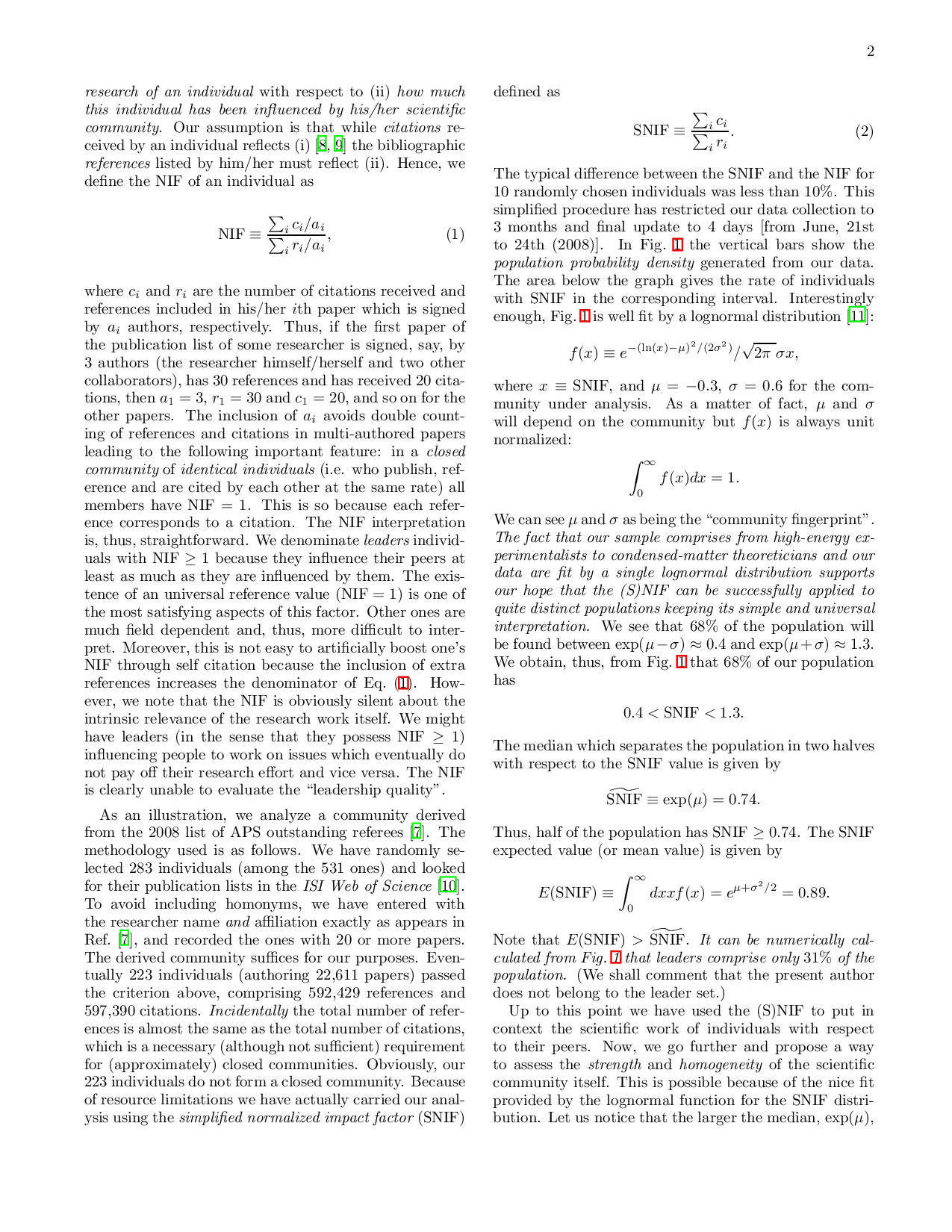
FIG. 2: The bars express the h-index range assumed by indi-
viduals with fixed SNIF. No obvious relationship between the
SNIF and h-index is seen: we can find leaders with relatively
small h-index and individuals with SNIF < 1 with relatively
large h-index.
The NIF puts in context (i) the influence exerted by the
2
research of an individual with respect to (ii) how much
this individual has been influenced by his/her scientific
community. Our assumption is that while citations re-
ceived by an individual reflects (i) [8, 9] the bibliographic
references listed by him/her must reflect (ii). Hence, we
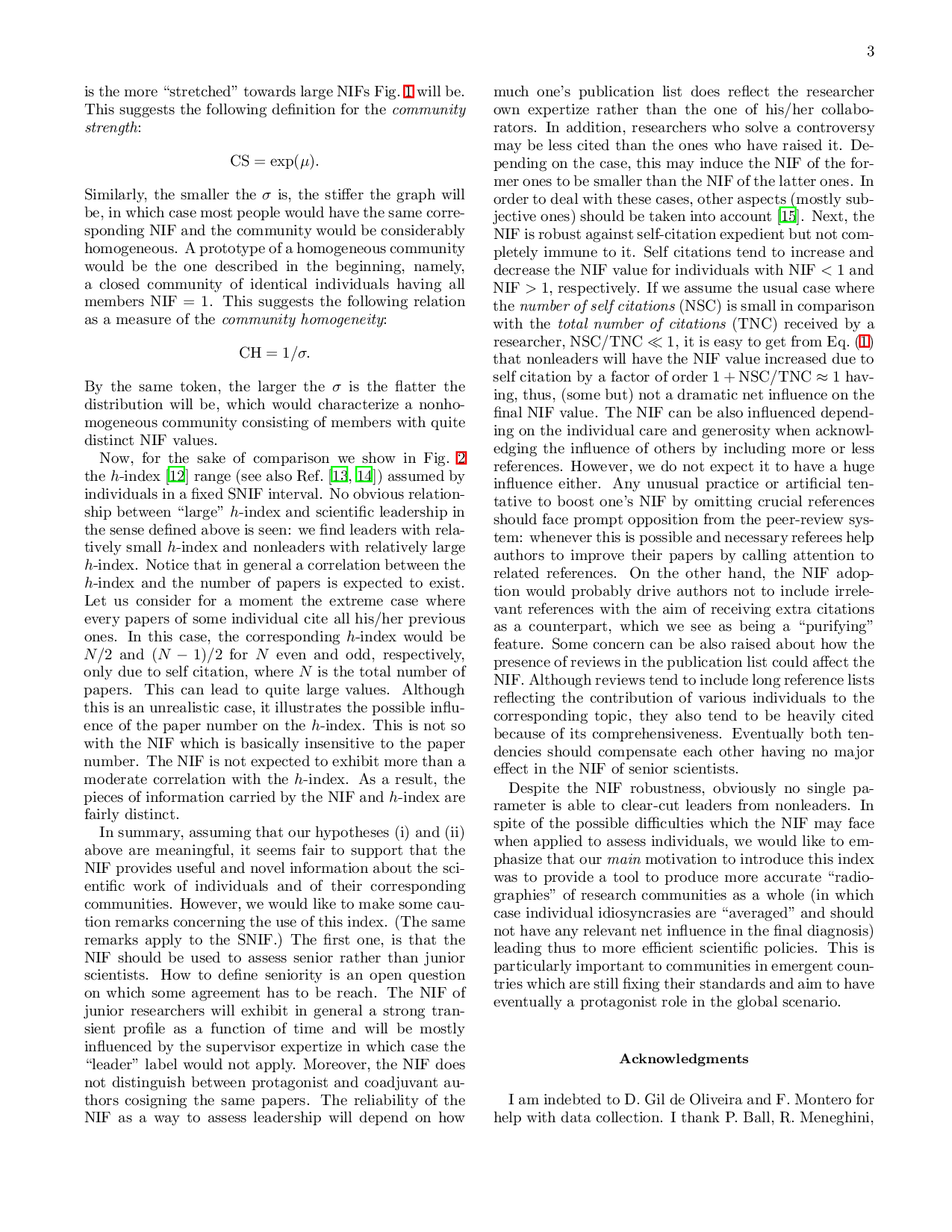
define the NIF of an individual as
NIF ≡
P
i ci/ai
P
i ri/ai
,
(1)
where ci and ri are the number of citations received and
references included in his/her ith paper which is signed
by ai authors, respectively. Thus, if the first paper of
the publication list of some researcher is signed, say, by
3 authors (the researcher himself/herself and two other
collaborators), has 30 references and has received 20 cita-
tions, then a1 = 3, r1 = 30 and c1 = 20, and so on for the
other papers. The inclusion of ai avoids double count-
ing of references and citations in multi-
…(Full text truncated)…
This content is AI-processed based on ArXiv data.