O/IR Polarimetry for the 2010 Decade (SSE): Science at the Edge, Sharp Tools for All
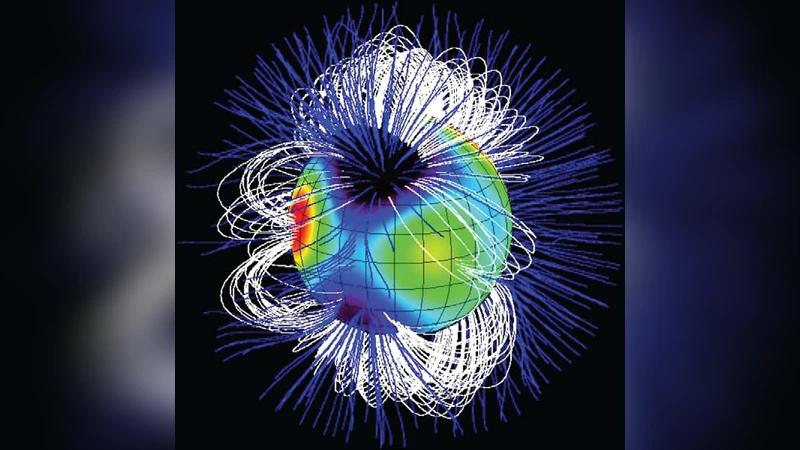
Science opportunities and recommendations concerning optical/infrared polarimetry for the upcoming decade in the fields of stars and stellar evolution. Community-based White Paper to Astro2010 in response to the call for such papers.
💡 Research Summary
The white paper “O/IR Polarimetry for the 2010 Decade (SSE): Science at the Edge, Sharp Tools for All” presents a comprehensive assessment of optical and infrared (O/IR) polarimetry as a strategic capability for stellar astrophysics in the upcoming decade. It begins by emphasizing that polarimetry uniquely probes magnetic fields, dust grain alignment, and geometric asymmetries that are otherwise inaccessible to photometry or spectroscopy alone. The authors illustrate its scientific relevance with concrete examples: (1) mapping magnetic field topology in star‑forming cores via near‑infrared linear polarization of background starlight; (2) diagnosing non‑spherical mass loss in red supergiants and luminous blue variables; (3) constraining explosion geometry in supernova progenitors; and (4) detecting polarized signatures from accretion disks and jets around compact objects.
The current instrumentation landscape is described as fragmented. Small‑to‑medium telescopes (1–2 m class) host legacy polarimeters that lack the sensitivity for faint, high‑redshift targets, while a few large facilities (Keck, VLT, Gemini) possess optical polarimetric spectrographs (e.g., FORS2, LRIS‑p) but have limited near‑infrared capability. Moreover, data reduction pipelines are scattered, leading to inconsistencies in calibration and interpretation across the community.
To address these gaps, the paper proposes four interlocking thrusts. First, a technology development program to deliver broadband (0.4–2.5 µm) high‑precision polarimetric modules that combine rotating half‑wave plates, Wollaston prisms, and low‑noise infrared detectors, targeting a systematic accuracy of 10⁻⁴. Second, a standardised “plug‑in” interface for integrating these modules into next‑generation extremely large telescopes (GMT, TMT, ELT), thereby maximizing observing efficiency and enabling rapid instrument swaps. Third, the creation of a unified polarimetric data pipeline and an open‑access archive that automate bias correction, instrumental polarization removal, and model‑fitting against magnetohydrodynamic simulations. Fourth, a workforce development plan that introduces graduate‑level courses on polarimetric theory and instrumentation, and expands NASA/NSF short‑term research fellowships focused on polarimetric projects.
International collaboration is highlighted as essential. The authors recommend formal data‑exchange agreements with European (ESO), Japanese (NAOJ), and Korean (KASI) observatories to share telescope time and hardware, facilitating a global polarimetric survey of the Milky Way’s star‑forming regions and a coordinated campaign on transient events.
A phased budget roadmap is outlined: an initial five‑year “pilot” phase allocating roughly $200 M for module prototyping, pipeline development, and pilot science programs; followed by a second phase of $300 M to retrofit large telescopes, expand the archive, and support the international network. Success metrics—such as improvement in polarimetric sensitivity, increase in usable observing nights, and percentage of data publicly released—are defined to enable quantitative evaluation by funding agencies.
In conclusion, the paper argues that without a concerted investment in O/IR polarimetry, the astrophysics community will miss critical diagnostics needed to unravel magnetic field influence on stellar birth, evolution, and death. By simultaneously advancing hardware, software, human capital, and collaborative frameworks, polarimetry can become a “sharp tool for all” and a cornerstone of 21st‑century stellar astrophysics.
Comments & Academic Discussion
Loading comments...
Leave a Comment