O/IR Polarimetry for the 2010 Decade (PSF): Science at the Edge, Sharp Tools for All
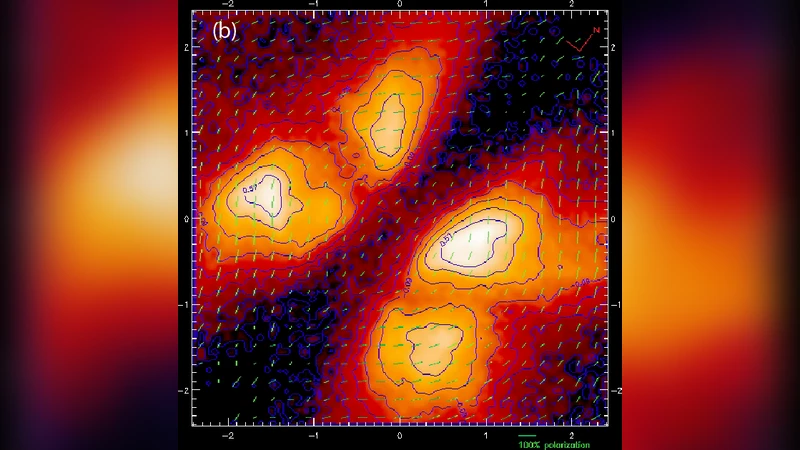
Science opportunities and recommendations concerning optical/infrared polarimetry for the upcoming decade in the fields of planetary systems and star formation. Community-based White Paper to Astro2010 in response to the call for such papers.
💡 Research Summary
The white paper “O/IR Polarimetry for the 2010 Decade (PSF): Science at the Edge, Sharp Tools for All” makes a compelling case that optical and infrared (O/IR) polarimetry should become a mainstream, high‑impact tool for the next ten years of astrophysical research. It begins by emphasizing that polarimetry uniquely probes physical properties that are invisible to pure photometry or spectroscopy: the alignment, shape, and size distribution of dust grains, the geometry of magnetic fields, and the scattering characteristics of planetary atmospheres and circum‑stellar disks. These diagnostics are essential for answering two of the most compelling questions in modern astronomy—how planetary systems form and evolve, and how stars are born within magnetized molecular clouds.
In the planetary‑system arena, the paper outlines how linear polarimetry across the visible and near‑infrared bands can be used to map dust grain growth in protoplanetary disks, to distinguish silicate from carbonaceous material, and to detect subtle asymmetries such as gaps, rings, and shadows that betray the presence of forming planets. Polarimetric imaging at high spatial resolution can separate scattered light from thermal emission, allowing researchers to reconstruct three‑dimensional disk structures and to test competing models of planetesimal formation. The authors also discuss the emerging field of exoplanet polarimetry, where phase‑dependent polarization signatures can reveal atmospheric particle sizes, cloud coverage, and even surface properties that are otherwise inaccessible.
For star formation, the paper stresses that magnetic fields imprint a characteristic linear polarization on background starlight and on thermal dust emission. By measuring this polarization, astronomers can infer the magnetic field direction and strength throughout dense cores, filaments, and outflow regions. Infrared polarimetry is especially valuable because it penetrates the high extinction that obscures the earliest stages of collapse, enabling a direct test of theories that invoke magnetic support versus turbulence‑driven fragmentation. The authors present case studies where polarimetric maps have clarified the role of magnetic fields in channeling material onto protostellar disks and in launching bipolar outflows.
Technically, the white paper identifies a set of concrete recommendations to realize the scientific potential of O/IR polarimetry. First, it calls for the integration of high‑efficiency, low‑noise polarimetric modules as standard instruments on all 8‑10 m class telescopes, ensuring sensitivity to polarization fractions as low as 10⁻⁴. Second, it advocates for the inclusion of polarimetric capabilities on upcoming space observatories (e.g., JWST successors) to eliminate atmospheric contamination and to enable stable, absolute polarization calibration. Third, the authors propose a community‑wide data‑standard and open‑access archive so that polarimetric datasets can be readily shared, re‑analyzed, and combined across facilities. Fourth, they stress the need for dedicated software tools, training workshops, and graduate‑level curricula to build a skilled workforce capable of designing experiments, reducing data, and interpreting polarimetric results.
Finally, the paper outlines an international collaboration framework. It suggests joint development of polarimetric hardware, coordinated large‑program surveys, and the launch of small, dedicated polarimetric satellite missions to provide continuous monitoring of variable sources. By sharing costs, expertise, and observing time, the global community can achieve a “polarimetric network” that delivers both deep, high‑resolution snapshots and long‑term temporal coverage.
In summary, the white paper argues that O/IR polarimetry is a uniquely powerful diagnostic for probing dust, magnetic fields, and scattering processes in planetary and star‑forming environments. Realizing its promise will require coordinated upgrades to ground‑based and space‑based instrumentation, robust data infrastructure, comprehensive education, and sustained international partnership. If these steps are taken, polarimetry will become a “sharp tool for all,” delivering transformative insights into the origins of planets and stars over the coming decade.
Comments & Academic Discussion
Loading comments...
Leave a Comment