T.I.P.O. (Tesla Interferometric Planetary Observer)
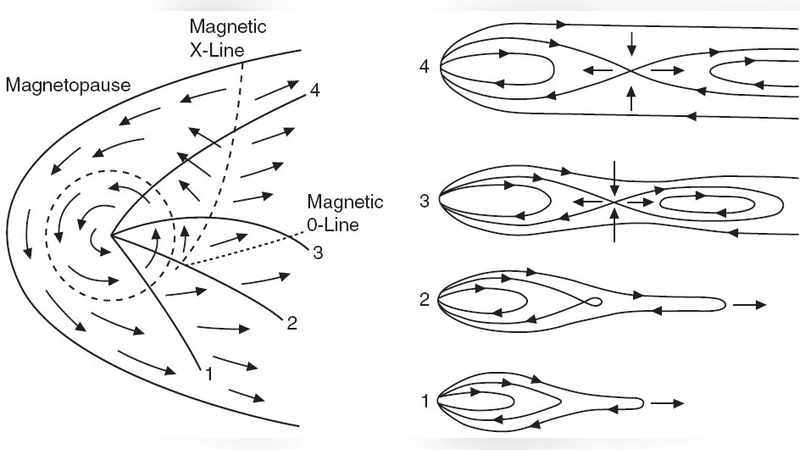
In the last years the Space Science community was confronted to a continuous increasing interest in Martian missions, extra-solar planet search and multi-satellite missions. The presented T.I.P.O. mission is a proposal for a research program dedicated to study, by space borne interferometric methods, the radio emissions generated in the atmospheres and magnetospheres of planets, both solar and extra-solar.
💡 Research Summary
The paper presents the Tesla Interferometric Planetary Observer (T.I.P.O.), a concept for a multi‑satellite space‑based interferometer designed to study low‑frequency radio emissions from planetary atmospheres and magnetospheres, both within the Solar System and around extrasolar planets. The authors begin by outlining the scientific motivation: recent surges in Mars exploration, exoplanet detection, and multi‑satellite missions have highlighted the need for a dedicated platform capable of probing the radio window below a few megahertz, a regime inaccessible from the ground because of the Earth’s ionospheric cutoff. Existing single‑satellite missions such as Cassini‑RPWS, Juno‑Waves, and the planned Europa Clipper radio payload provide valuable in‑situ measurements but lack the spatial resolution and directional discrimination that interferometry can deliver.
T.I.P.O. proposes a constellation of four to six small spacecraft placed in a heliocentric halo orbit near the Earth‑Sun L1 or L2 Lagrange points. Each spacecraft carries a long‑wire dipole antenna (several meters in length), a low‑noise broadband receiver covering roughly 10 kHz to 10 MHz, an atomic clock for precise timing, and a laser ranging unit for inter‑satellite distance measurement. The formation is actively controlled to maintain baselines ranging from 100 km to 500 km, enabling angular resolutions on the order of 0.1 arcseconds at the upper end of the band. Laser interferometry provides sub‑millimeter ranging accuracy, which, together with the atomic clocks, allows phase errors to be calibrated to well below one radian across the full band.
The scientific objectives are threefold. First, the mission will map the radio auroral and magnetospheric emissions of the giant planets (Jupiter, Saturn) and terrestrial planets (Mars, Venus) with unprecedented spatial detail, allowing reconstruction of plasma density gradients, field‑aligned currents, and the geometry of radiation belts. Second, by capturing the temporal evolution of bursty auroral kilometric radiation, T.I.P.O. will investigate the coupling between planetary ionospheres, thermospheres, and magnetospheres, shedding light on energy transfer processes that are currently modeled only indirectly. Third, the interferometer will search for coherent low‑frequency signatures associated with star‑planet magnetic interactions in nearby exoplanetary systems. The detection of such signals would provide the first direct measurement of exoplanet magnetic field strengths, a key parameter for assessing planetary habitability and interior dynamics.
Technical challenges are addressed in depth. Maintaining a precise formation over hundreds of kilometres requires continuous thrusting and high‑fidelity navigation; the authors propose a hybrid electric propulsion system combined with autonomous formation‑flight software that uses the laser ranging data as feedback. The low‑frequency receivers must operate with noise temperatures below 10 K while consuming less than 5 W, a requirement met by cryogenic HEMT amplifiers and duty‑cycled operation. Data volume is mitigated by on‑board real‑time correlation of the received signals, reducing raw bandwidth by a factor of 100 before downlink via a high‑gain Ka‑band optical link. An AI‑driven compression algorithm further trims the data stream while preserving transient events.
Simulation results demonstrate that a 300 km baseline yields a synthesized beam of ~0.1 arcseconds at 1 MHz, sufficient to resolve the main auroral source regions on Jupiter (≈10,000 km across). Sensitivity analyses indicate that, for a target star at 10 pc, the interferometer could detect coherent emissions as weak as 1 mJy, assuming integration times of a few hours and a modest duty cycle. The paper also includes a risk assessment, noting that the most critical failure modes are loss of formation control and degradation of the laser ranging system; mitigation strategies include redundant ranging units and a fallback mode where the constellation reconfigures into a compact array for single‑satellite science.
In conclusion, T.I.P.O. represents a transformative step for low‑frequency radio astronomy, moving the field from ground‑based, ionosphere‑limited observations to a space‑borne, high‑resolution interferometric platform. By delivering direct images of planetary radio sources and opening a new window on exoplanet magnetism, the mission promises to bridge planetary science, heliophysics, and exoplanetology. The authors outline a roadmap that begins with a technology‑demonstration flight to validate formation‑flying, laser ranging, and on‑board correlation, followed by a full‑scale science mission slated for the early 2030s.
Comments & Academic Discussion
Loading comments...
Leave a Comment