Seeing another Earth: Detecting and Characterizing Rocky Planets with Extremely Large Telescopes
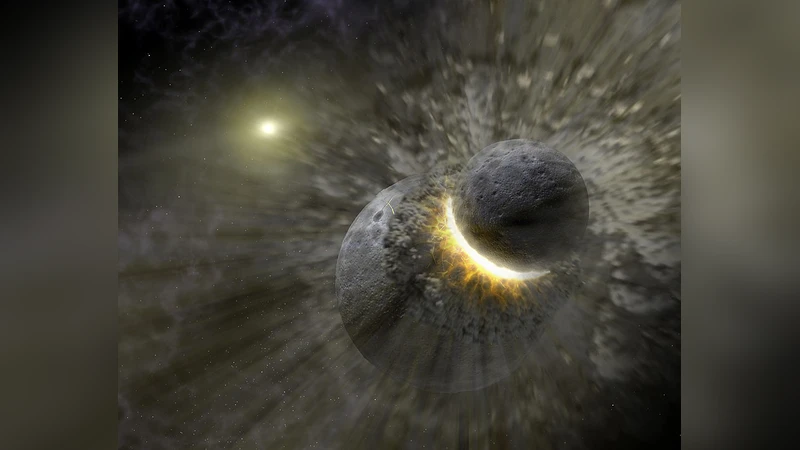
The detection of lower mass planets now being reported via radial velocity and microlensing surveys suggests that they may be ubiquitous. If missions such as Kepler are able to confirm this, the detection and study of rocky planets via direct imaging with ground-based telescopes of apertures > 20 m is feasible in the thermal infrared. We discuss two cases for detecting rocky planets, the first via detection of molten Earths formed though an Earth-Moon like impact event, and the second via detection of planets around very nearby stars. These observations have the potential to give us a first look at a rocky planet similar to the Earth.
💡 Research Summary
The paper evaluates the feasibility of directly detecting and characterizing rocky, Earth‑like planets using next‑generation Extremely Large Telescopes (ELTs) with primary mirrors larger than 20 m, operating in the thermal‑infrared (≈ 10 µm). Recent radial‑velocity (RV) and microlensing surveys have revealed a high occurrence rate of low‑mass planets (1–10 M⊕), and the Kepler mission is expected to confirm that such planets are common around Sun‑like stars. The authors argue that, given these statistics, ELTs equipped with state‑of‑the‑art adaptive optics (AO) and high‑contrast coronagraphic or null‑ing interferometric systems can image these worlds in the thermal infrared, where the planet‑to‑star contrast is most favorable.
Two observational scenarios are examined in detail. The first targets “molten Earths,” i.e., planets that have recently experienced a giant impact similar to the hypothesized Earth‑Moon forming collision. Such an event raises the planetary surface temperature to 1500–2000 K, producing a bright black‑body spectrum that peaks in the mid‑infrared. The authors calculate that a molten Earth at a distance of up to ~30 pc would have a planet‑star flux ratio of 10⁻⁶–10⁻⁷ at 10 µm, making it detectable with an ELT in a few hours of integration, provided that AO delivers a Strehl ratio > 0.9 and the coronagraph achieves a raw contrast of ~10⁻⁸. Simulations incorporating realistic wave‑front error budgets and thermal background show that a 5σ detection is achievable for targets younger than ~100 Myr, where the molten phase is expected to last 10⁴–10⁵ yr.
The second scenario focuses on mature Earth analogues orbiting the very nearest Sun‑like stars (e.g., α Centauri, Proxima Cen, τ Ceti). An Earth‑size planet at 1 AU has an equilibrium temperature of ~300 K, yielding a thermal flux that is ~10⁻⁷–10⁻⁸ of its host star’s flux at 10 µm. The angular separation for a star at 5 pc is ≈ 0.1″, comparable to the diffraction limit of a 30‑m telescope at this wavelength (≈ 0.04″). Achieving a detection therefore requires an instrument contrast of better than 10⁻⁹ at sub‑0.1″ separations. The authors discuss the required advances in coronagraph design (e.g., vortex, phase‑induced amplitude apodization), wave‑front control (electric‑field conjugation, predictive control), and thermal background mitigation (cold stops, high‑throughput optics). Under optimistic but plausible performance assumptions, a 20‑hour integration would yield a 5σ detection of an Earth‑like planet around the nearest stars.
Beyond detection, the paper emphasizes the scientific payoff of ELT thermal‑IR spectroscopy. For molten Earths, emission lines of SiO, MgO, and other refractory species would directly probe the composition of a post‑impact silicate vapor atmosphere, offering a rare glimpse of early planetary differentiation. For mature Earth analogues, low‑resolution spectra could reveal the presence of H₂O, CO₂, and O₃ absorption features, providing constraints on atmospheric pressure, greenhouse warming, and potential biosignatures. The authors argue that ELTs will thus fill a critical niche: they can survey a statistically meaningful sample of nearby rocky planets, characterize their bulk thermal emission, and prioritize the most promising targets for future space‑based direct‑imaging missions such as LUVOIR or HabEx.
In conclusion, the authors contend that the combination of high planet occurrence rates, the superior angular resolution and collecting area of ELTs, and ongoing advances in AO and high‑contrast instrumentation makes the direct imaging of rocky planets in the thermal infrared a realistic near‑term goal. Successful implementation would not only test planet‑formation theories (e.g., the frequency of giant impacts) but also open the first observational window onto the atmospheres and surface conditions of true Earth analogues beyond the Solar System.
Comments & Academic Discussion
Loading comments...
Leave a Comment