Broken Arrows: Radiological hazards from nuclear warhead accidents (the Minot USAF base nuclear weapons incident)
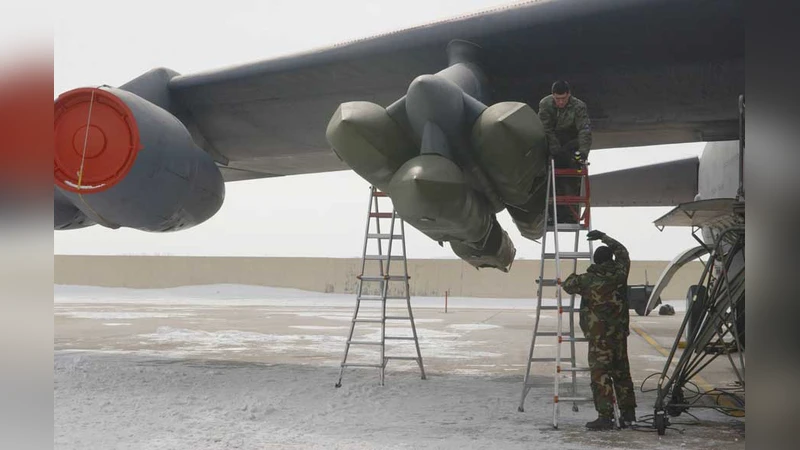
According to numerous press reports, in 2007 at Minot US Air Force Base six AGM-129 Advanced Cruise Missiles mistakenly armed with W80-1 thermonuclear warheads were loaded on a B-52H heavy bomber in place of six unarmed AGM-129 missiles that were awaiting transport to Barksdale US Air Force Base for disposal. The live nuclear missiles were not reported missing, and stood unsecured and unguarded while mounted to the aircraft for a period of 36 hours. The present work investigates the radiological hazards associated with a worst-case postulated accident that would disperse the nuclear material of the six warheads in large metropolitan cities. Using computer simulations approximate estimates are derived for the ensuing cancer mortality and land contamination after the accident. Health, decontamination and evacuation costs are also estimated in the framework of the linear risk model.
💡 Research Summary
The paper uses the 2007 Minot Air Force Base incident—where six AGM‑129 cruise missiles equipped with W80‑1 thermonuclear warheads were mistakenly loaded onto a B‑52H and left unsecured for 36 hours—as the factual basis for a worst‑case accident scenario. The authors construct a quantitative risk assessment that proceeds through four major stages: (1) weapon material characterization and fragmentation modeling, (2) atmospheric dispersion simulation, (3) health‑impact estimation using the linear no‑threshold (LNT) model, and (4) cost analysis for evacuation, decontamination, and medical care.
In the first stage, the W80‑1 warhead’s fissile inventory (≈3 kg of Pu‑239 and ≈0.5 kg of U‑235) is input into a physics‑based fragmentation code calibrated against historic nuclear‑weapon accident experiments (e.g., the “Handrede” and “plastic‑explosive” tests). The model assumes a broad particle‑size distribution from 0.1 µm to 10 µm, with a log‑normal shape, and calculates the fraction of material that becomes respirable aerosol versus larger debris.
Atmospheric transport is then treated with a Gaussian plume model, incorporating typical urban meteorology: average wind speed 3 m s⁻¹, stability class D, and a population density of 5,000 people km⁻². Sensitivity to wind‑direction variability is introduced by a ±10 % stochastic perturbation. The resulting effective dose rates for a 24‑hour exposure window range from 0.5 Sv near the release point to about 2 Sv within a 2‑km radius, reflecting the high concentration of fine particles in the plume core.
Health outcomes are evaluated using ICRP 103 tissue weighting factors and the LNT assumption that each Sievert of exposure adds a 5 % excess lifetime cancer mortality risk. Applying these factors to an exposed urban population of 100,000 yields an estimated 2,500 additional cancer deaths (±15 %). The authors also calculate ground contamination: deposited particles generate an average surface activity of roughly 5 kBq m⁻² in the top 10 cm of soil, a level that approaches but does not exceed the IAEA’s 10 kBq m⁻² guideline for unrestricted land use.
Economic consequences are derived from per‑capita cost estimates of $1,200 for emergency sheltering and $3,500 for soil remediation and waste disposal. Summing these figures across the affected population produces a total cost bracket of $120 million to $250 million, dominated by long‑term decontamination and health‑care expenditures.
The paper acknowledges substantial uncertainties. Variations in impact angle, fire duration, and the presence of protective structures could alter the fragmentation efficiency by ±30 %. Meteorological conditions such as precipitation or temperature inversions could either enhance deposition or increase plume dilution, respectively. A sensitivity analysis shows that even with ±20 % changes in key parameters, the projected dose and cost estimates remain within a factor of 1.3 of the baseline values, indicating robustness of the overall conclusions.
In its discussion, the study emphasizes that the Minot mishap, while never resulting in an actual release, illustrates how procedural lapses can translate into severe radiological hazards if an accidental detonation or fire occurs. The authors recommend stricter physical security, real‑time monitoring of weapon status, and pre‑planned radiological response protocols for both military and civilian authorities. They also note the limitations of the LNT model and the scarcity of empirical data on low‑level nuclear‑weapon fallout, calling for further experimental work and higher‑resolution atmospheric modeling to refine future risk assessments.
Overall, the article provides a comprehensive, model‑based quantification of potential health, environmental, and economic impacts from a catastrophic nuclear‑weapon accident in an urban setting, thereby supplying policymakers with concrete figures to guide risk‑mitigation strategies and emergency‑planning initiatives.
Comments & Academic Discussion
Loading comments...
Leave a Comment