Diffuse baryonic matter beyond 2020
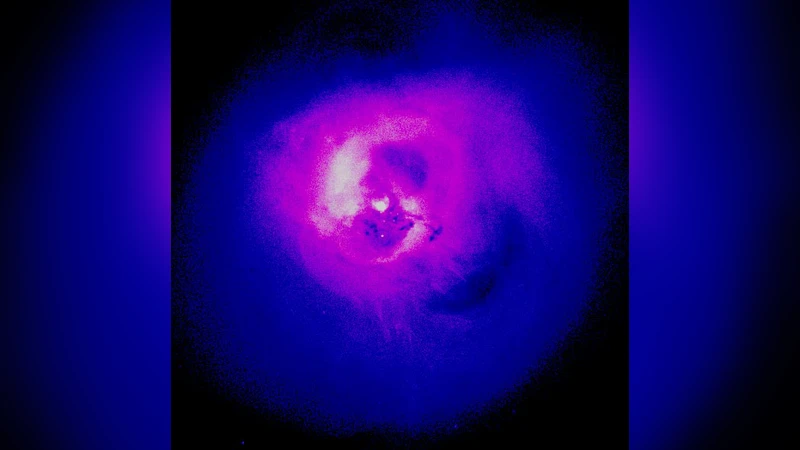
The hot, diffuse gas that fills the largest overdense structures in the Universe – clusters of galaxies and a web of giant filaments connecting them – provides us with tools to address a wide array of fundamental astrophysical and cosmological questions via observations in the X-ray band. Clusters are sensitive cosmological probes. To utilize their full potential for precision cosmology in the following decades, we must precisely understand their physics – from their cool cores stirred by jets produced by the central supermassive black hole (itself fed by inflow of intracluster gas), to their outskirts, where the infall of intergalactic medium (IGM) drives shocks and accelerates cosmic rays. Beyond the cluster confines lies the virtually unexplored warm IGM, believed to contain most of the baryonic matter in the present-day Universe. As a depository of all the matter ever ejected from galaxies, it carries unique information on the history of energy and metal production in the Universe. Currently planned major observatories, such as Astro-H and IXO, will make deep inroads into these areas, but to see the most interesting parts of the picture will require an almost science-fiction-grade facility with tens of m^2 of effective area, subarcsecond angular resolution, a matching imaging calorimeter and a super high-dispersion spectrograph, such as Generation-X.
💡 Research Summary
The paper provides a comprehensive overview of the role of hot, diffuse baryonic gas in the largest overdense structures of the Universe—galaxy clusters and the filamentary web that connects them—and outlines the observational capabilities required to exploit this medium for astrophysical and cosmological research. Clusters contain plasma at temperatures of 10⁷–10⁸ K, which emits strongly in the X‑ray band. This emission carries direct information on the gas temperature, density, and metal abundance, making clusters powerful probes of both structure formation and fundamental cosmology.
To use clusters as precision cosmological tools, the authors argue that a detailed understanding of the intra‑cluster medium (ICM) physics is essential. In the cores, cooling flows are regulated by feedback from the central supermassive black hole. Relativistic jets inject mechanical energy, suppress runaway cooling, and redistribute metals. This feedback imprints observable signatures such as temperature gradients, surface‑brightness asymmetries, and non‑thermal pressure components (cosmic rays, magnetic fields). Current X‑ray observatories (Chandra, XMM‑Newton) lack the combination of collecting area and sub‑arcsecond angular resolution needed to resolve these processes fully.
The paper then turns to the outskirts of clusters, typically defined near the radius R₂₀₀ where the mean interior density is 200 times the critical density. Here, infalling intergalactic medium (IGM) drives accretion shocks, accelerates particles, and amplifies magnetic fields. The surface brightness drops dramatically, and the spatial scales extend over several megaparsecs, making detection challenging with existing instruments. High‑sensitivity, wide‑band detectors with angular resolution better than 0.5″ and effective areas of several hundred square meters are required to map temperature and pressure profiles out to and beyond the virial radius. Complementary Sunyaev‑Zel’dovich measurements can help disentangle thermal from non‑thermal pressure contributions.
The most ambitious target discussed is the Warm‑Hot Intergalactic Medium (WHIM), predicted by cosmological simulations to contain roughly 30–40 % of the present‑day baryons. The WHIM resides in low‑density filaments at temperatures of 10⁵–10⁷ K, producing weak absorption lines (e.g., O VII, O VIII) against bright background sources and faint emission that is currently below detection thresholds. The authors emphasize that a definitive census of the WHIM demands a spectrograph with energy resolution ΔE ≈ 1 eV or better, combined with a collecting area of tens of square meters and an ultra‑low instrumental background. Such capabilities are beyond the scope of planned missions like Astro‑H (Hitomi) and the International X‑ray Observatory (IXO), which will make important first steps but cannot fully resolve the WHIM.
Consequently, the paper advocates for a next‑generation, “Generation‑X” class X‑ray observatory. This facility would integrate (1) a massive effective area (≥ 10 m²) to gather enough photons from low‑surface‑brightness regions, (2) sub‑arcsecond imaging to separate fine structures in cluster cores and filaments, (3) an imaging calorimeter with ~2 eV resolution for spatially resolved spectroscopy, and (4) a high‑dispersion grating spectrograph capable of detecting WHIM absorption at the 1 eV level. With these instruments, astronomers could (a) calibrate the mass–observable relations of clusters to the percent level, (b) map the thermodynamic state of the ICM from the core to the virial boundary, (c) directly measure the kinetic and thermal energy budget of accretion shocks, and (d) finally produce a three‑dimensional map of the baryon distribution in the cosmic web.
In summary, the authors conclude that while current and near‑future X‑ray missions will advance our knowledge of hot baryons, only an ultra‑large, high‑resolution X‑ray observatory can unlock the full scientific potential of diffuse baryonic matter for precision cosmology, galaxy‑formation feedback studies, and a complete accounting of the Universe’s baryon budget.
Comments & Academic Discussion
Loading comments...
Leave a Comment