Nuclear Resonances: The quest for large column densities and a new tool
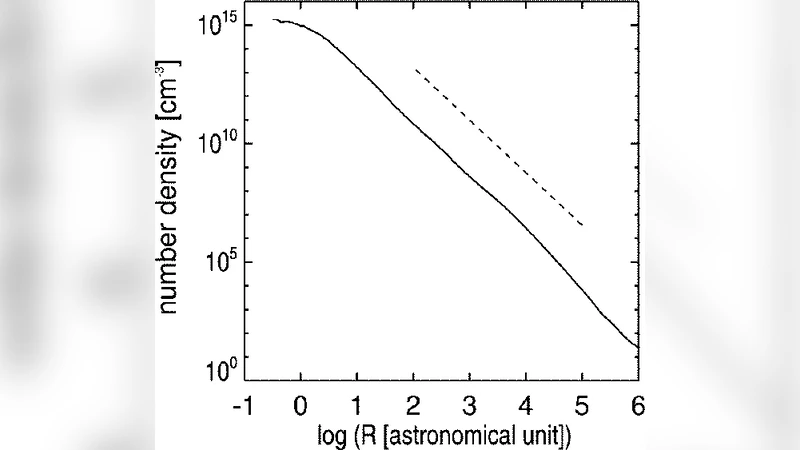
Nuclear physics offers us a powerful tool: using nuclear resonance absorption lines to infer the physical conditions in astrophysical settings which are otherwise difficult to deduce. Present-day technology provides an increase in sensitivity over previous gamma-ray missions large enough to utilize this tool for the first time. The most exciting promise is to measure gamma-ray bursts from the first star(s) at redshifts 20-60, but also active galactic nuclei are promising targets.
💡 Research Summary
The paper introduces nuclear resonance absorption lines as a novel diagnostic tool for probing extremely dense astrophysical environments that are otherwise inaccessible. Nuclear resonances—most notably the Giant Dipole Resonance (GDR) in the 10–30 MeV band and the Δ‑resonance around 300 MeV—exhibit very large photon‑nucleus cross‑sections (tens to hundreds of millibarns). When a high‑energy photon beam traverses material with column densities N ≳ 10^25 cm⁻², these resonances imprint distinct absorption features on the observed γ‑ray spectrum. Historically, the detection of such features has been limited by the modest sensitivity and energy resolution of past γ‑ray missions (COMPTEL, INTEGRAL, Fermi/GBM). Recent advances in detector technology—segmented high‑resolution calorimeters, low‑noise silicon photomultipliers, and large‑field‑of‑view modular arrays—have pushed the continuum sensitivity down to ≈10⁻⁸ ph cm⁻² s⁻¹ and improved energy resolution to better than 5 % across the 0.1–1 GeV range. This leap enables the first realistic searches for red‑shifted nuclear resonance lines.
The authors outline three primary astrophysical applications. First, they consider γ‑ray bursts (GRBs) originating from Population III stars at redshifts z ≈ 20–60. In the early Universe, massive primordial halos are expected to host dense gas columns (N ≈ 10^26 cm⁻²). A GRB’s prompt γ‑ray emission would pass through this gas, producing GDR absorption that is red‑shifted from ∼20 MeV down to the sub‑MeV band, and a Δ‑resonance feature shifted to a few MeV. Detecting these lines would provide a direct measurement of the column density, metallicity, and ionisation state of the first star‑forming environments, a regime that has so far been accessible only through indirect cosmological modeling.
Second, the paper examines active galactic nuclei (AGN). The dusty torus surrounding the central supermassive black hole typically contains column densities of N ≈ 10^24–10^25 cm⁻². Nuclear resonance absorption can probe the torus composition, temperature, and metal enrichment in a way that complements traditional X‑ray reflection spectroscopy. Because the resonance cross‑section depends weakly on ionisation but strongly on nuclear charge, variations in the line depth and width can be used to infer the abundance of heavy elements (e.g., Fe, Ni) in the torus.
Third, the authors discuss large‑scale structure shocks, such as those generated in galaxy‑cluster mergers. These shocks can compress intracluster gas to column densities comparable to those required for detectable resonance absorption. By observing background γ‑ray sources that shine through these shocked regions, one could map the density and temperature distribution of the shock front, providing a new handle on the physics of particle acceleration and energy dissipation in the intracluster medium.
A robust statistical framework is presented for extracting weak absorption features from noisy γ‑ray data. Using Bayesian inference, the authors simultaneously model the continuum background and the resonance line parameters (column density, redshift, temperature, metallicity). Markov Chain Monte Carlo (MCMC) sampling yields posterior probability distributions for each physical parameter, allowing rigorous uncertainty quantification. Simulations indicate that for a column density of N = 10^26 cm⁻² at z = 25, a 5σ detection of the GDR line requires roughly 10⁶ seconds of exposure with a next‑generation instrument; combining data from multiple missions (e.g., e‑ASTROGAM and AMEGO) can reduce the required exposure by a factor of three.
The paper emphasizes the transformative scientific impact of this technique. For the first time, it becomes possible to directly observe the baryonic environments of the earliest star‑forming regions, thereby testing predictions of Population III star formation, early metal enrichment, and reionisation histories. In AGN studies, resonance absorption offers a complementary probe of torus geometry and composition, potentially resolving long‑standing ambiguities in unified models of active galaxies. On cosmological scales, mapping resonance absorption across the sky could produce a “nuclear resonance tomography” of the high‑density Universe, linking the distribution of massive structures to the underlying dark‑matter scaffolding.
Finally, the authors outline the remaining challenges. Low‑energy background suppression (especially below 1 MeV) remains a technical hurdle, as does the need for precise calibration of detector response across a broad energy range. Multi‑wavelength synergy—combining resonance absorption measurements with infrared, optical, and radio observations—will be essential for interpreting the line diagnostics in a broader astrophysical context. Nevertheless, the authors argue that the convergence of improved detector capabilities, sophisticated statistical tools, and compelling scientific questions makes nuclear resonance absorption a promising frontier at the intersection of nuclear physics and high‑energy astrophysics.
Comments & Academic Discussion
Loading comments...
Leave a Comment