X-ray Timing of Neutron Stars, Astrophysical Probes of Extreme Physics
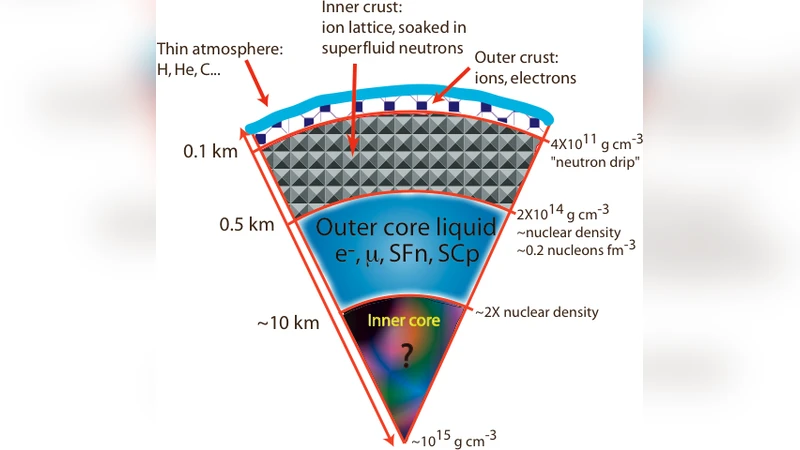
The characteristic physical timescales near stellar-mass compact objects are measured in milliseconds. These timescales – the free-fall time, the fastest stable orbital period, and stellar spin periods – encode the fundamental physical properties of compact objects: mass, radius, and angular momentum. The characteristic temperature of matter in the vicinity of neutron stars is such that the principal electromagnetic window into their realms is the X-ray band. Because of these connections to the fundamental properties of neutron stars, X-ray timing studies remain today the most direct means of probing their structure and dynamics. While current X-ray observatories have revealed many relevant and fascinating phenomena, they lack the sensitivity to fully exploit them to uncover the fundamental properties of compact objects and their extreme physics. With this white paper, we summarize and highlight the science opportunities that will accompany an order-of-magnitude improvement in X-ray timing sensitivity, a goal attainable in the coming decade.
💡 Research Summary
The white paper makes a compelling case that X‑ray timing is the most direct and powerful probe of neutron‑star (NS) physics. Millisecond‑scale dynamical timescales in the vicinity of a stellar‑mass compact object—free‑fall time, the period of the innermost stable circular orbit (ISCO), and the stellar spin period—are each mathematically linked to the fundamental properties of the star: mass (M), radius (R), and angular momentum (J). Because the characteristic temperature of matter near NSs (10⁷–10⁸ K) forces the bulk of the radiated energy into the X‑ray band, high‑time‑resolution X‑ray observations uniquely capture the signatures of these timescales.
Current observatories (NICER, XMM‑Newton, NuSTAR, etc.) have uncovered a rich phenomenology—high‑frequency quasi‑periodic oscillations (QPOs), millisecond pulsations, burst oscillations—but their limited collecting area and timing precision prevent a full exploitation of the data. In particular, signals above a few hundred Hz, and sub‑millisecond pulse structures, are often buried in statistical noise, limiting the accuracy with which M, R, and spin can be inferred.
The authors argue that an order‑of‑magnitude increase in timing sensitivity—achievable with a next‑generation mission featuring a large‑area X‑ray telescope (∼10 m class optics) coupled to state‑of‑the‑art detectors (e.g., transition‑edge sensors or silicon‑drift detectors)—would transform the field. With ten‑times the photon‑count rate, the following scientific breakthroughs become realistic:
-
Precise Mass–Radius Determination: Simultaneous measurement of free‑fall time (via burst rise times) and ISCO frequency (via high‑frequency QPOs) yields two independent constraints on M and R. This directly maps the NS mass‑radius curve, allowing discrimination among competing equations of state (EOS) for ultra‑dense matter, including models with exotic components such as deconfined quarks or hyperons.
-
Strong‑Gravity Tests: The ISCO period and frame‑dragging signatures encoded in the spin‑modulated X‑ray flux are sensitive to the non‑linear predictions of General Relativity in the strong‑field regime. High‑precision timing can measure these effects, providing an unprecedented laboratory for testing GR beyond the weak‑field limits probed by binary pulsars or gravitational‑wave detections.
-
Multi‑Energy Timing Diagnostics: Enhanced sensitivity across a broad energy band (∼0.1–10 keV) enables energy‑resolved timing studies. By correlating spectral changes with timing features, one can disentangle contributions from the accretion disk, magnetic hotspots, and surface thermal emission, thereby probing the geometry of magnetic fields, the physics of accretion flows, and the thermal conductivity of the NS crust.
The paper also outlines technical requirements: sub‑millisecond absolute timing accuracy, photon‑counting statistics better than 0.1 % for bright sources, and low instrumental dead time. It emphasizes that achieving these specifications is within reach of current detector technology when combined with a large‑area, lightweight X‑ray optic.
In summary, the authors contend that a ten‑fold improvement in X‑ray timing capability will unlock the full diagnostic power of neutron‑star variability. It will allow the community to measure the fundamental parameters of NSs with unprecedented precision, to discriminate among EOS models, and to perform stringent strong‑gravity tests—all within the next decade. Consequently, they call for coordinated international investment in a next‑generation X‑ray timing mission, positioning it as a cornerstone for astrophysics, nuclear physics, and fundamental physics alike.
Comments & Academic Discussion
Loading comments...
Leave a Comment