Structure and Substructure of Galactic Spheroids
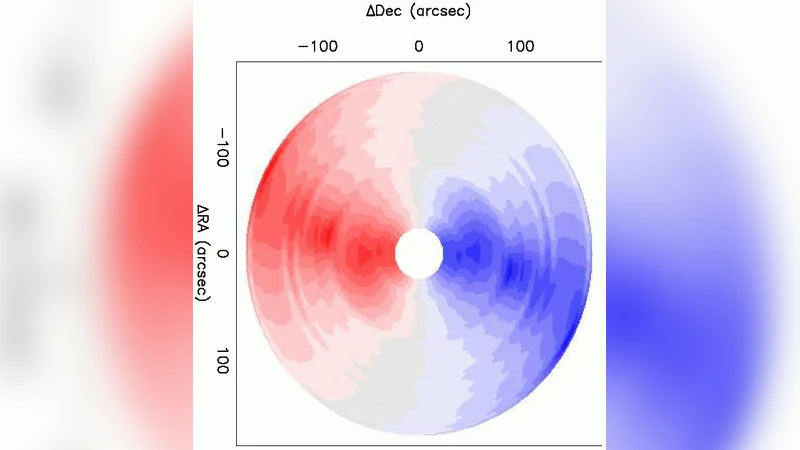
The full spatio-chemo-dynamical structure of galaxies of all types and environments at low redshift provides a critical accompaniment to observations of galaxy formation at high redshift. The next decade brings the observational opportunity to strongly constrain nearby galaxies’ histories of star formation and assembly, especially in the spheroids that comprise the large majority of the stellar mass in the Universe but have until now been difficult to study. In order to constrain the pathways to building up the spheroidal “red-sequence”, various standard techniques in photometry and spectroscopy, particularly with resolved tracer populations like globular clusters and planetary nebulae, can be scaled up to comprehensive surveys as improved wide-field instrumentation is increasingly available. At the same time, progress in adaptive optics on giant telescopes could for the first time permit deep, resolved photometric and spectroscopic analysis of large samples of individual stars in these systems, thereby revolutionizing galaxy studies. Strong theoretical support is needed in order to understand the new observational constraints via detailed modeling and self-consistent simulations of star and galaxy formation throughout cosmic time.
💡 Research Summary
The paper presents a comprehensive roadmap for unraveling the full three‑dimensional spatio‑chemo‑dynamical structure of low‑redshift galaxies, with a particular focus on spheroidal systems that dominate the stellar mass budget of the Universe. The authors argue that, while high‑redshift studies are rapidly advancing, the detailed internal histories of nearby spheroids remain poorly constrained because traditional photometric and spectroscopic techniques have been limited by narrow fields of view, low signal‑to‑noise ratios, and the inability to resolve individual stellar populations in dense environments.
To address this gap, the authors propose two complementary observational strategies that exploit recent advances in wide‑field instrumentation and adaptive optics (AO) on next‑generation extremely large telescopes (ELTs). The first strategy scales up the use of resolved tracer populations—globular clusters (GCs) and planetary nebulae (PNe)—as “time capsules” of galaxy assembly. GCs preserve the metallicity, α‑element abundance, and kinematic imprint of star formation episodes that occurred billions of years ago, while PNe trace more recent stellar evolution. By employing wide‑field imagers (e.g., Subaru‑HSC, LSST) together with multi‑object spectrographs (e.g., VLT‑MUSE, Keck‑DEIMOS), the authors anticipate building samples of several thousand GCs and PNe per galaxy, enabling statistically robust measurements of metallicity‑age relations, radial velocity distributions, and spatial anisotropies across a wide range of environments.
The second strategy leverages AO‑assisted near‑infrared spectroscopy on 30‑meter class telescopes (TMT, ELT, GMT) to resolve individual stars within the high‑surface‑brightness cores of spheroids. This capability pushes spatial resolution to ~0.01″, far surpassing the limits of integrated‑light analyses. It allows direct determination of stellar radial velocities, detailed chemical abundances (including Fe, Mg, Ca, Na), and precise age diagnostics from spectral indices. Crucially, AO observations can penetrate the bright central regions without saturation, revealing multiple kinematic components—rotation, triaxiality, and possible kinematically decoupled cores—that are otherwise blended in lower‑resolution data.
Interpreting these rich datasets requires a parallel theoretical effort. The authors advocate the use of high‑resolution cosmological hydrodynamic simulations that incorporate realistic star‑formation feedback, metal diffusion, and merger histories (e.g., EAGLE‑II, Illustris‑TNG, FIRE‑3). They outline a Bayesian forward‑modeling framework that matches observed GC metallicity distributions and orbital eccentricities to simulated sub‑halo accretion events, thereby quantifying the relative contributions of in‑situ star formation versus ex‑situ accretion to the final spheroid mass budget. By decomposing the observed velocity field into rotational and pressure‑supported components, the framework can also test competing quenching pathways—rapid “quench‑and‑grow” episodes versus prolonged minor‑merger driven growth—that are hypothesized to populate the red‑sequence.
The paper’s key insights are: (1) Large‑scale GC and PN surveys will transform our ability to reconstruct the temporal sequence of enrichment and assembly in spheroids, exposing non‑linear metallicity‑age trends that single‑population studies miss. (2) AO‑enabled stellar spectroscopy will uncover hidden dynamical substructures, allowing a more accurate separation of rotational support from anisotropic dispersion, which is essential for dynamical mass modeling. (3) Coupling these observations with state‑of‑the‑art simulations will demonstrate that red‑sequence spheroids likely follow a hybrid evolutionary path, experiencing both early, rapid quenching and later, stochastic minor mergers. (4) Within the next decade, the synergy of wide‑field tracer surveys and ELT‑scale resolved stellar work will map the full three‑dimensional parameter space of mass, metallicity, and kinematics for a statistically meaningful sample of spheroids, moving galaxy formation theory from a qualitative to a precision‑testing discipline.
In conclusion, the authors call for coordinated investment in both observational facilities (wide‑field imagers, MOS, AO‑fed spectrographs) and theoretical infrastructure (large‑volume, high‑resolution simulations, Bayesian inference pipelines). Such an integrated approach promises to finally close the loop between the high‑redshift formation epochs observed by JWST and the low‑redshift fossil record encoded in the structure and substructure of galactic spheroids.
Comments & Academic Discussion
Loading comments...
Leave a Comment