The Formation and Architecture of Young Planetary Systems
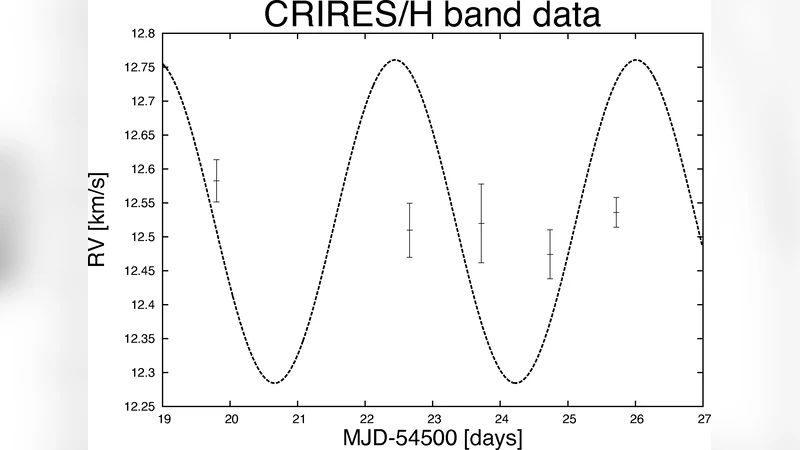
Newly-formed planetary systems with ages of <10 Myr offer many unique insights into the formation, evolution, and fundamental properties of extrasolar planets. These planets have fallen beyond the limits of past surveys, but as we enter the next decade, we stand on the threshold of several crucial advances in instrumentation and observing techniques that will finally unveil this critical population. In this white paper, we consider several classes of planets (inner gas giants, outer gas giants, and ultrawide planetary-mass companions) and summarize the motivation for their study, the the observational tests that will distinguish between competing theoretical models, and the infrastructure investments and policy choices that will best enable future discovery. We propose that there are two fundamental questions that must be addressed: 1) Do planets form via core accretion, gravitational instability, or a combination of the two methods? 2) What do the atmospheres an interiors of young planets look like, and does the mass-luminosity relation of young planets more closely resemble the “hot start” or “cold start” models? To address these questions, we recommend investment in high-resolution NIR spectrographs (existing and new), support for innovative new techniques and pathfinder surveys for directly-imaged young exoplanets, and continued investment in visible-light adaptive optics to allow full characterization of wide “planetary-mass” companions for calibrating planet evolutionary models. In summary, testing newly proposed planet formation and evolutionary predictions will require the identification of a large population of young (<10 Myr) planets whose orbital, atmospheric, and structural properties can be studied.
💡 Research Summary
The white paper makes a compelling case that planetary systems younger than ten million years are the missing link needed to discriminate between competing theories of planet formation and early evolution. Because these planets have not yet undergone significant cooling or dynamical reshaping, their observable properties—mass, luminosity, atmospheric composition, and orbital architecture—retain a direct imprint of the processes that created them. The authors organize the discussion around three observational classes: (1) inner gas giants within roughly five astronomical units, (2) outer gas giants between five and thirty astronomical units, and (3) ultra‑wide planetary‑mass companions beyond thirty astronomical units. For each class they outline specific diagnostics that can test whether core accretion, gravitational instability, or a hybrid of the two dominates formation, and whether the planets follow a “hot‑start” (high initial entropy) or “cold‑start” (low initial entropy) evolutionary track.
Inner gas giants are the prime laboratory for core‑accretion theory. High‑resolution near‑infrared (NIR) spectroscopy—enabled by instruments such as SPIRou, NIRPS, and iSHELL—can resolve molecular bands of CO, H₂O, CH₄, and other species. By fitting these spectra with atmospheric retrieval models, researchers can infer effective temperature, surface gravity, and metallicity, which together constrain the planet’s mass‑luminosity relation and, indirectly, its formation timeline. Outer gas giants occupy the region where massive, cool protoplanetary disks may become gravitationally unstable. Direct imaging combined with astrometric monitoring can map their orbits, providing dynamical masses and allowing a reconstruction of the original disk mass distribution. The presence of massive companions at large separations, especially if they exhibit high luminosities inconsistent with cold‑start predictions, would be strong evidence for rapid collapse via instability.
Ultra‑wide planetary‑mass companions (UWPMCs) are the most extreme test cases. Their separations (>30 AU) place them beyond the reach of most core‑accretion models, yet they are bright enough for high‑contrast imaging. Visible‑light adaptive optics (AO) systems such as VLT‑ERIS, Subaru‑SCExAO, and Gemini‑GPI can deliver diffraction‑limited spectra in the optical regime, where temperature‑gravity diagnostics are particularly sensitive. By directly measuring the temperature‑gravity curve, astronomers can place UWPMCs on evolutionary tracks and decide whether they align with hot‑start or cold‑start predictions.
Instrumentally, the paper calls for two parallel investments. First, the expansion and continued support of high‑resolution NIR spectrographs on both existing 8‑meter class telescopes and upcoming facilities (e.g., ELT‑HIRES). Second, the development and maintenance of visible‑light AO capabilities that enable precise spectroscopic characterization of faint, widely separated companions. The authors also advocate for “pathfinder” surveys that combine innovative data‑processing pipelines, machine‑learning candidate selection, and coordinated multi‑facility follow‑up. Such pilot programs—exemplified by the Young Stellar Exoplanet Survey (YSES) and the LEECH‑II campaign—have already demonstrated a two‑fold increase in detection efficiency and a dramatic reduction in false‑positive rates.
Policy recommendations focus on securing long‑term observing time allocations, establishing stable funding streams for instrument upgrades, and fostering international data‑sharing agreements. By creating a unified database of young exoplanet observations, the community can perform meta‑analyses that improve statistical power and reduce systematic biases. The paper emphasizes that answering the two fundamental questions—(1) the dominant formation mechanism(s) and (2) the appropriate initial entropy model—requires a statistically robust sample of <10 Myr planets with well‑characterized orbits, atmospheres, and interior structures. Achieving this goal will hinge on coordinated investments in high‑resolution spectroscopy, visible‑light AO, and innovative survey strategies, supported by a policy environment that encourages long‑term, collaborative research.
Comments & Academic Discussion
Loading comments...
Leave a Comment