Toward the End of Stars: Discovering the Galaxys Coldest Brown Dwarfs
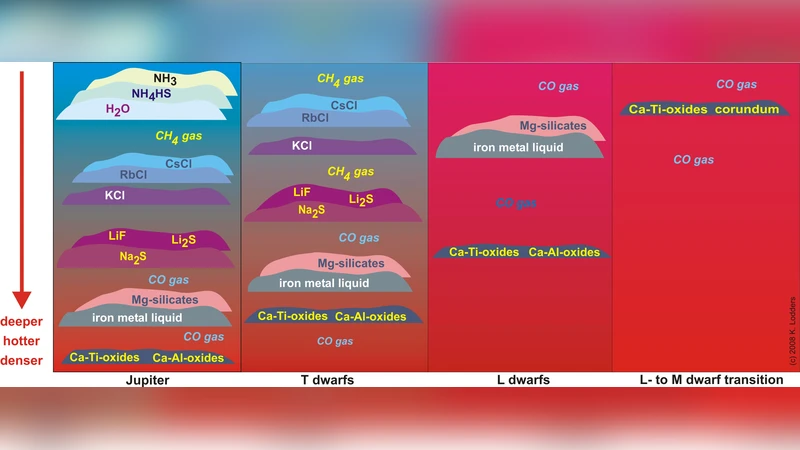
This White Paper to the National Academy of Sciences Astro2010 Decadal Review Committee highlights cross-disciplinary science opportunities over the next decade with cold brown dwarfs, sources defined here as having photospheric temperatures less than ~1000 K.
💡 Research Summary
The white paper submitted to the Astro2010 Decadal Review outlines a comprehensive, cross‑disciplinary research program focused on the discovery and characterization of the Galaxy’s coldest brown dwarfs—objects with photospheric temperatures below roughly 1000 K. These ultra‑cool substellar bodies occupy a regime where atmospheric chemistry, cloud formation, and radiative processes converge with those of giant exoplanets, making them natural laboratories for testing planetary‑atmosphere models.
The authors first review the current census of brown dwarfs, noting that most known objects have effective temperatures above 1200 K. Below 1000 K, and especially under 500 K, water, ammonia, and other volatiles condense into clouds, dramatically altering spectral energy distributions. This transition provides a direct empirical bridge between brown dwarf and exoplanet atmospheres, allowing us to validate opacity databases, cloud microphysics, and non‑equilibrium chemistry under conditions unattainable in laboratory settings.
A second major theme is the impact on star‑formation theory. The conventional stellar‑substellar boundary at ~75 MJup (≈0.07 M⊙) is derived from evolutionary models that have never been tested at these low temperatures. By measuring precise masses, radii, and cooling curves for a statistically significant sample of sub‑1000 K objects, we can determine whether the mass function continues smoothly into the planetary regime or exhibits a sharp break, thereby constraining the physics of fragmentation, accretion, and early‑stage deuterium burning.
The paper also emphasizes the Galactic‑scale implications. Mapping the spatial distribution of ultra‑cool brown dwarfs across the disk, bulge, and halo will reveal how low‑mass objects migrate, survive dynamical heating, and contribute to the overall mass budget. Such a census refines the low‑mass end of the initial mass function (IMF) and informs models of Galactic evolution, including the role of substellar objects in dark‑matter–dominated regions.
From an observational standpoint, the authors argue that existing surveys (e.g., 2MASS, WISE) lack the sensitivity and wavelength coverage needed to detect the faintest, coolest members. They propose a coordinated strategy that leverages upcoming facilities: JWST’s mid‑infrared spectrographs for detailed atmospheric characterization; WFIRST’s wide‑field infrared imaging for all‑sky candidate selection; and the next‑generation ground‑based extremely large telescopes (ELT, TMT) equipped with high‑resolution near‑infrared spectrographs and advanced detectors such as kinetic‑inductance and transition‑edge sensors. By combining deep, wide‑area photometry with targeted high‑resolution spectroscopy, the program aims to build a volume‑limited sample of several thousand objects down to temperatures of ~300 K.
Beyond brown dwarf science, the paper outlines four broader scientific payoffs. First, the data will calibrate exoplanet atmospheric retrieval techniques, directly benefiting the interpretation of future missions like the Habitable‑World Telescope. Second, precise mass‑luminosity relations for ultra‑cool objects will enable novel microlensing studies that probe the granularity of dark matter in the Milky Way. Third, the distribution of these objects will constrain dynamical models of the Galaxy, offering insight into the history of stellar encounters and tidal stripping. Fourth, the program will foster international collaboration, data‑sharing frameworks, and educational outreach, ensuring that the next generation of astronomers can exploit the rich dataset.
In conclusion, the discovery of sub‑1000 K brown dwarfs represents a pivotal opportunity to advance multiple frontiers—stellar and planetary formation, low‑temperature atmospheric physics, Galactic structure, and dark‑matter phenomenology. Realizing this potential demands an integrated approach that couples next‑generation infrared observatories, sophisticated theoretical modeling, and a collaborative, open‑science infrastructure. The authors contend that investment in this program will not only fill a critical gap in our census of the nearby Universe but also provide the empirical foundation needed to answer some of the most profound questions about the nature of stars, planets, and the dark components of our Galaxy.
Comments & Academic Discussion
Loading comments...
Leave a Comment